Archbishop Palace
Restoration and seismic retrofit of Camerino’s Archbishop Palace: heritage preservation, structural upgrading, and energy efficiency.
The Archbishop’s Palace in Camerino as a Stratified Historic Building
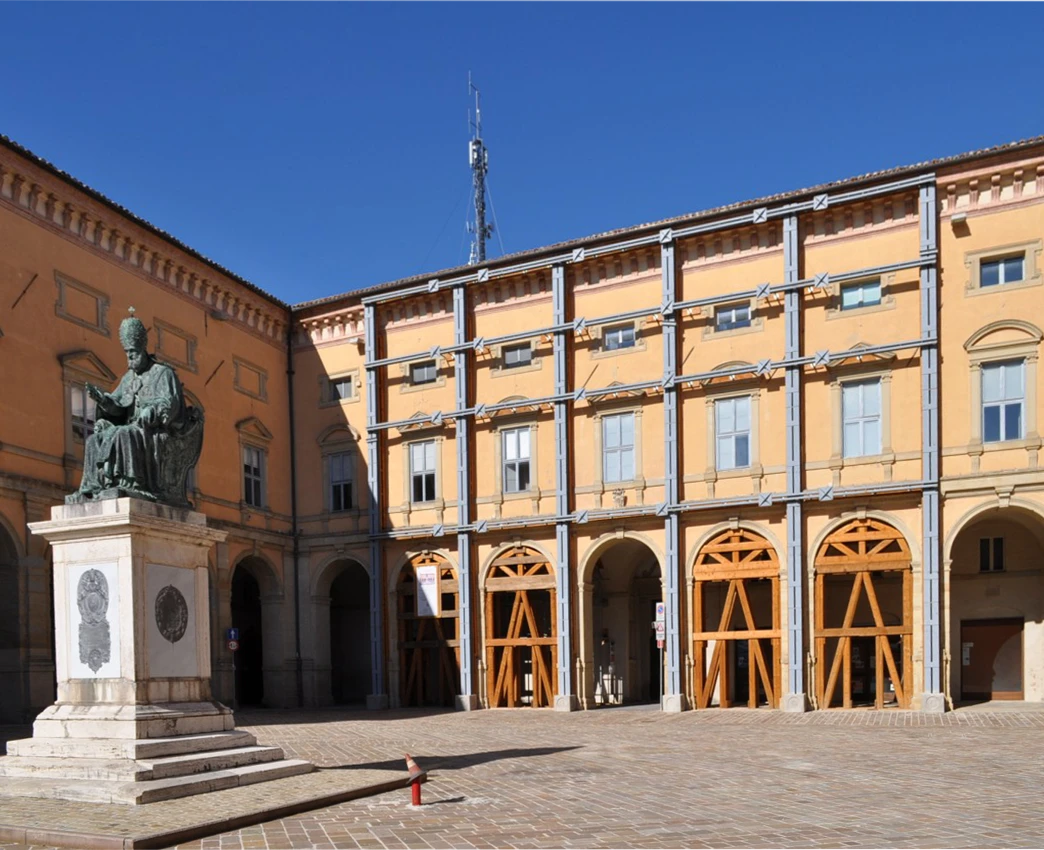
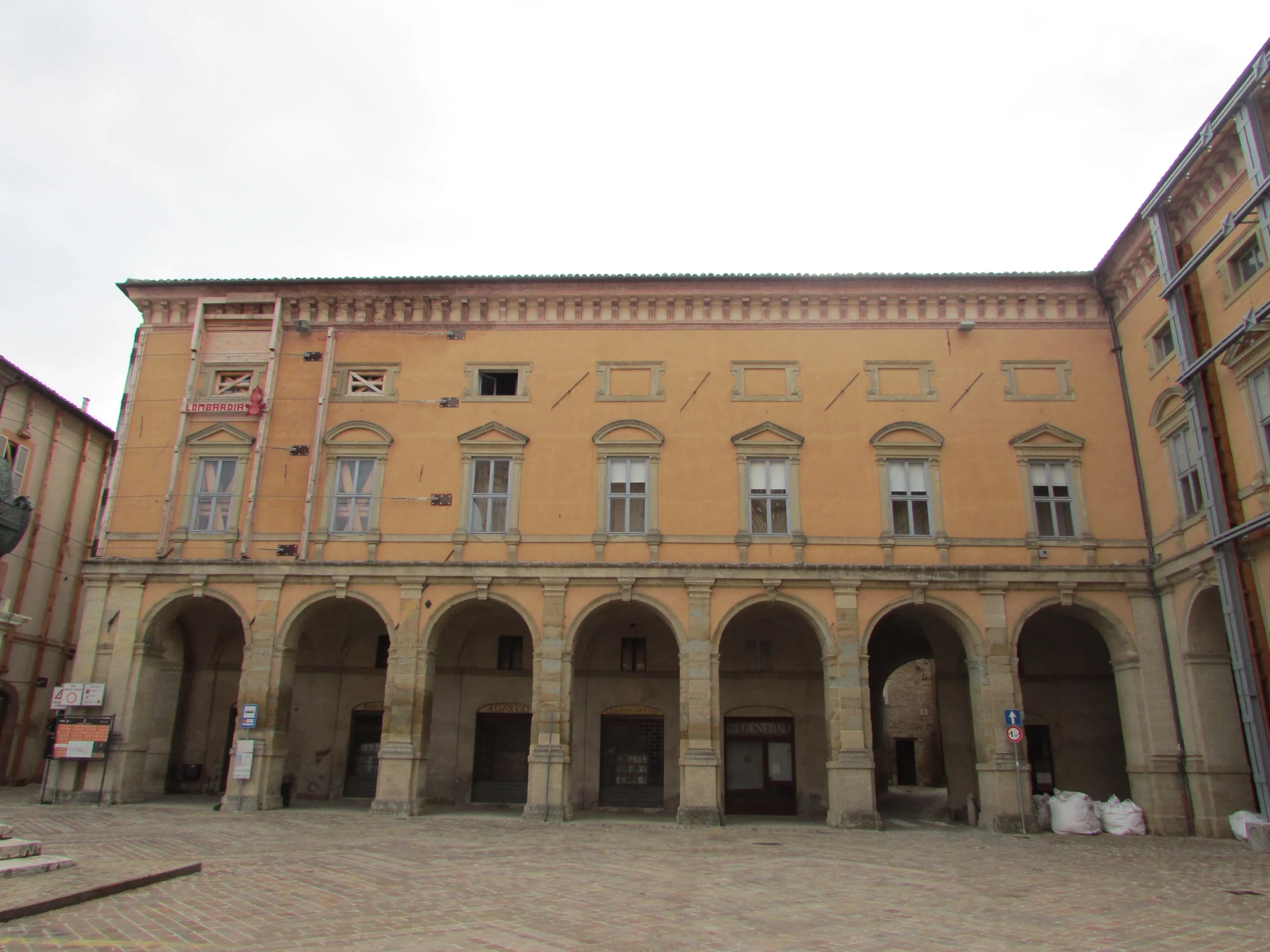
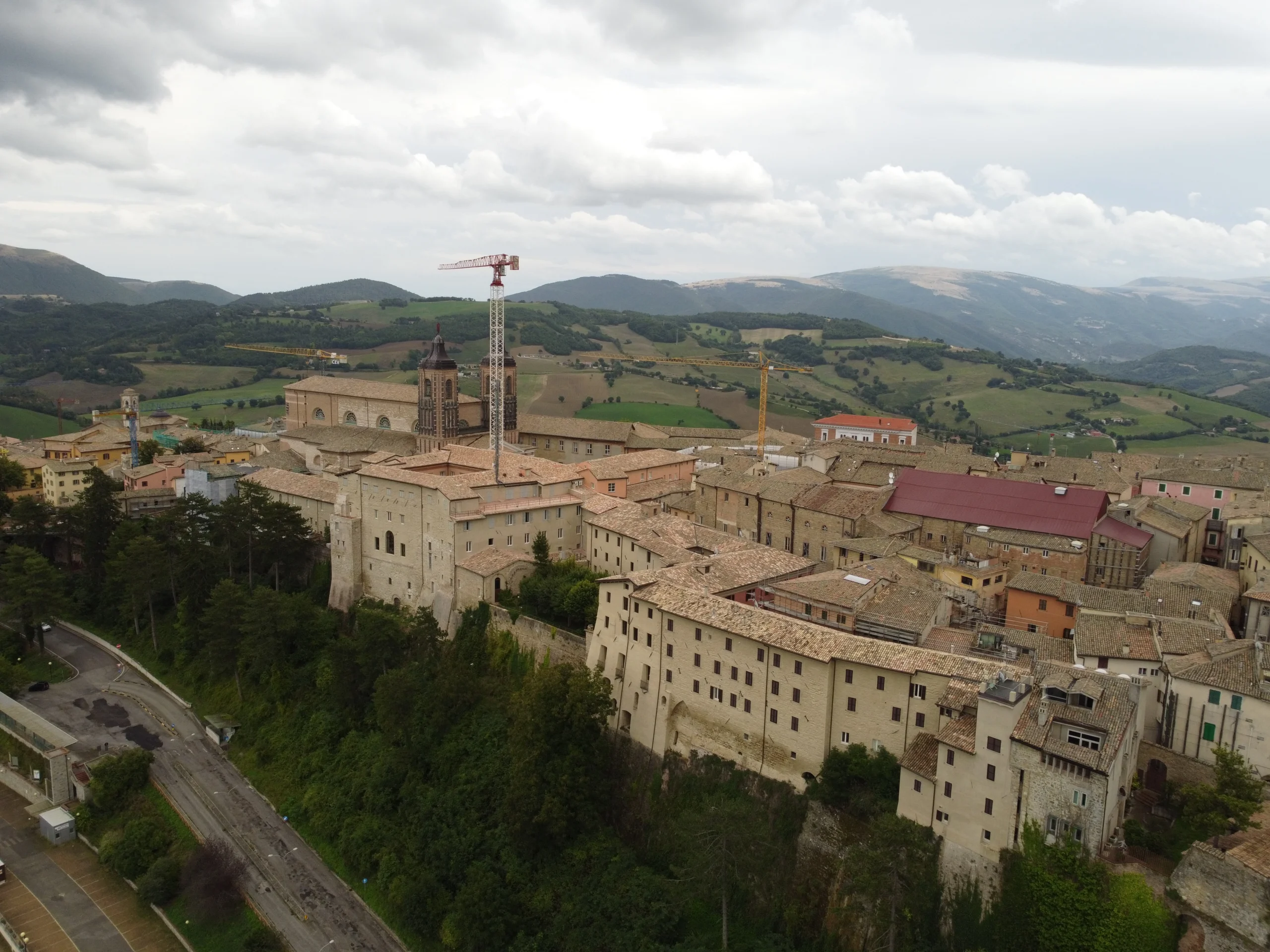
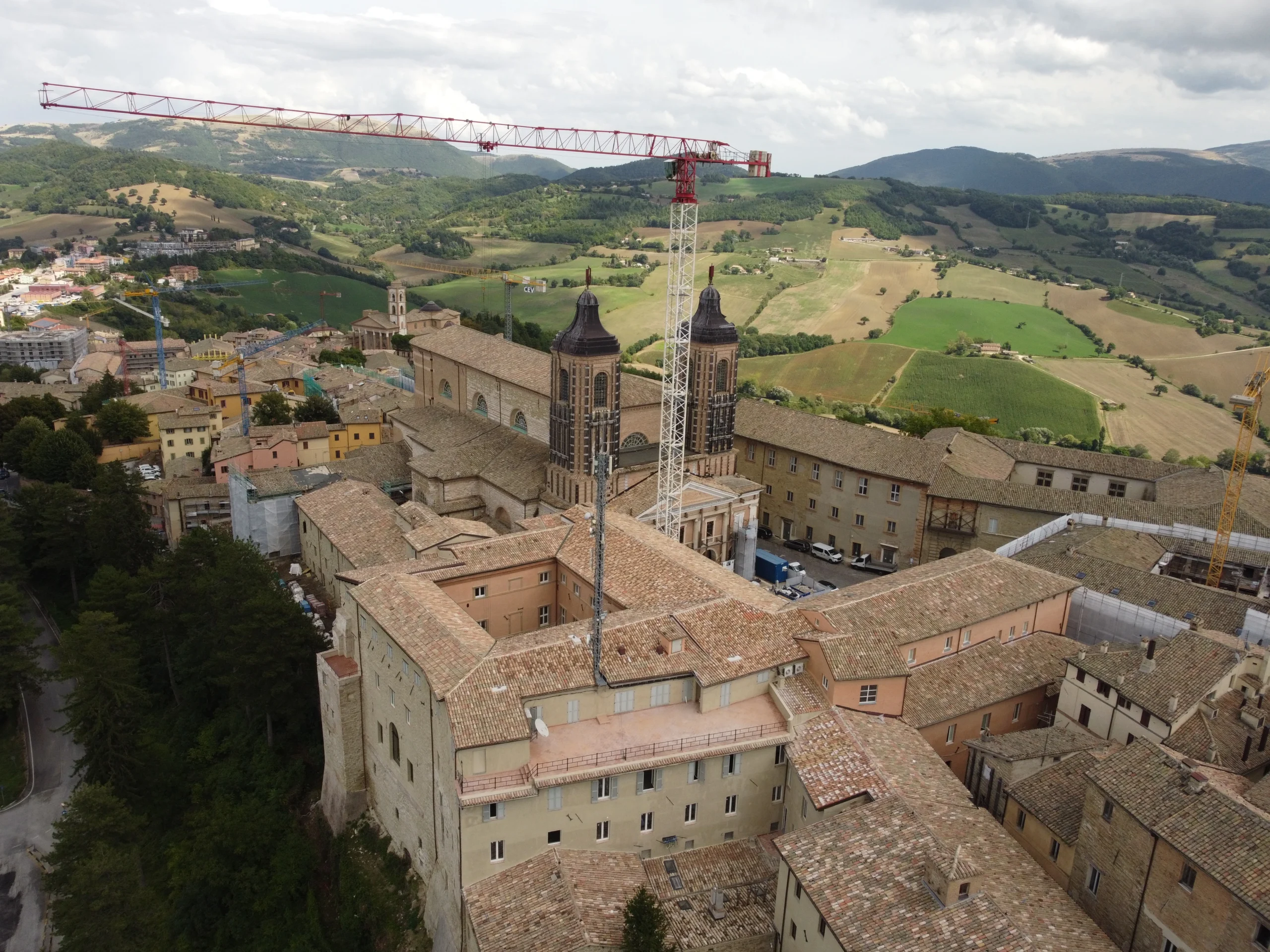
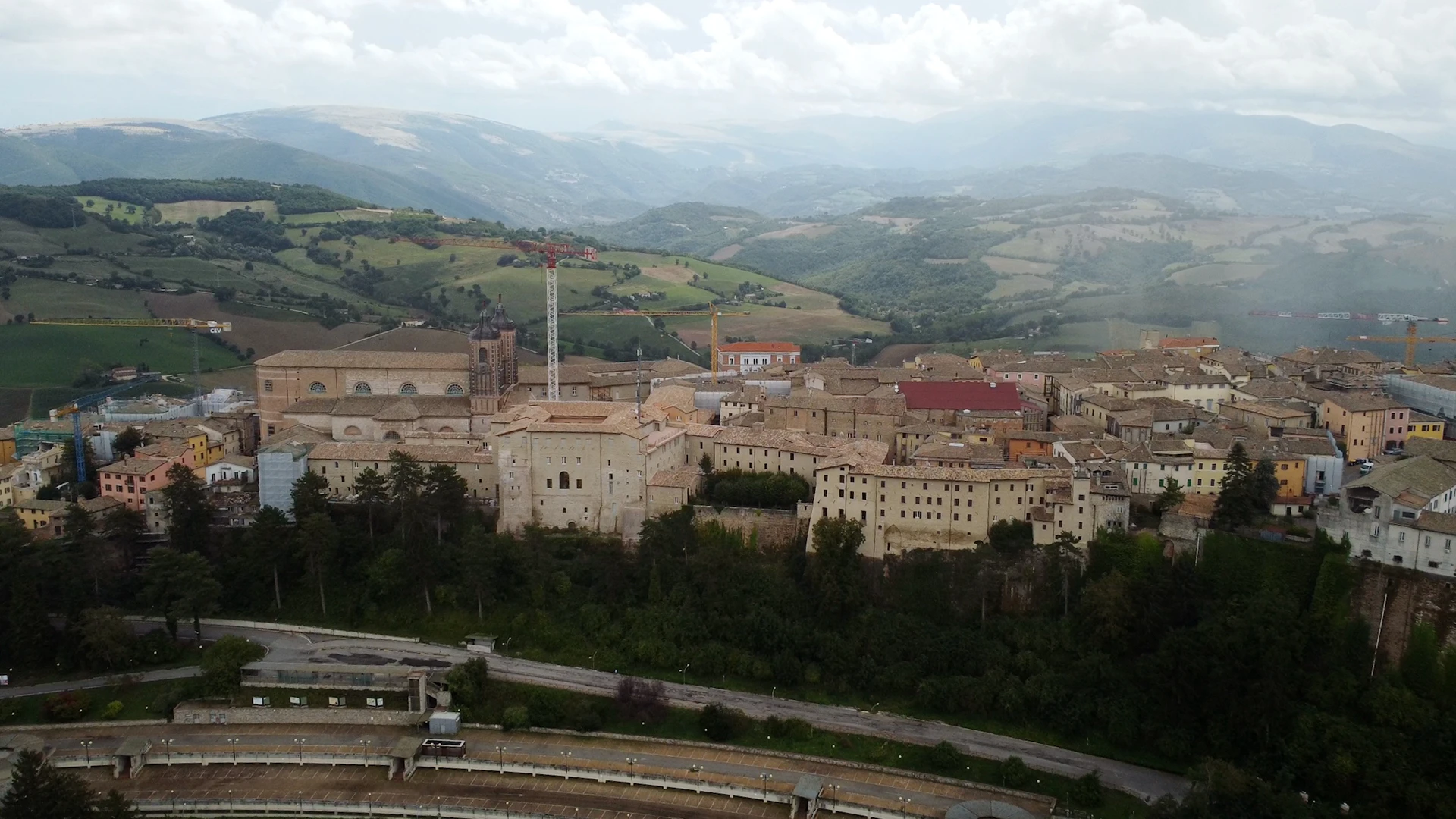
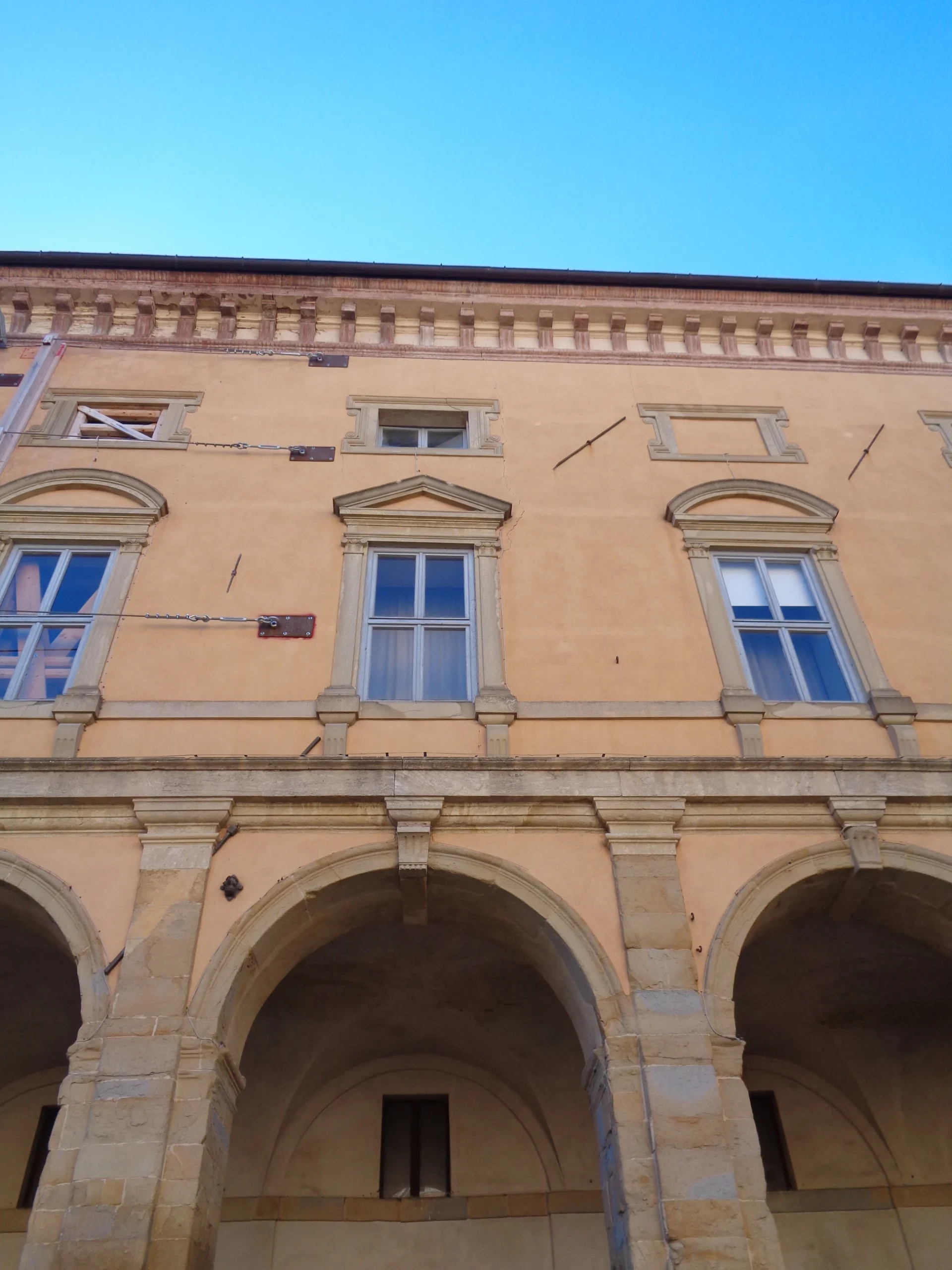
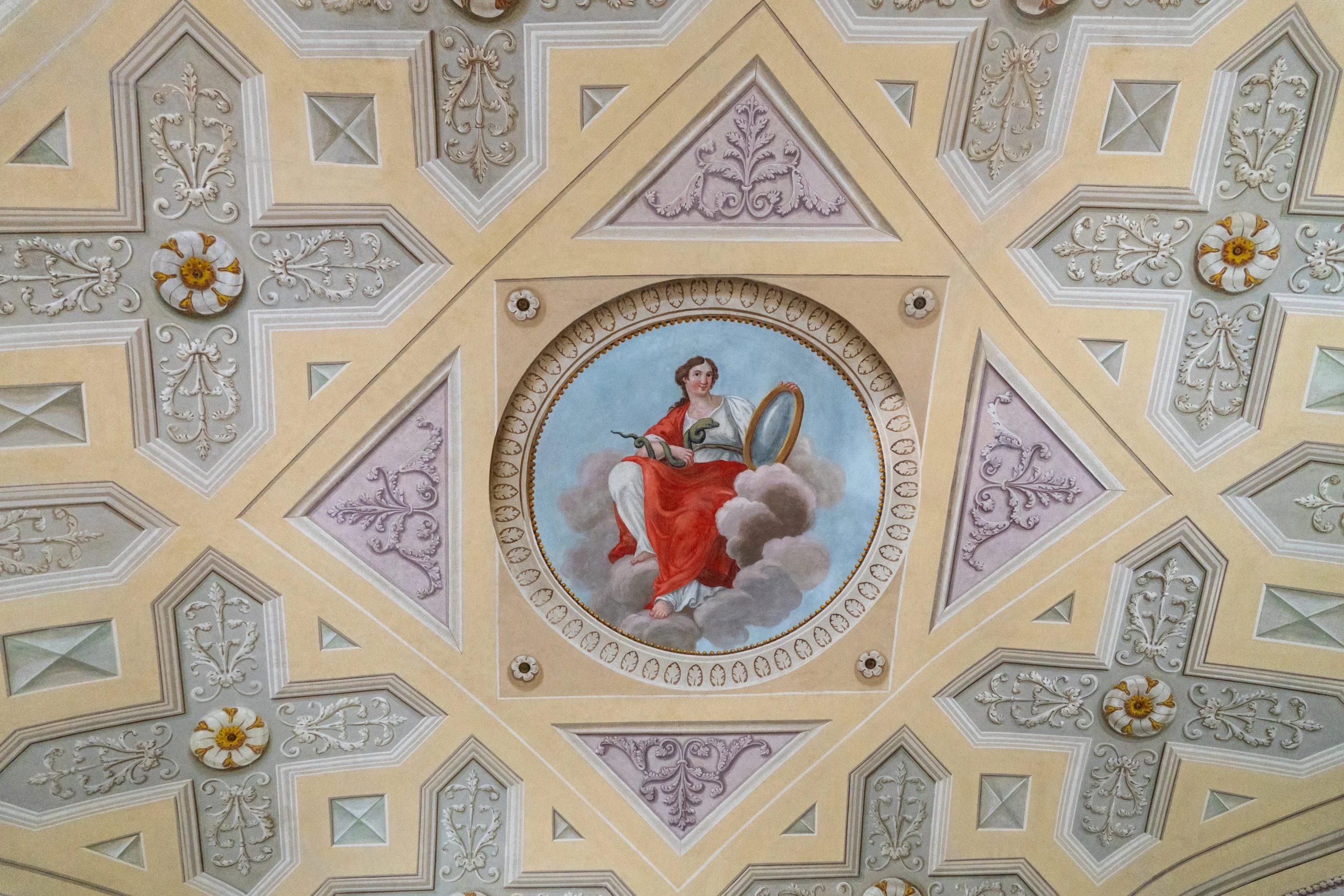
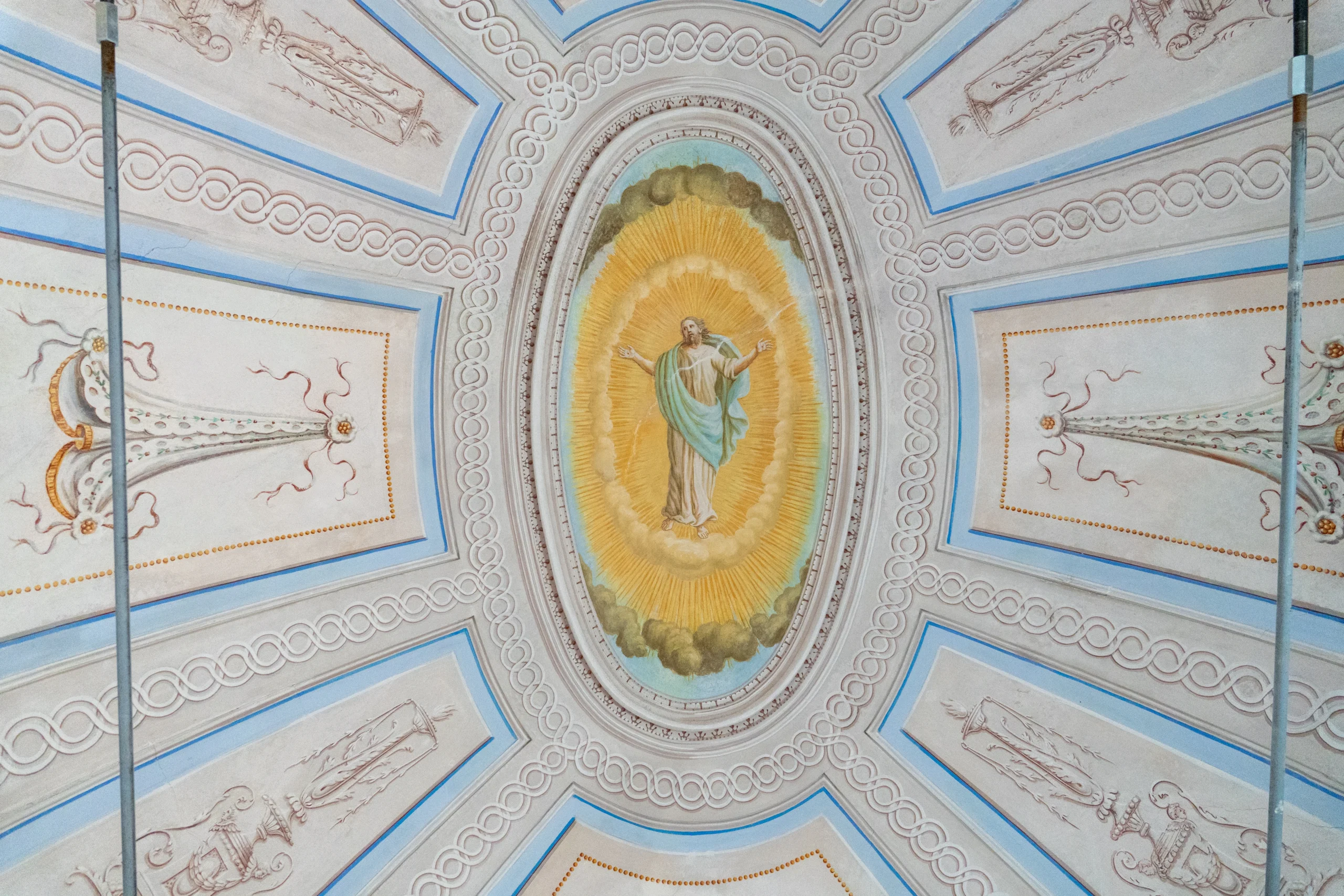
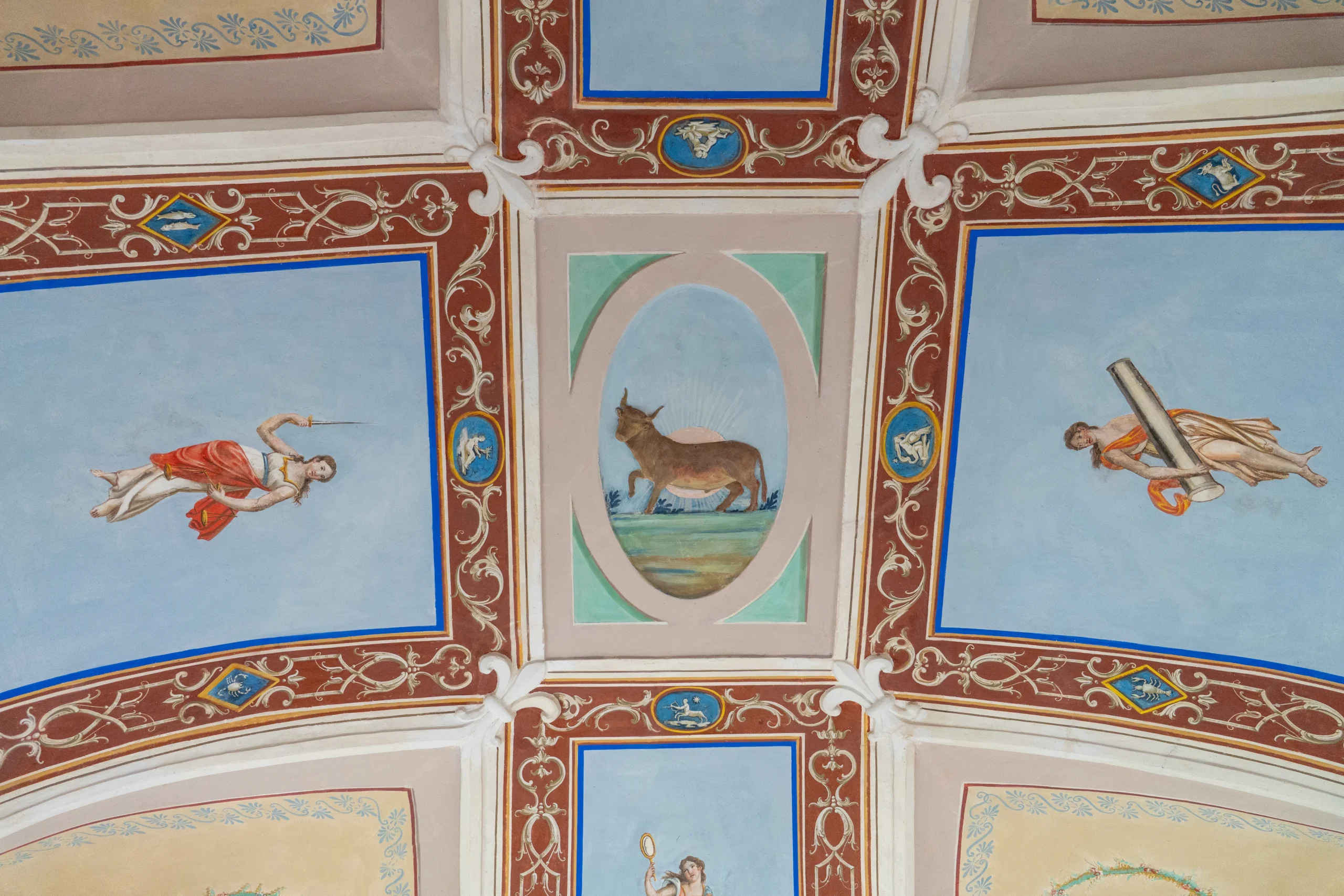
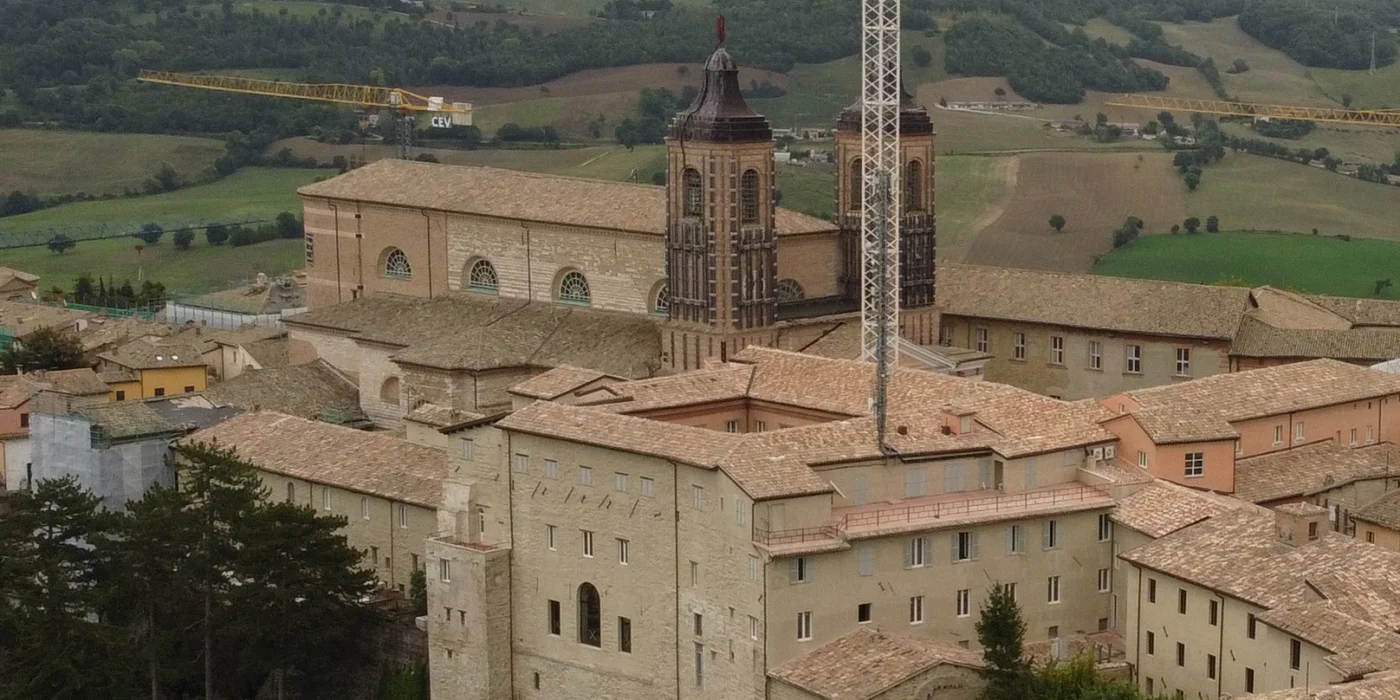
The restoration of the Archbishop’s Palace in Camerino requires a unified interpretation of the building as an architectural organism, not a sum of separate interventions. Overlooking Piazza Cavour and adjoining the ancient city walls, the palace is one of the most complex architectural aggregates in Camerino’s historic center. Its current configuration is the result of a long process of construction layering, where medieval structures, Renaissance reworkings, and 19th-century transformations coexist.
The intervention developed by ENGLOBE falls within the framework of post-earthquake reconstruction in Central Italy, governed by Law Decree 189/2016 and the related Special Commissioner’s Orders. The main technical challenge is to restore the usability and operational capacity of a protected building, in compliance with Legislative Decree 42/2004, without compromising the documentary value of its historical layers.
According to ENGLOBE’s technical team, the Archbishop’s Palace was not treated as a simple container to be consolidated, but as a complex historic system in which structure, material fabric, internal layout, and functions must be managed through a single coordinated design strategy.
Architectural Restoration and Conservation of Historic Materials
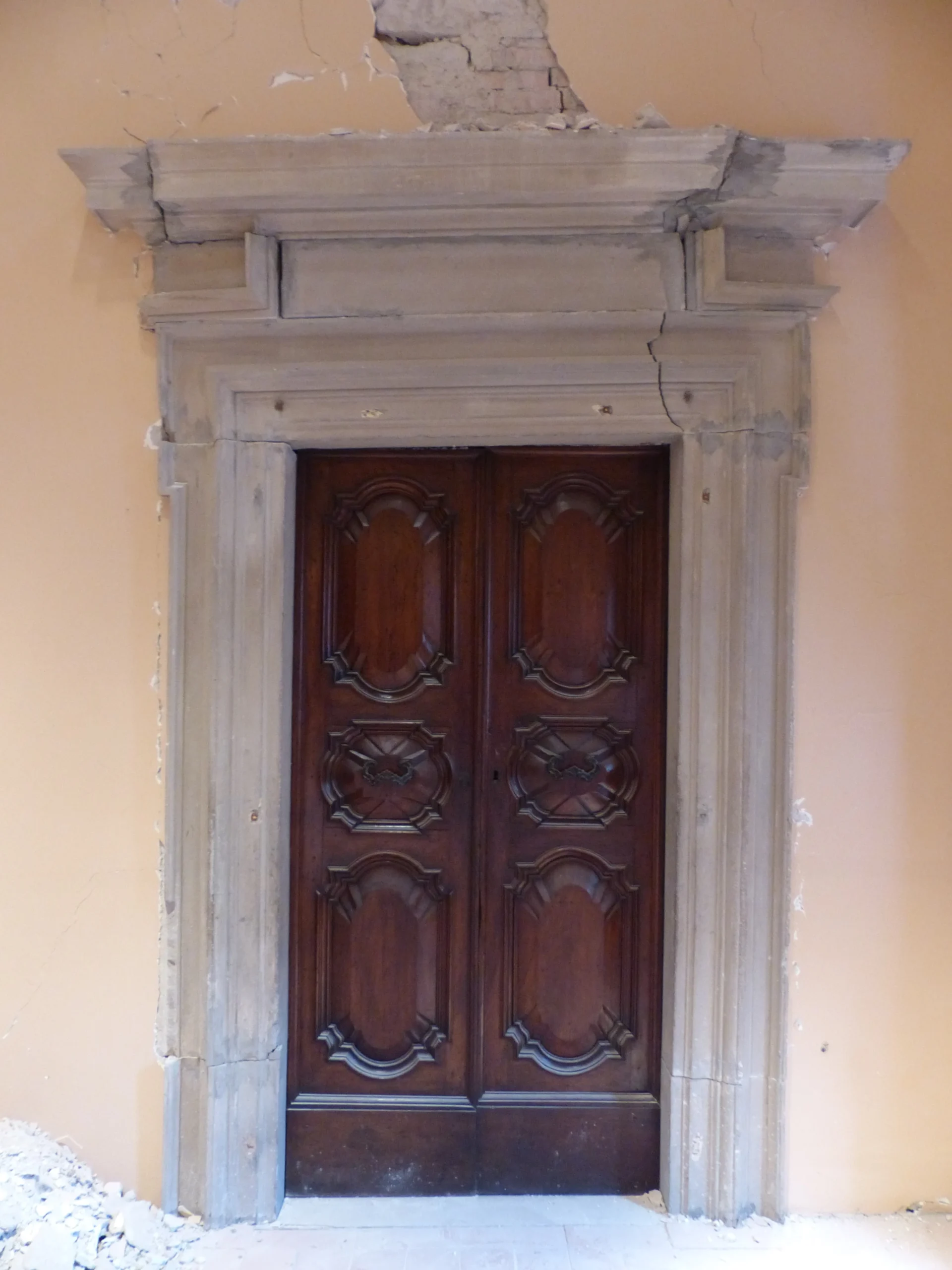
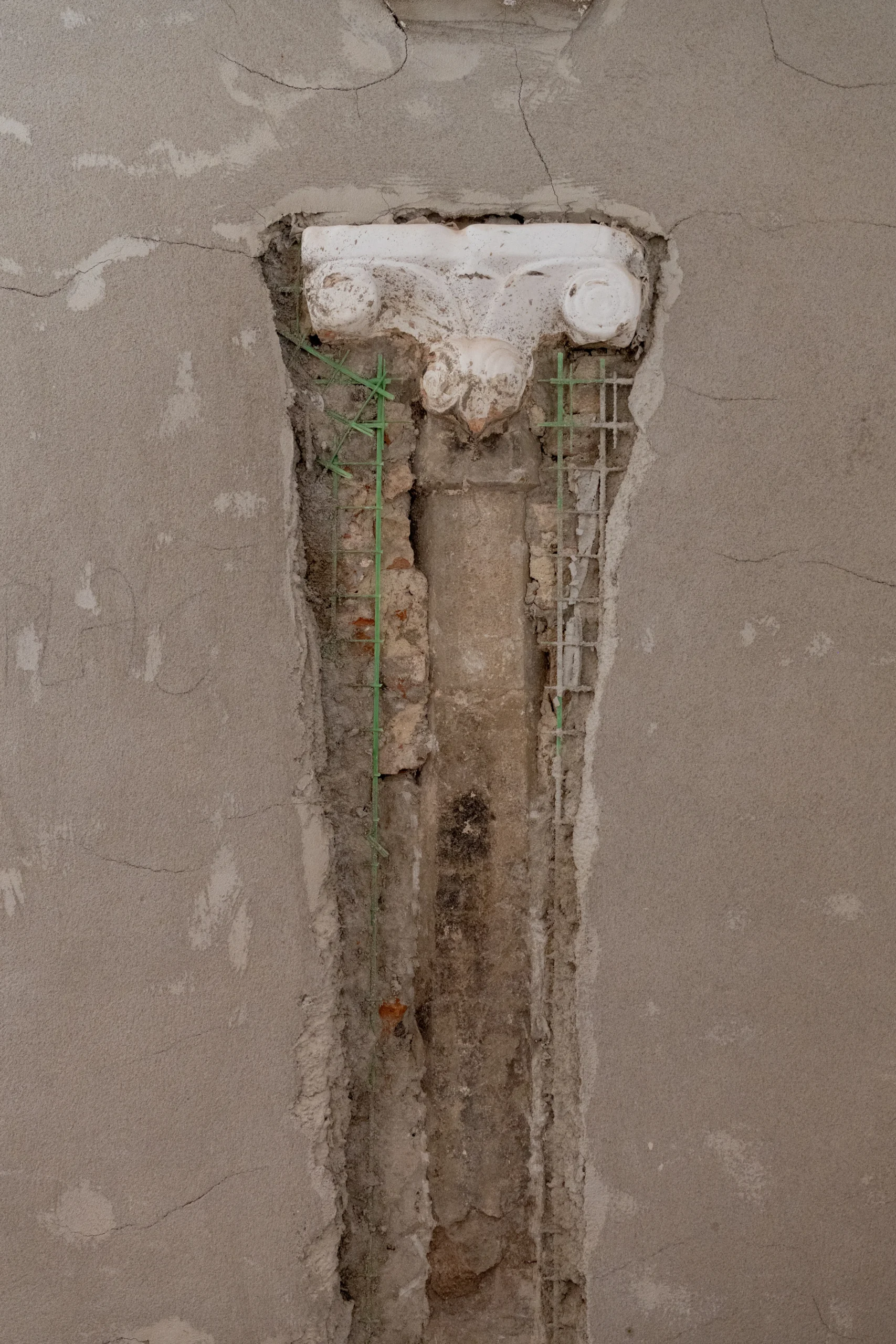
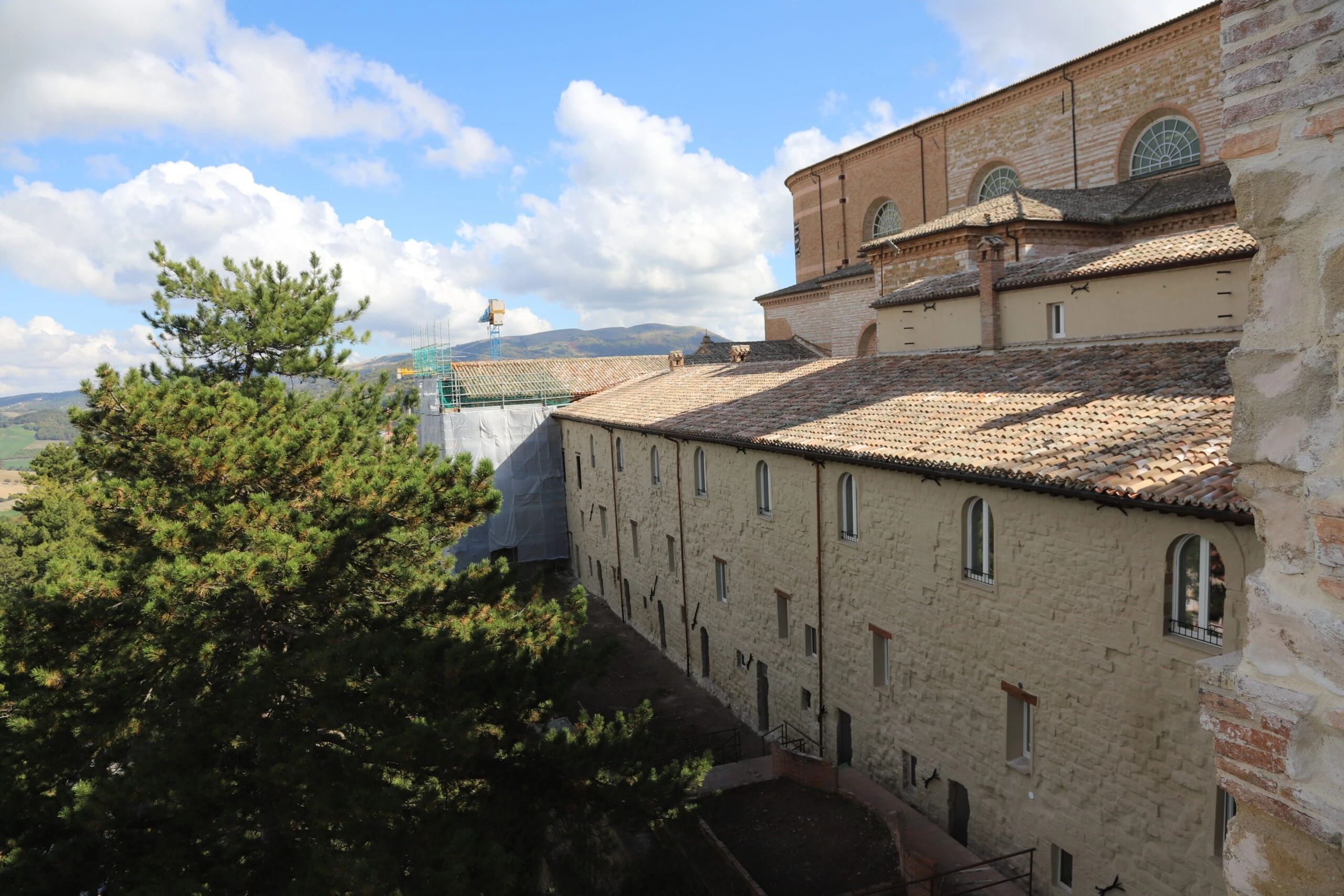
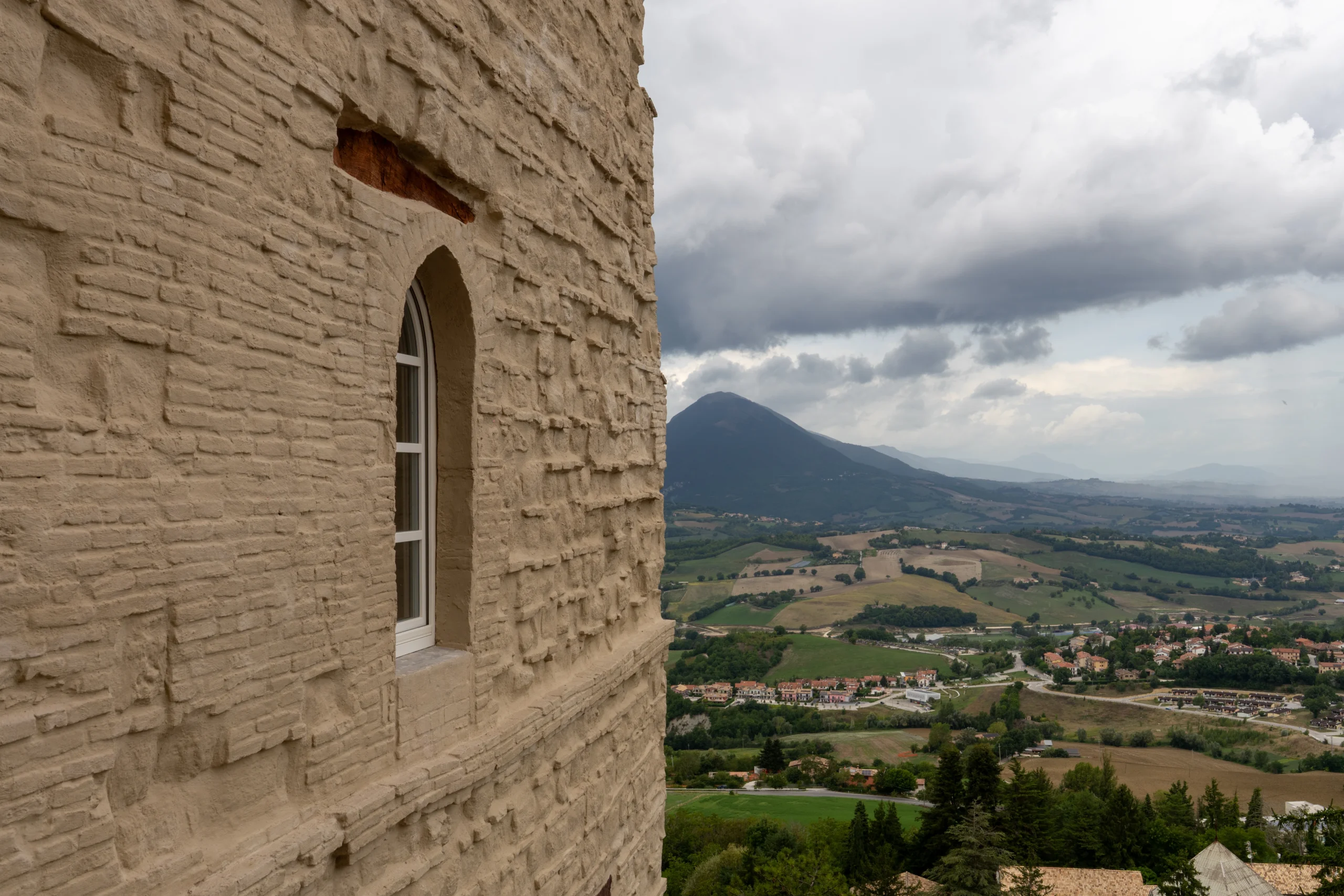
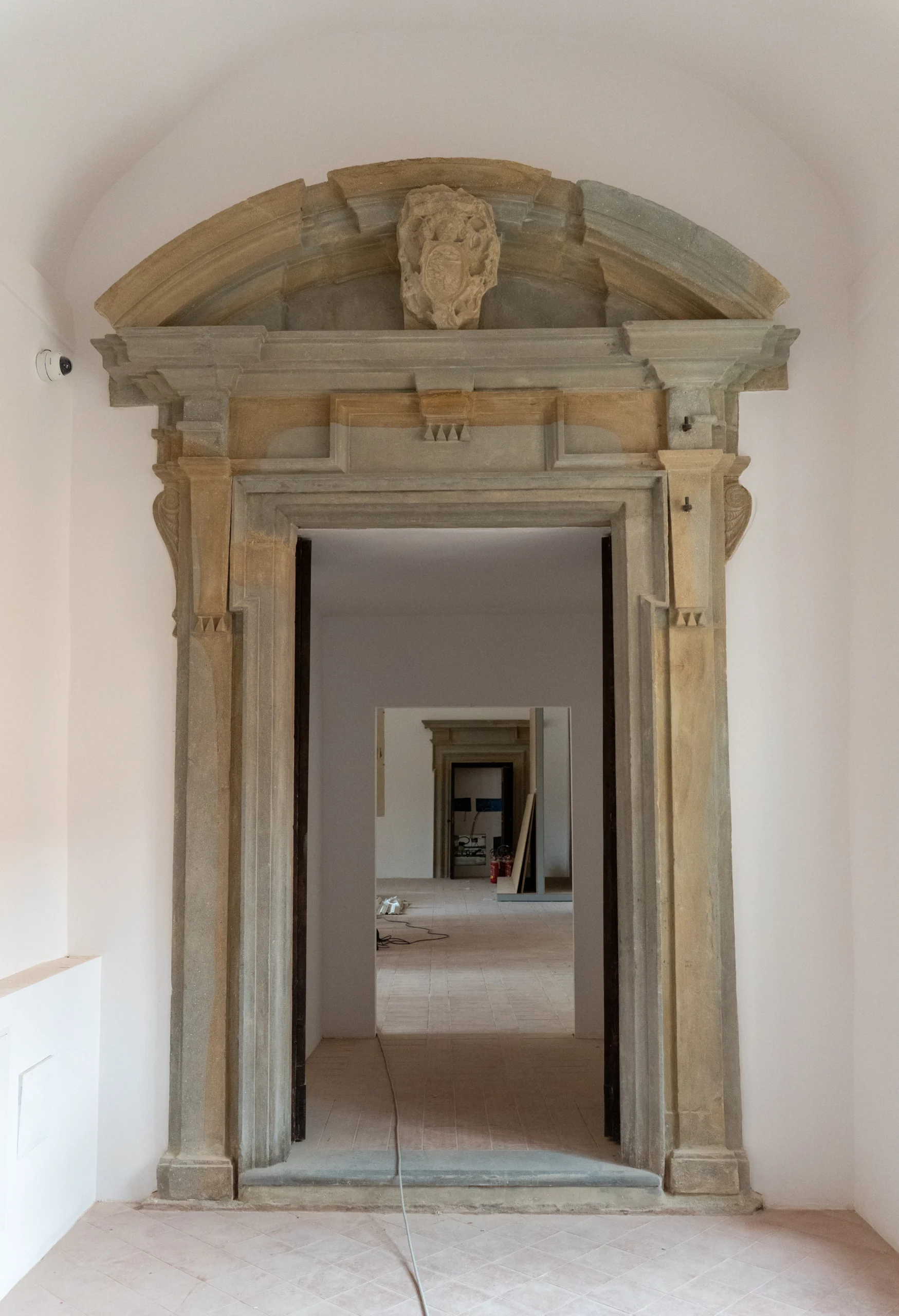
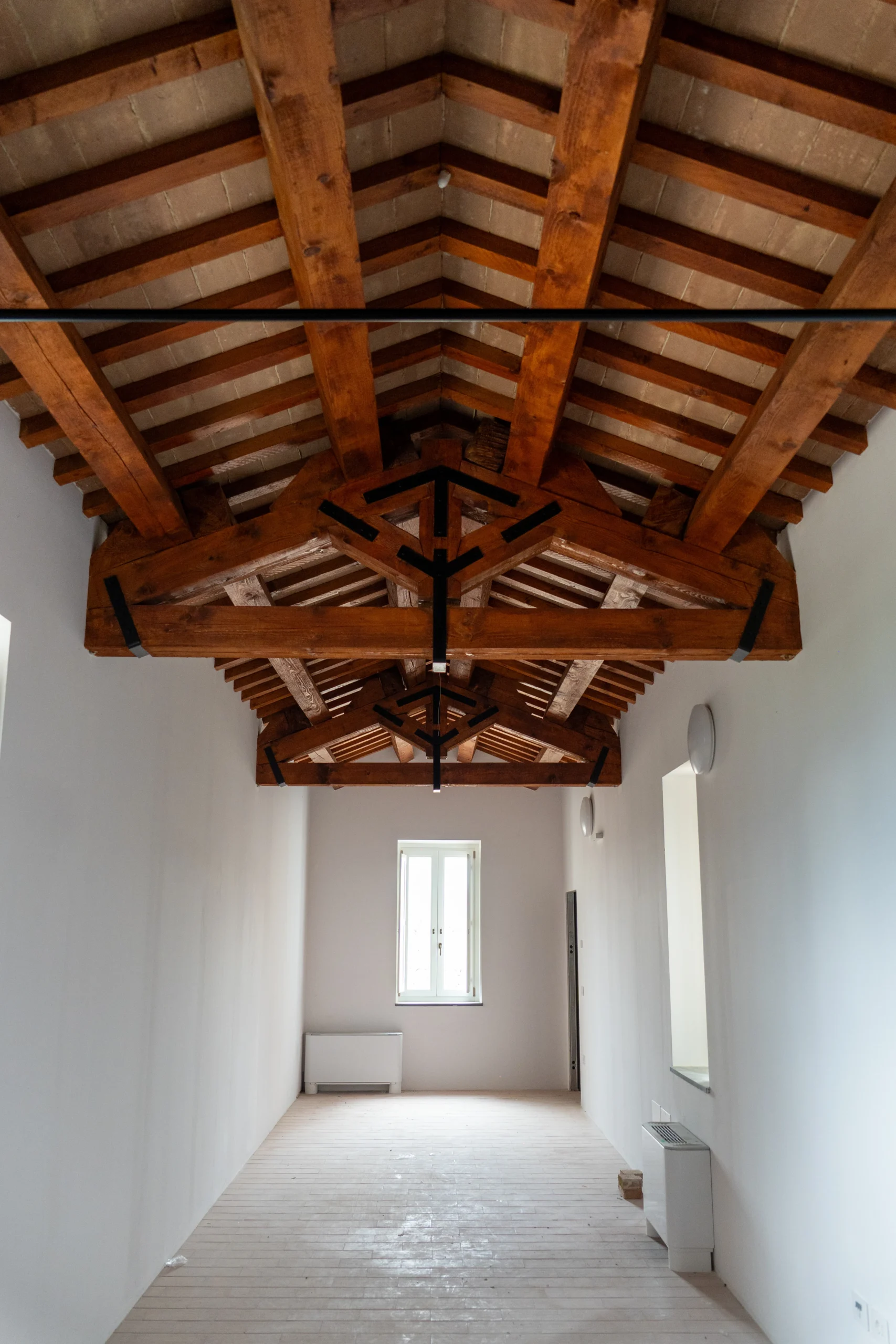
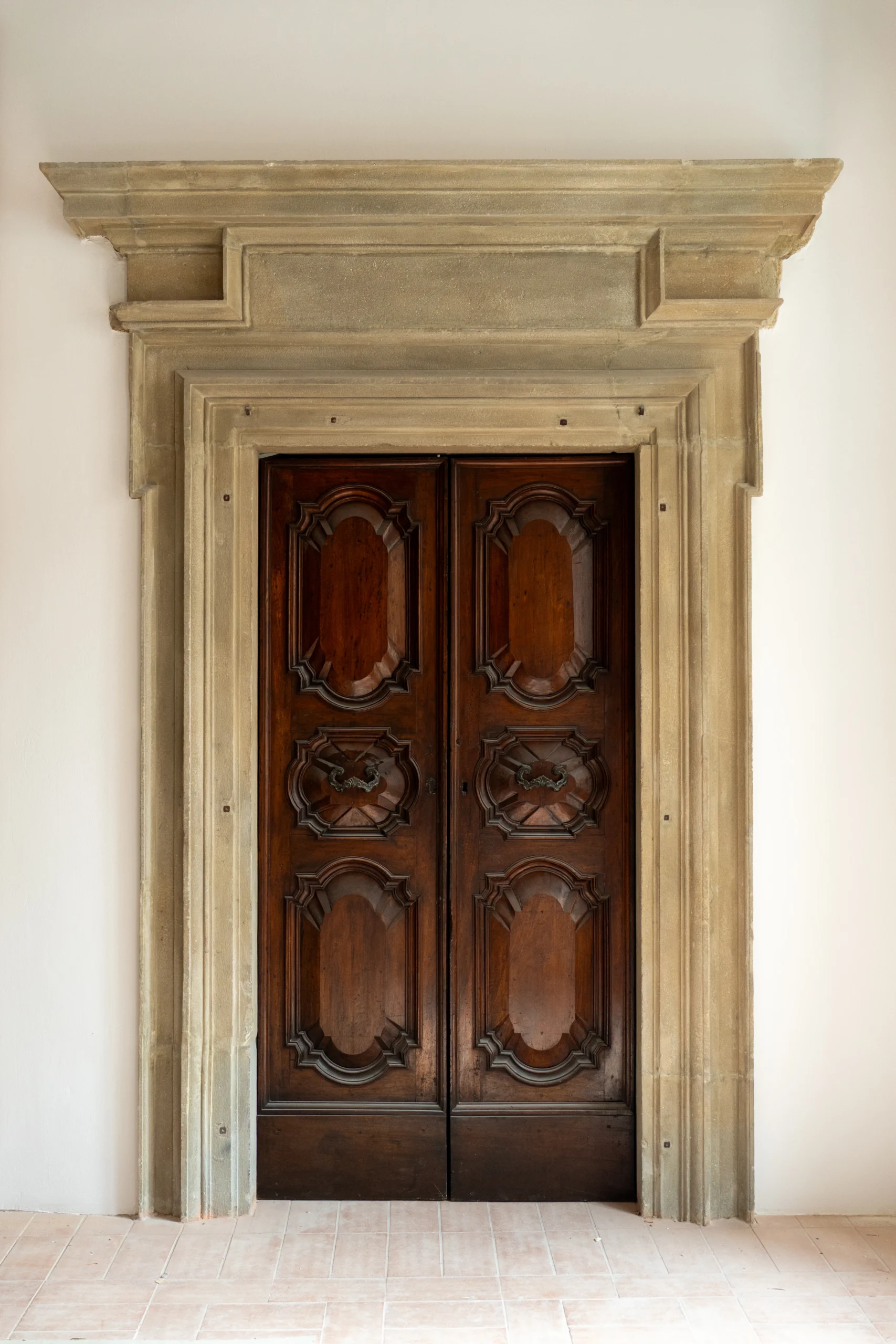
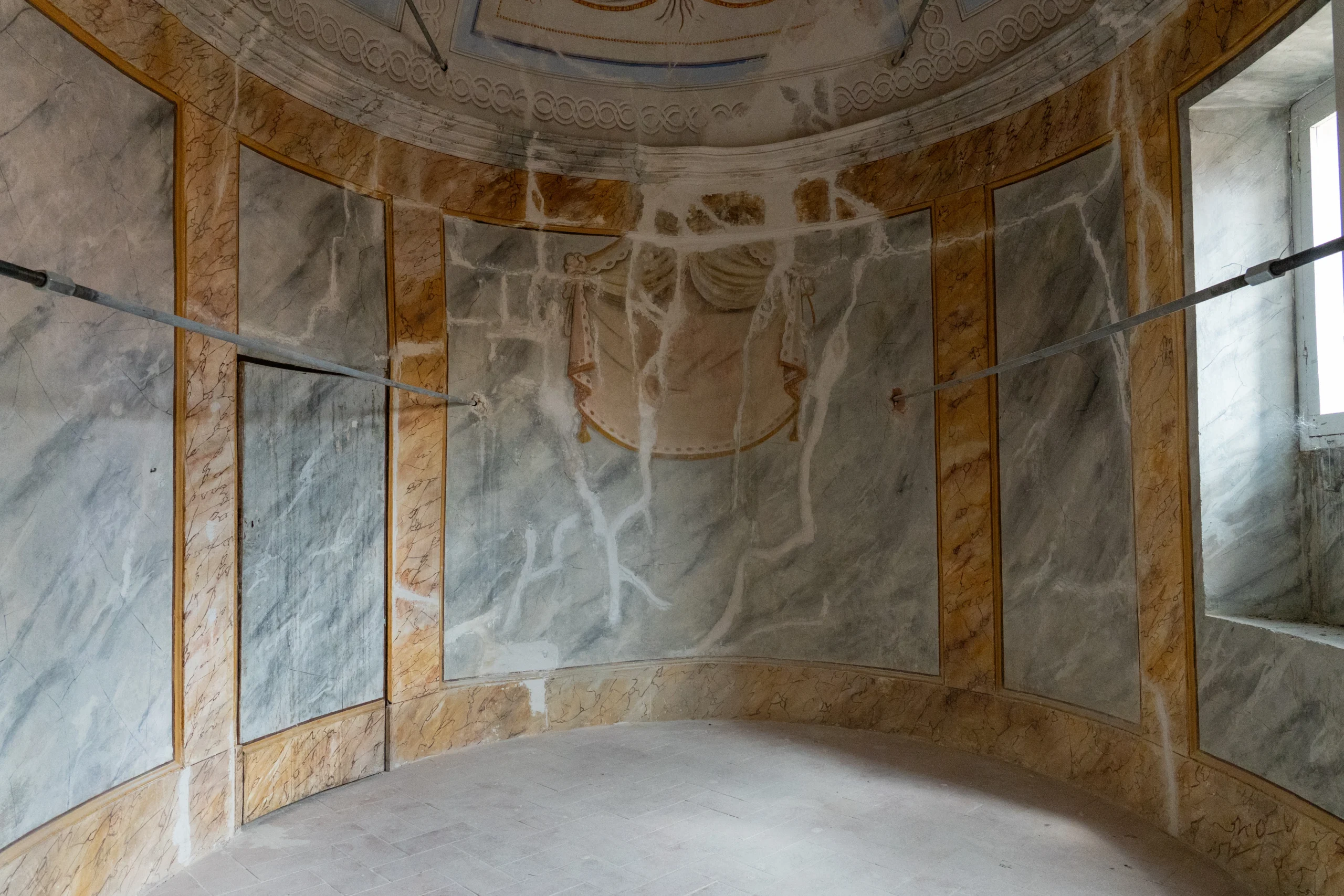
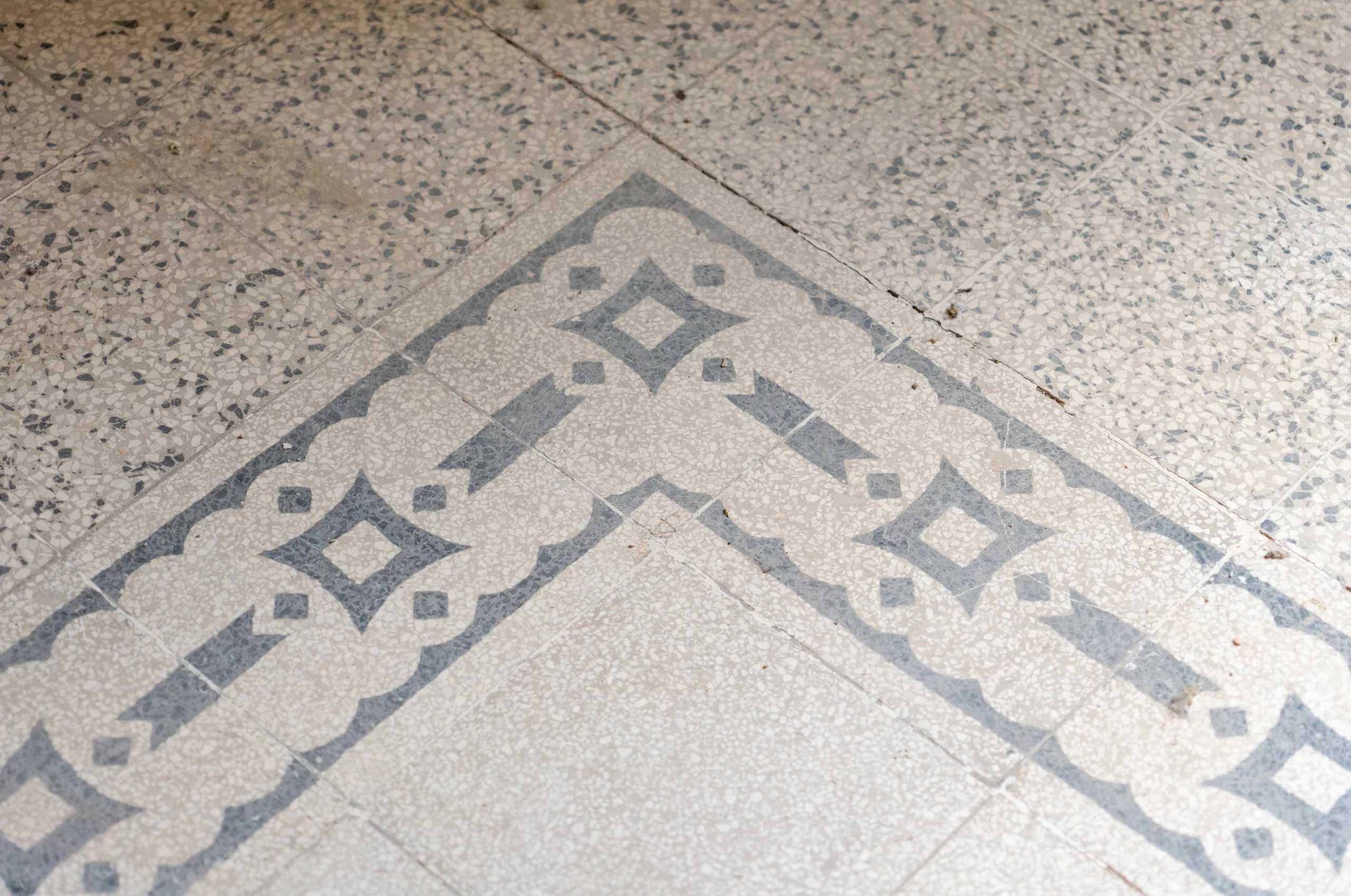
The historic material fabric becomes the primary parameter of the project. The façades in sandstone, brick, and limestone were restored through interventions compatible with the original characteristics of the building, aimed at recovering the readability of the surfaces without introducing incongruous formal or material alterations.
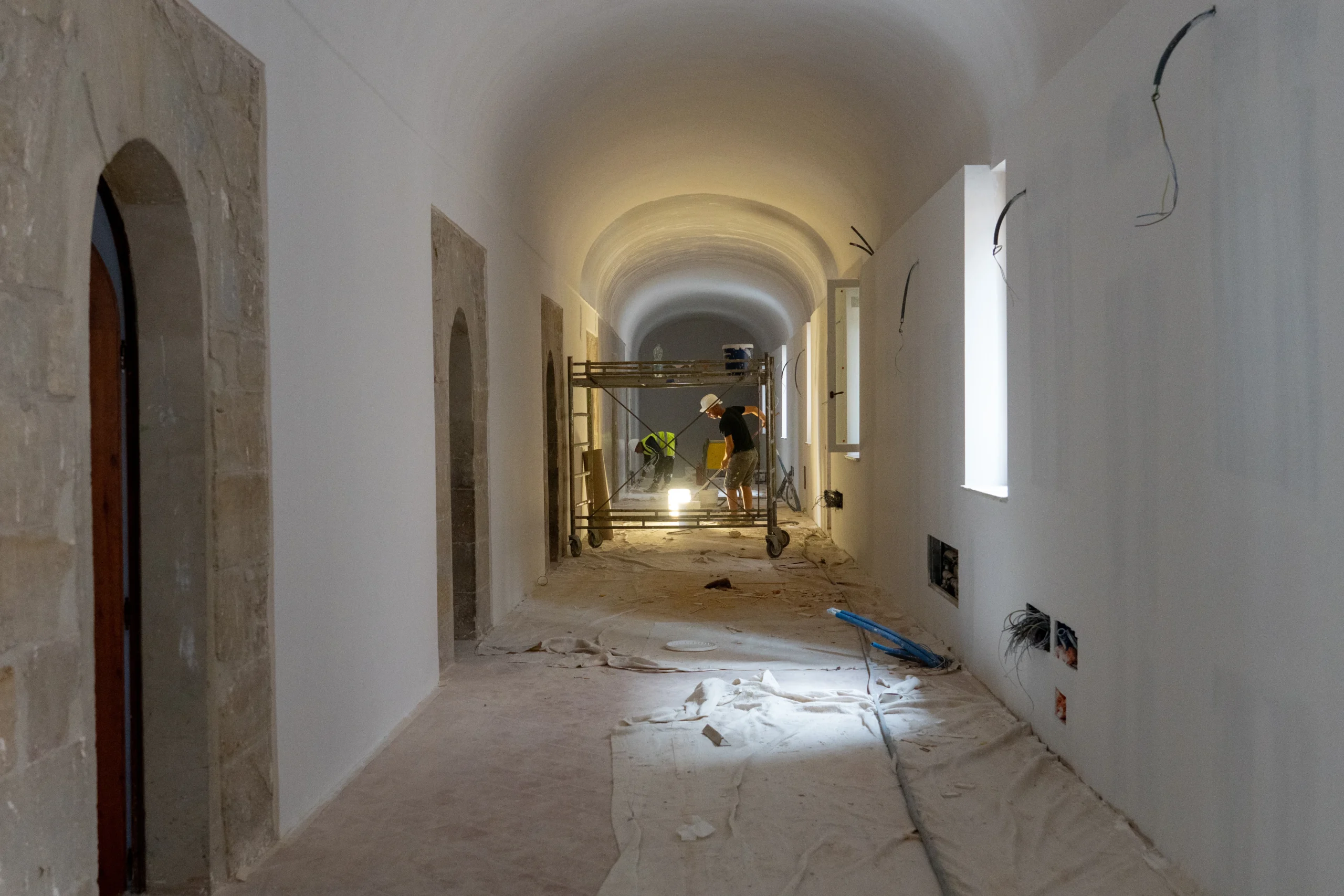
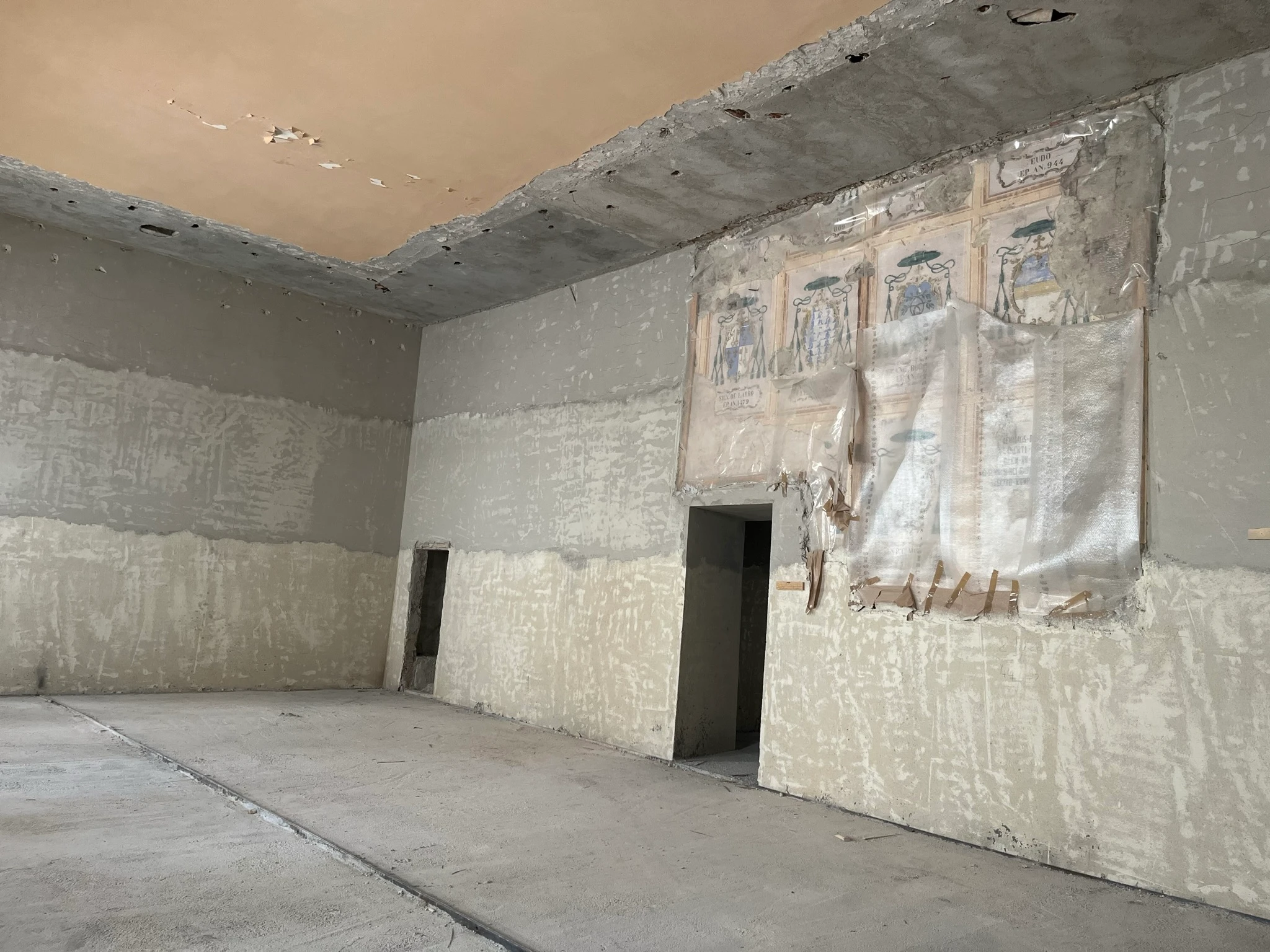
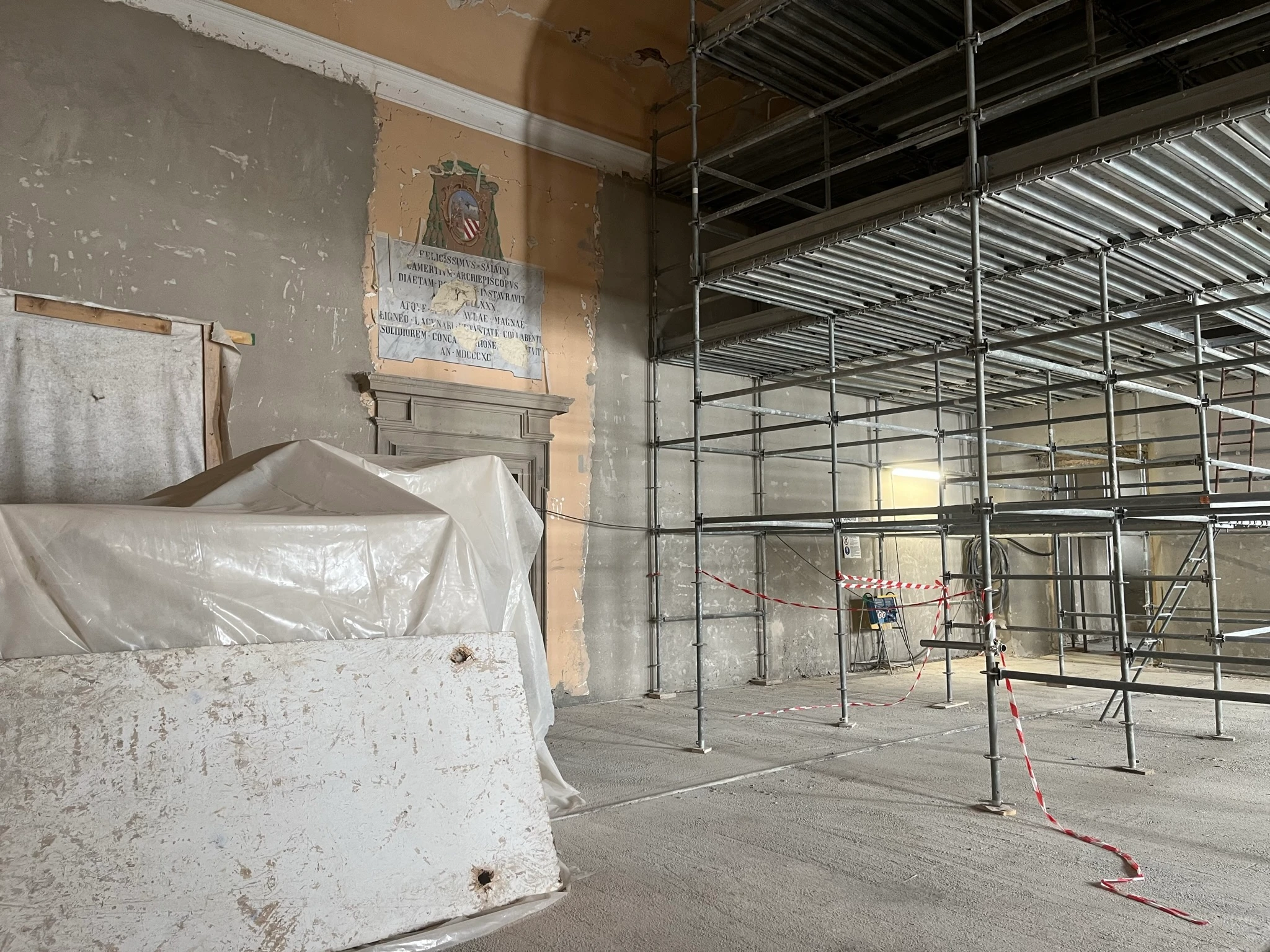
The project clearly distinguishes between elements to be preserved, incompatible additions to be removed, and components to be integrated. The internal layout is preserved in its general configuration, maintaining the spatial relationships between ecclesiastical, museum, residential, and administrative areas.
Seismic Improvement Compatible with Heritage Constraints
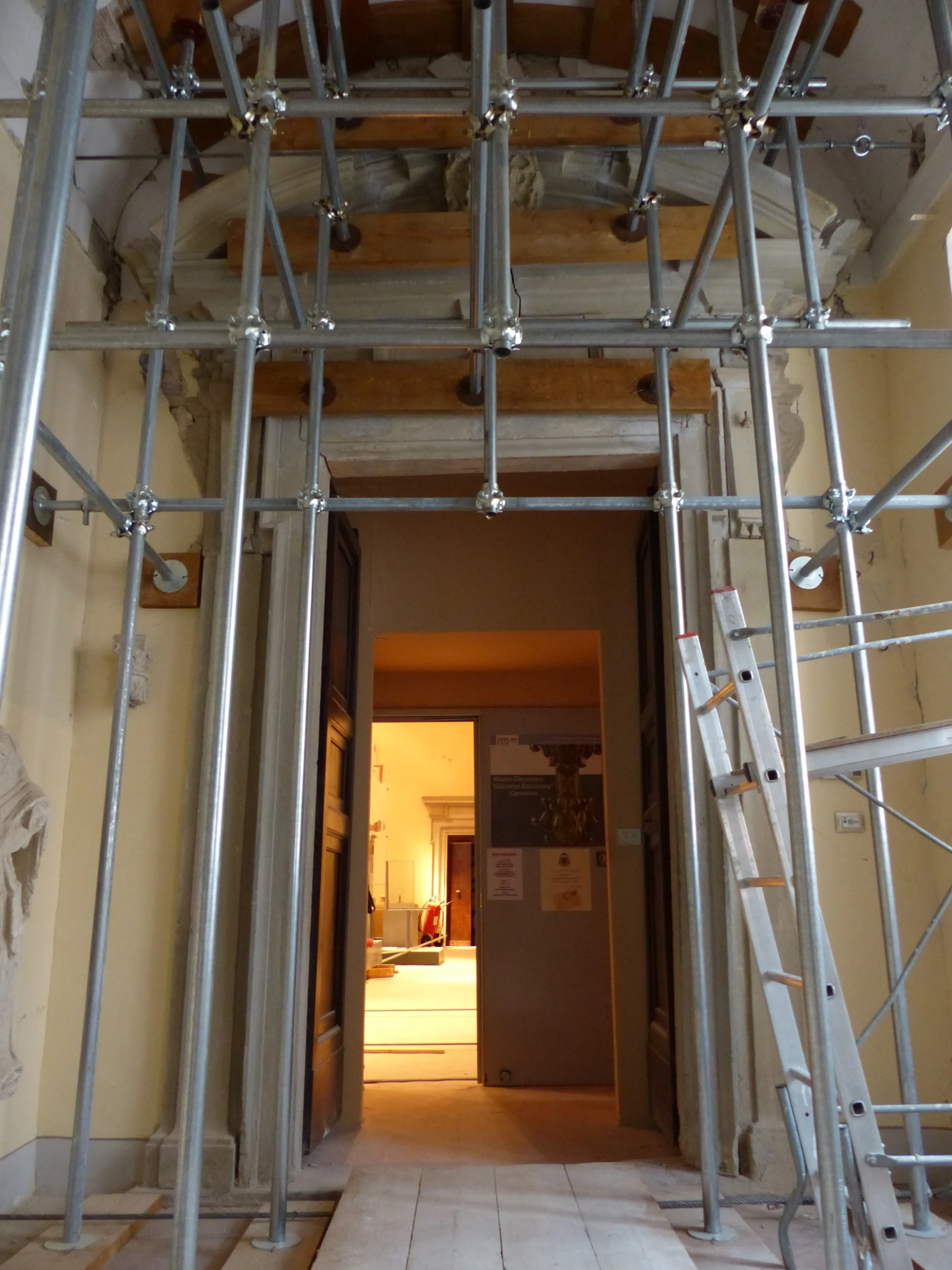
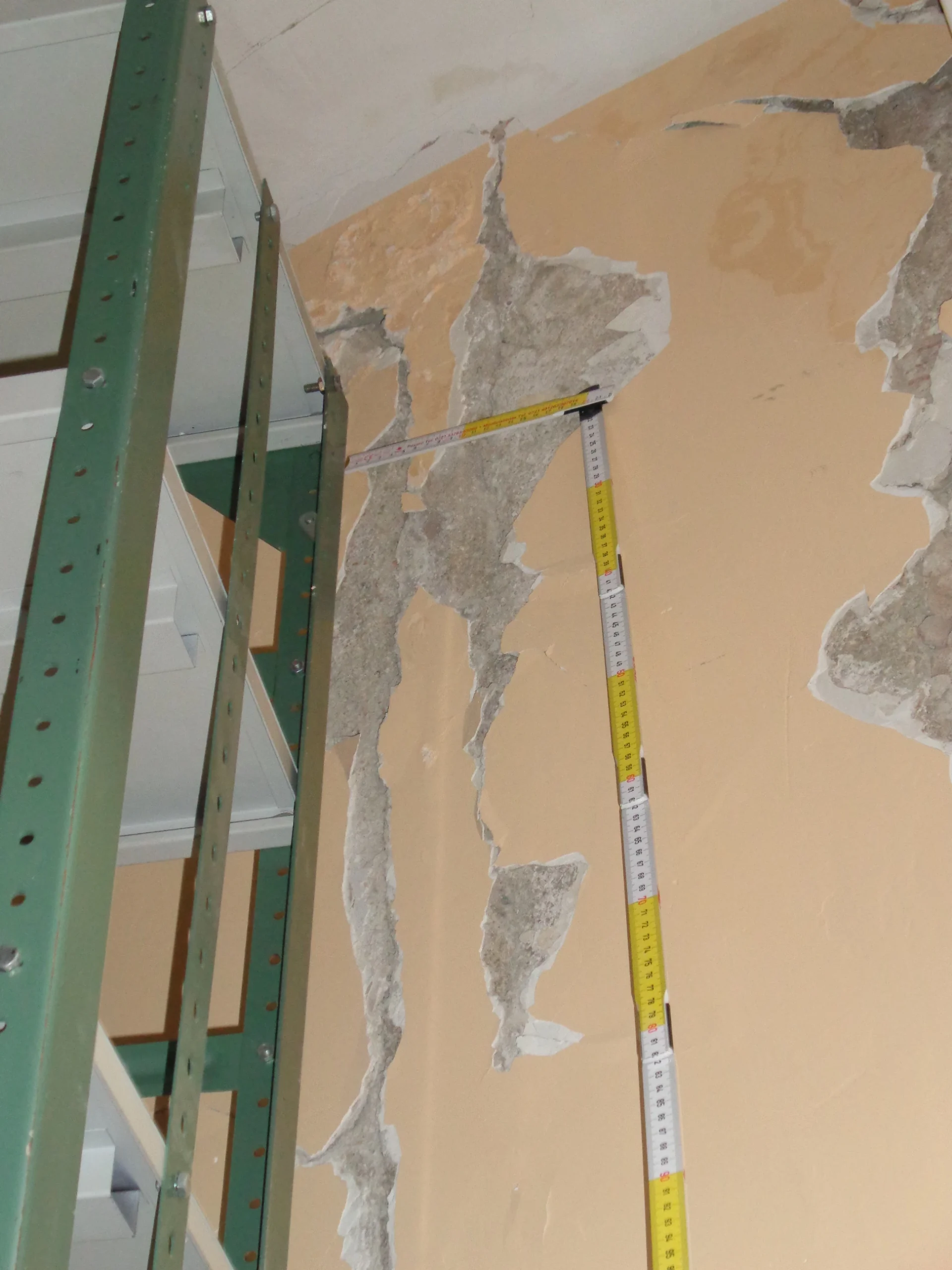
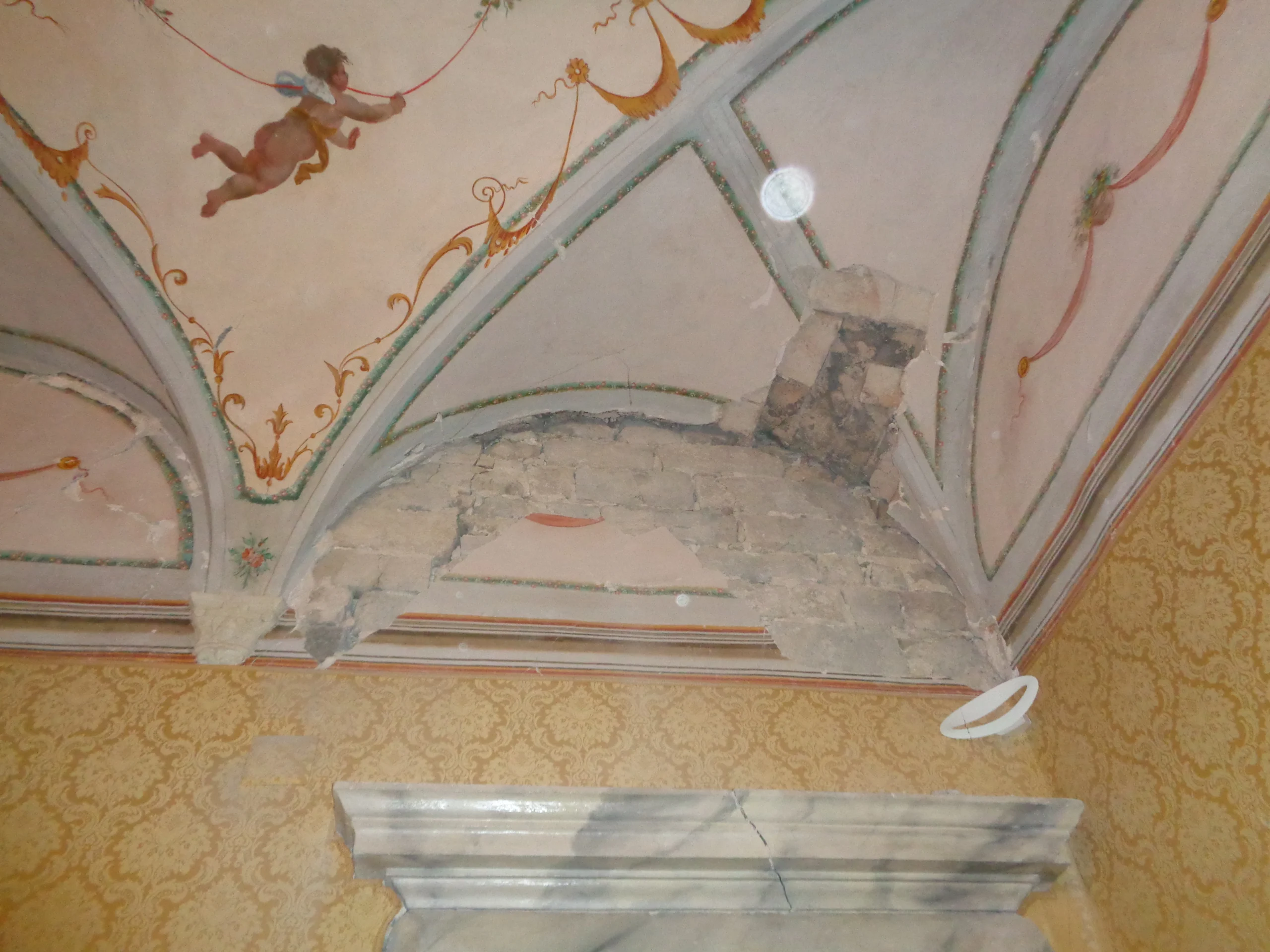
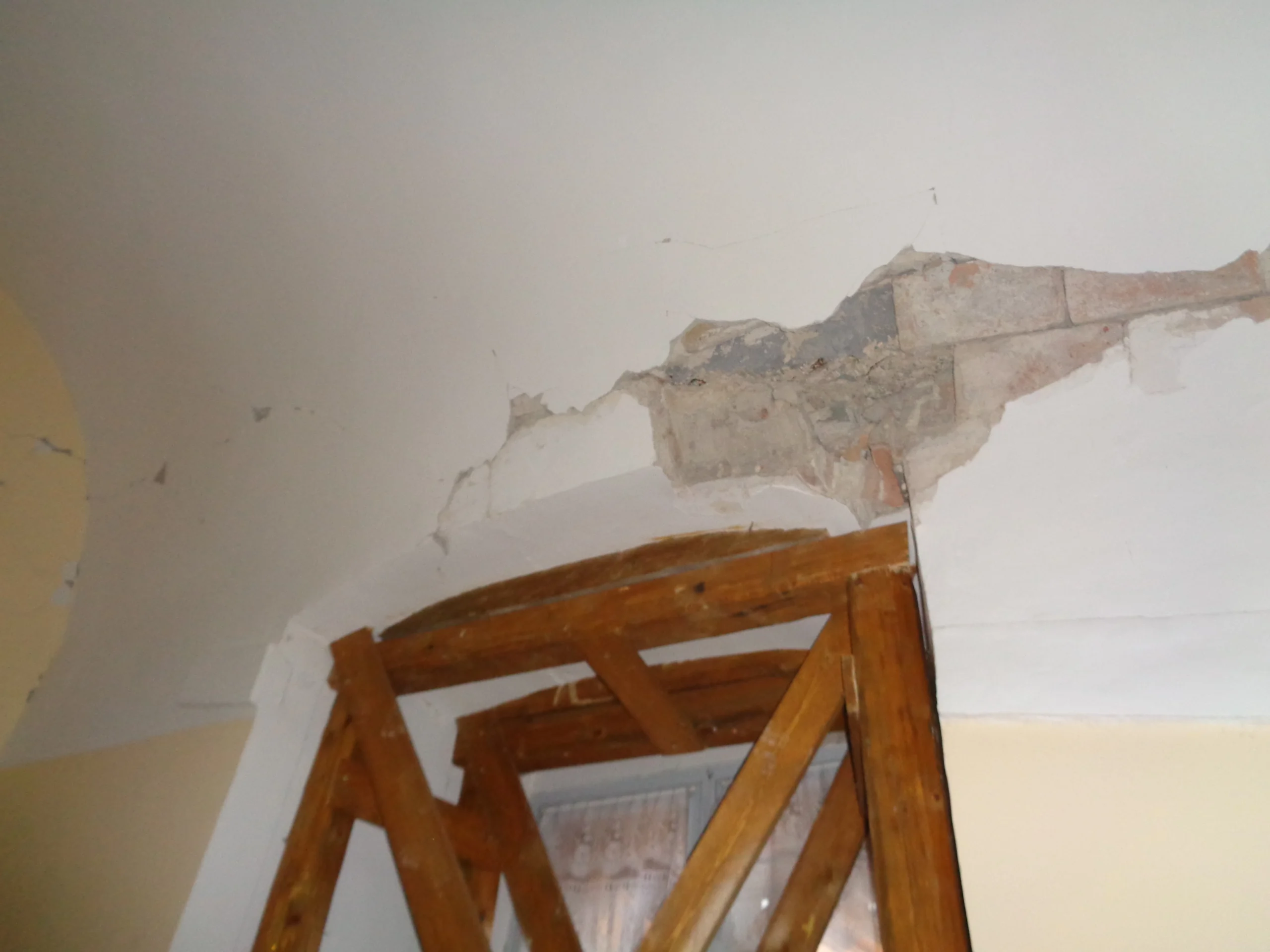
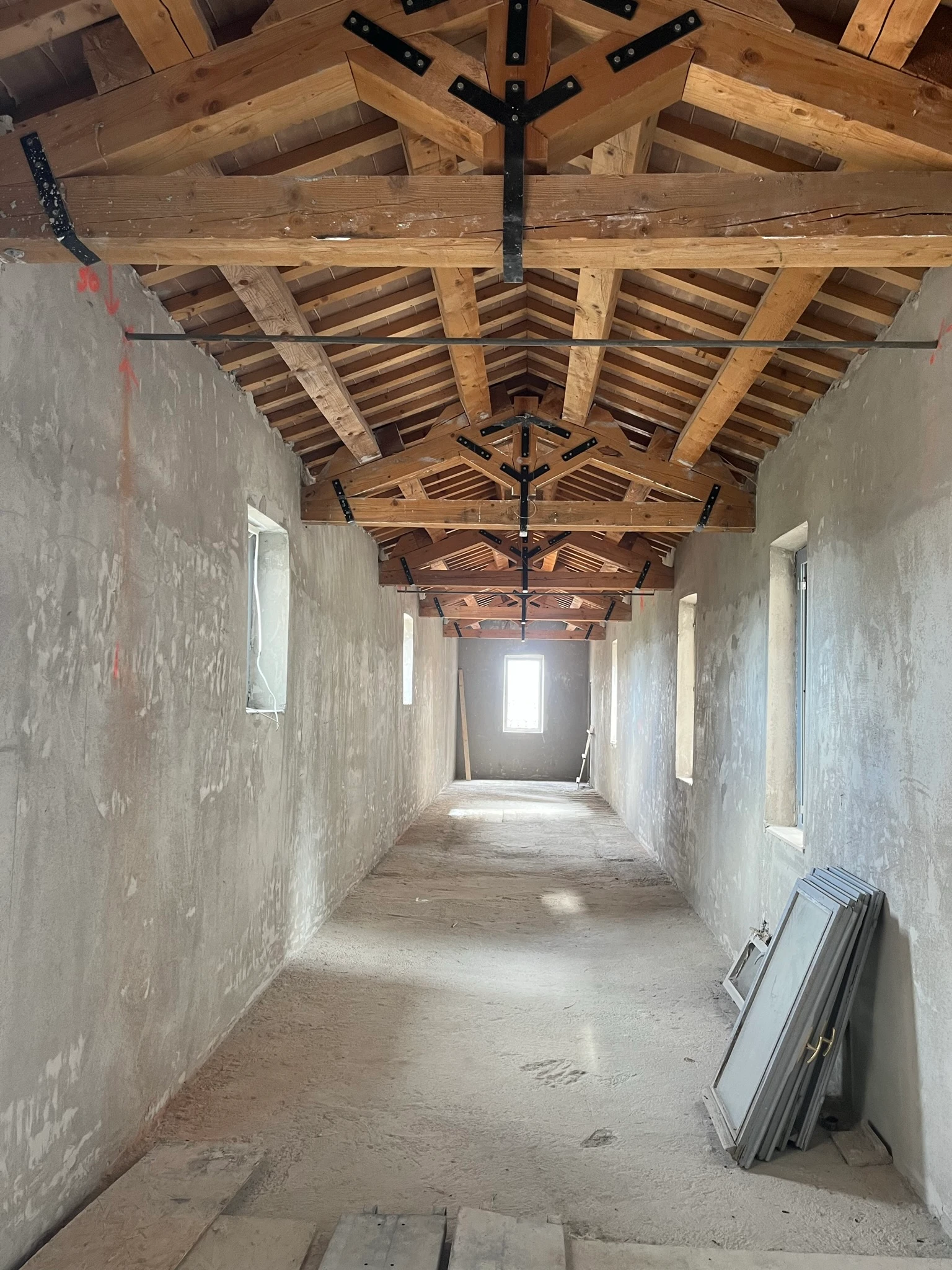
The seismic improvement strategy was conceived as a compatible, selective intervention coordinated with architectural conservation. In compliance with NTC 2018 – Ministerial Decree of January 17, 2018 and Circular No. 7/2019, the project addresses the vulnerabilities of the architectural aggregate through masonry consolidation, reinforcement of the most fragile elements, and improvement of the connections between the different building volumes.
The objective is not to erase the historic complexity of the building, but to increase structural safety while maintaining reversibility, material compatibility, and the recognizability of the original layout.
Reversible Energy Upgrading on a Protected Historic Envelope
Energy performance is improved from the inside, without intervening on the historic exterior surfaces. The solution includes dry-installed insulated internal linings with STIFERITE panels, designed to improve the hygrothermal comfort of the rooms and reduce energy consumption while maintaining reversibility and compatibility with the heritage constraint.
This strategy makes it possible to reconcile monument protection with performance upgrading, avoiding invasive interventions on the exterior envelope.
Integrated Restoration as a Design Method for Complex Historic Buildings
The value of the project lies in its ability to bring together conservation, safety, and efficiency within a single technical strategy. As analyzed by ENGLOBE engineers, the recovery of the Archbishop’s Palace demonstrates that earthquake-damaged historic buildings can be returned to the city only through a multidisciplinary process based on knowledge, coordination, and the compatibility of interventions.
The result is not only the physical recovery of a monumental building, but the reactivation of a cultural and civic landmark in the heart of Camerino: an architectural work restored to its public function, its construction memory, and the continuity of urban life.
Why can the Archbishop’s Palace in Camerino be described as “architecture built over other architecture”?
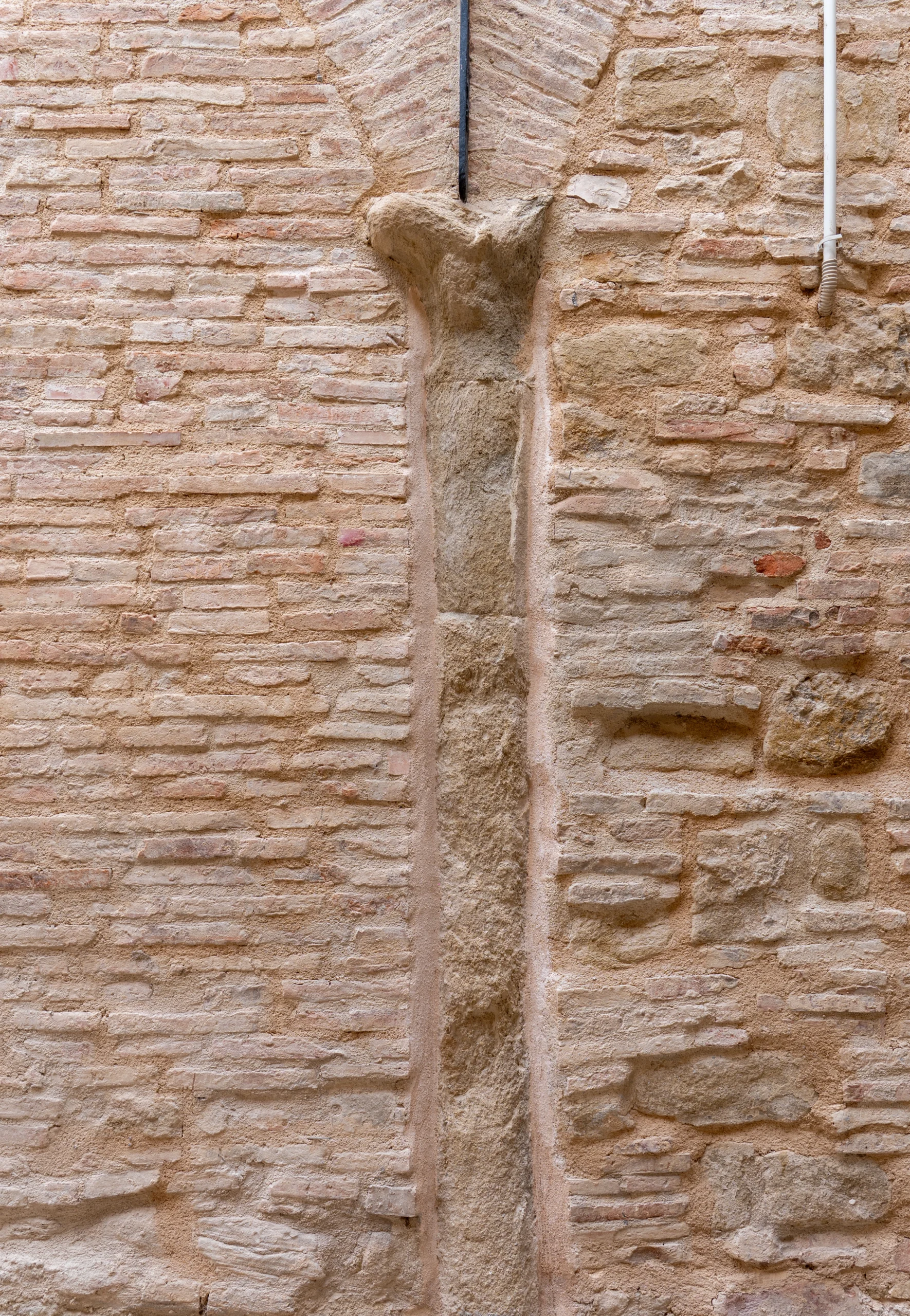
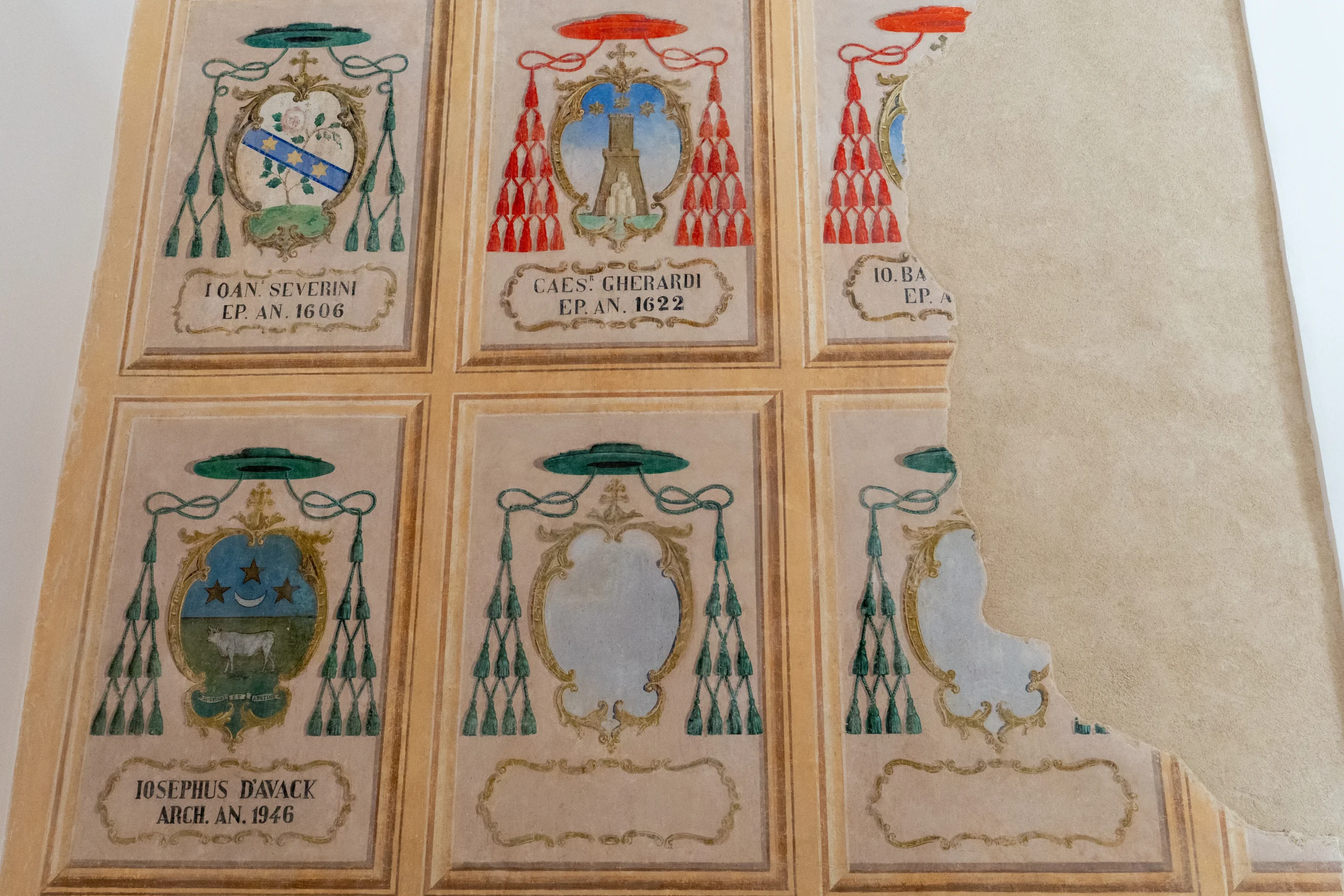
The Archbishop’s Palace stands above a section of the ancient city walls and on pre-existing medieval buildings, still visible in the basement level. Its origins date back to 1571, when Bishop Berardo Bongiovanni began construction after exchanging the former bishop’s palace for two buildings on the square: Palazzo del Bargello and Palazzo dei Priori. Each layer tells a different chapter in the city’s history, making the palace not simply a historic building, but a built fragment of Camerino’s collective memory.
What cultural treasure does the Archbishop’s Palace preserve today?
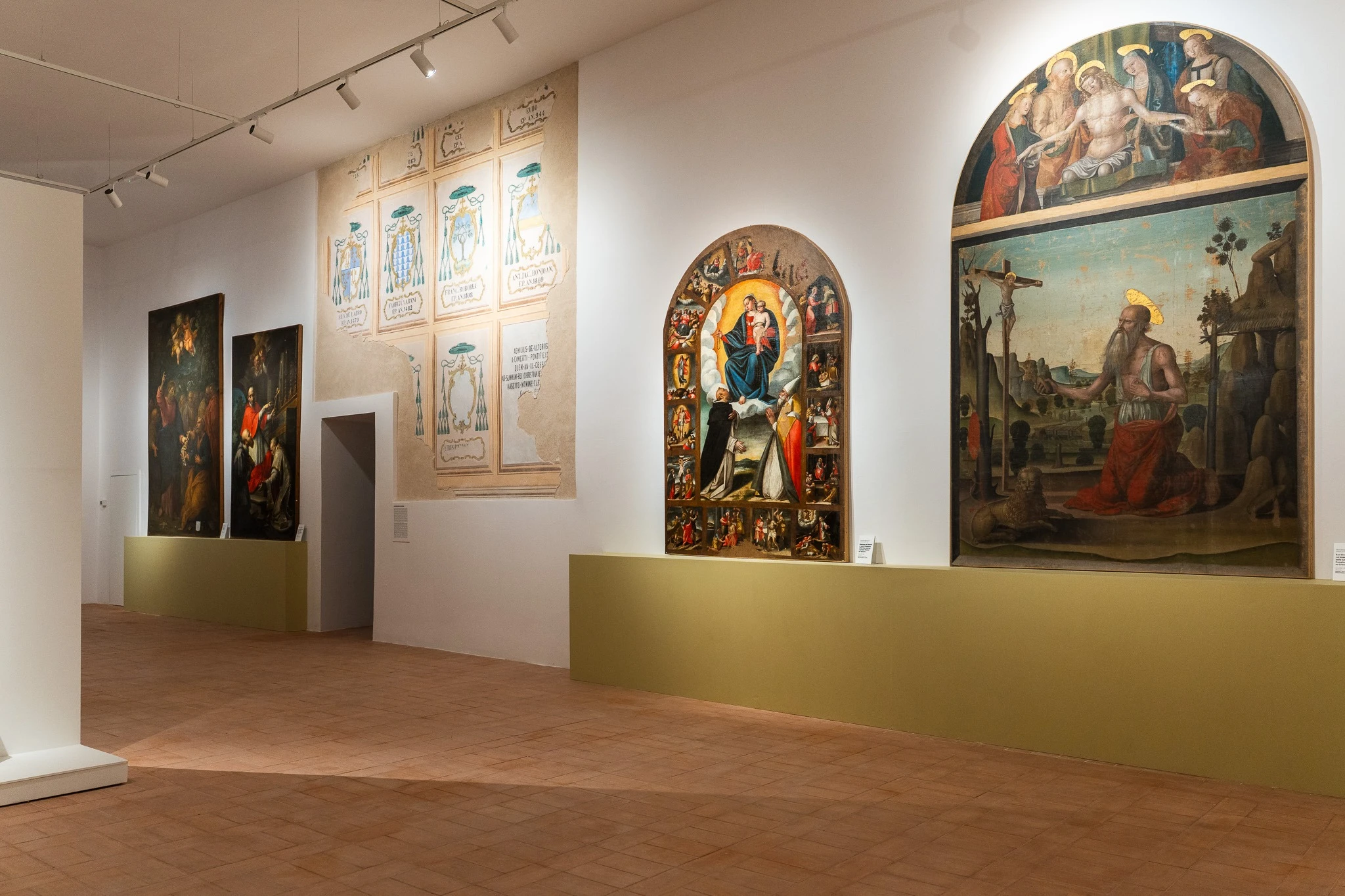
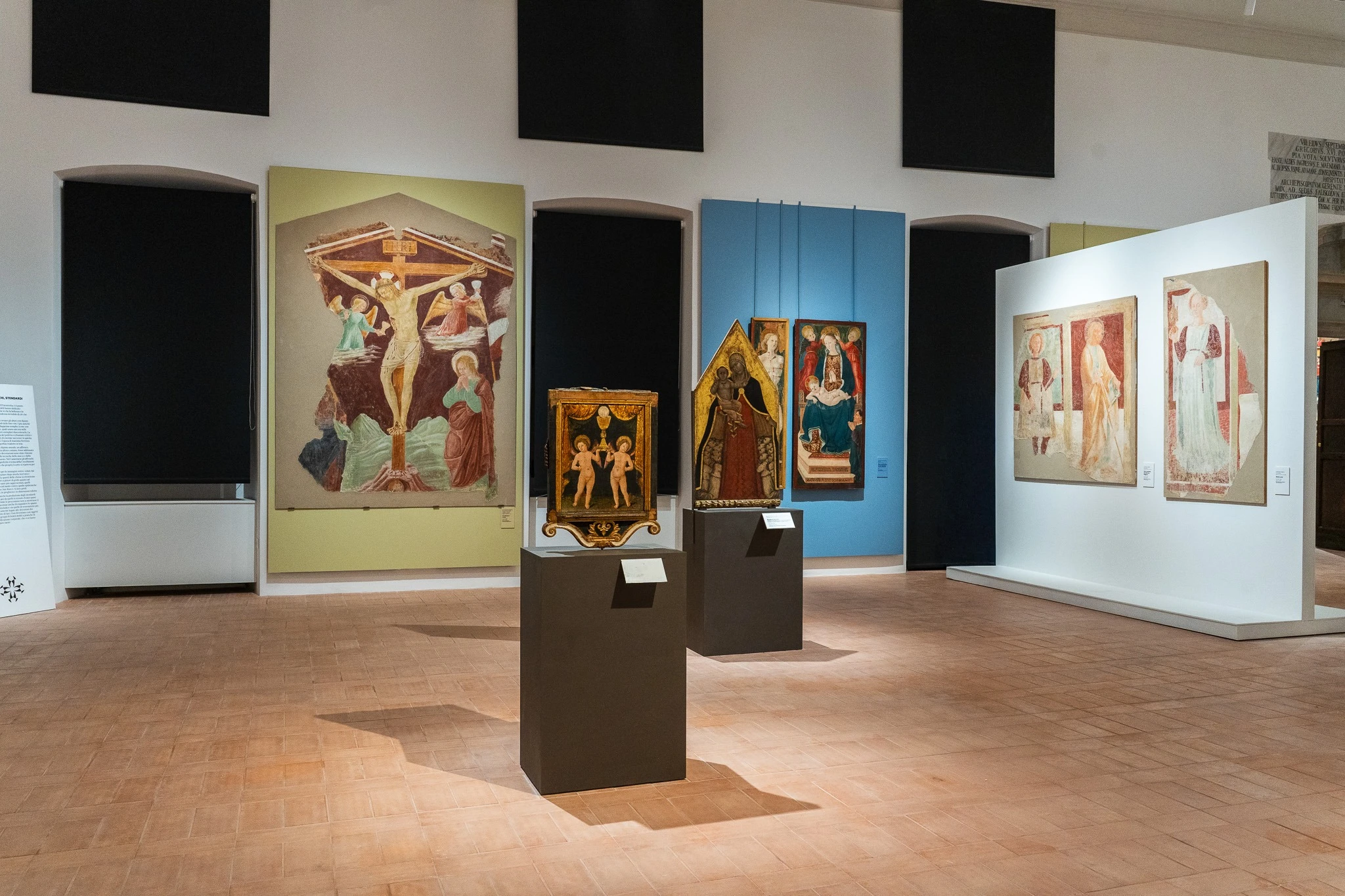
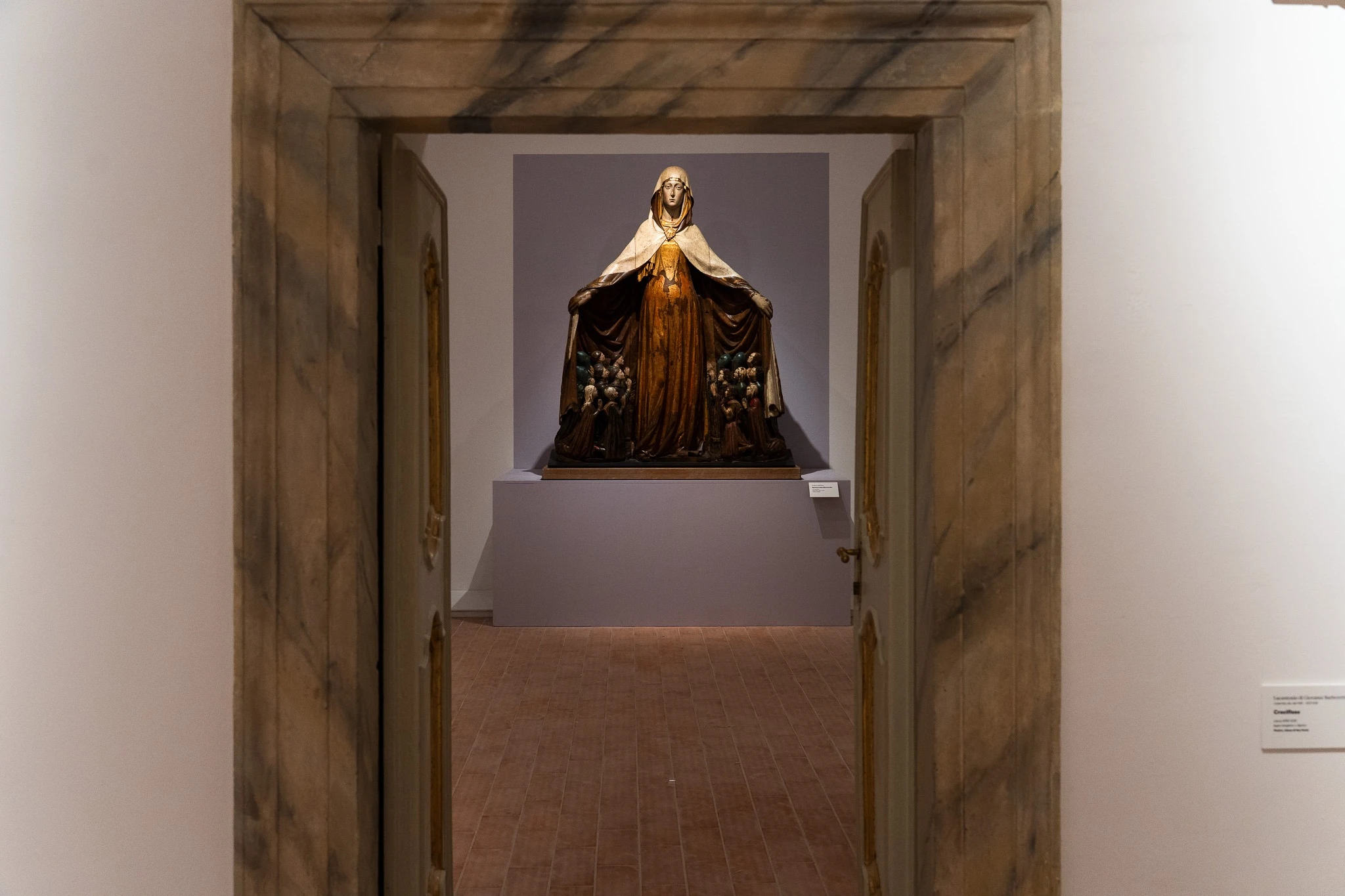
The palace houses the Bishop’s residence, the Curia offices, the diocesan archive, and the “Giacomo Boccanera” Diocesan Museum, whose collections include paintings, sculptures, goldsmith works, and sacred furnishings from the churches of the diocese. After the 2016 earthquake, the museum reopened with a new exhibition layout featuring works by Giovan Battista Tiepolo, Baciccio, and Valentin de Boulogne, restoring one of the historic center’s main cultural landmarks.
PLACE
Camerino (MC)
CLIENT
Arcidiocesi di Camerino - San Severino Marche
WORK PERIOD
2021 / ongoing
ACTIVITY
Construction Design
Detailed Design
TYPOLOGY
Conservative Rehabilitation
Preparation
Restoration of Listed Cultural Heritage
INTENDED USE
Cultural
Multifunctional
Museum
Religious
Residential
WORK AMOUNT
€ 17.900.000,00
WORKING GROUP
Englobe
Ing. Carlo Morosi
Ing. Tommaso Ortolani