The Monumental Complex of San Bernardino
San Bernardino Convent Restoration and Seismic Upgrade in Urbino
A Renaissance Complex That Tells Centuries of Layering and Transformation
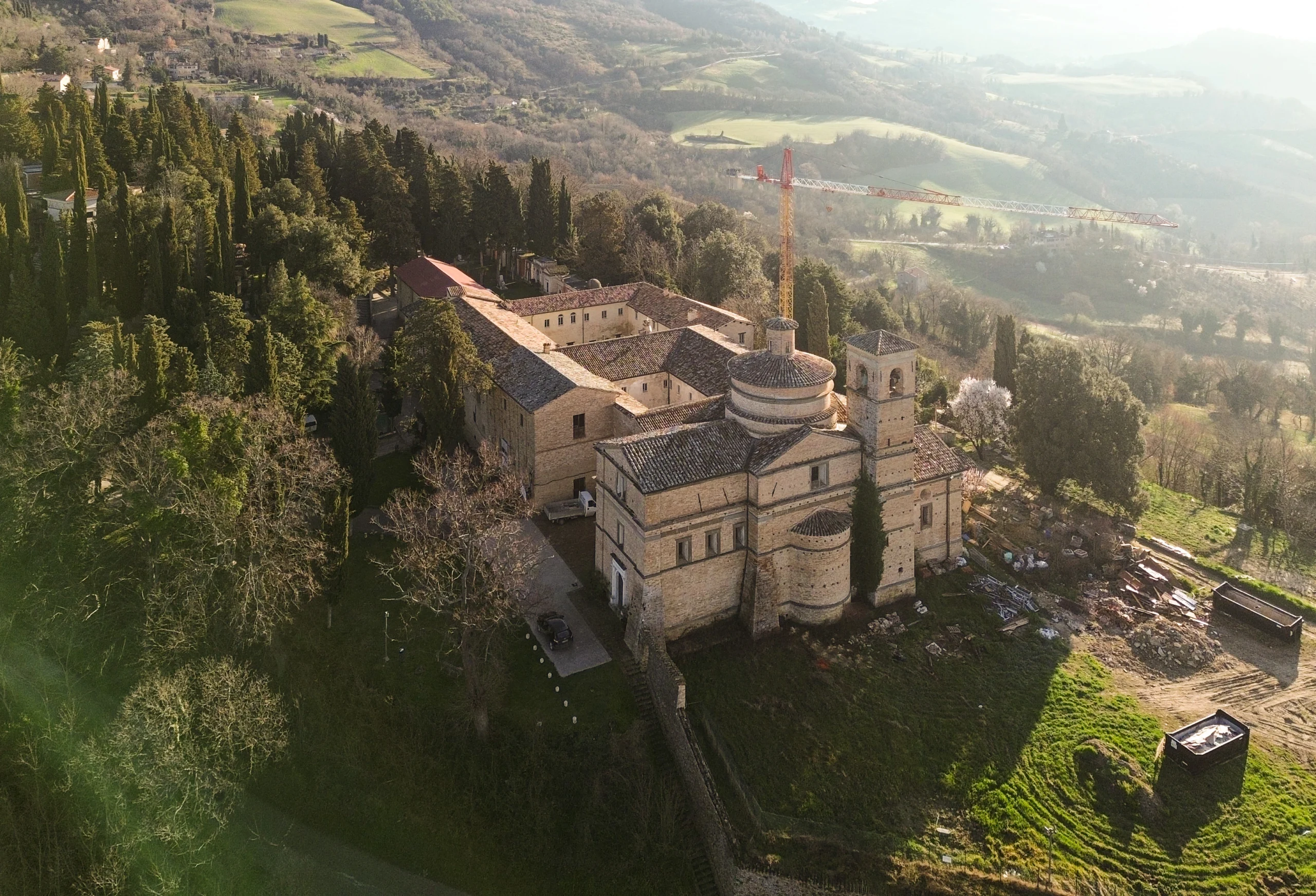
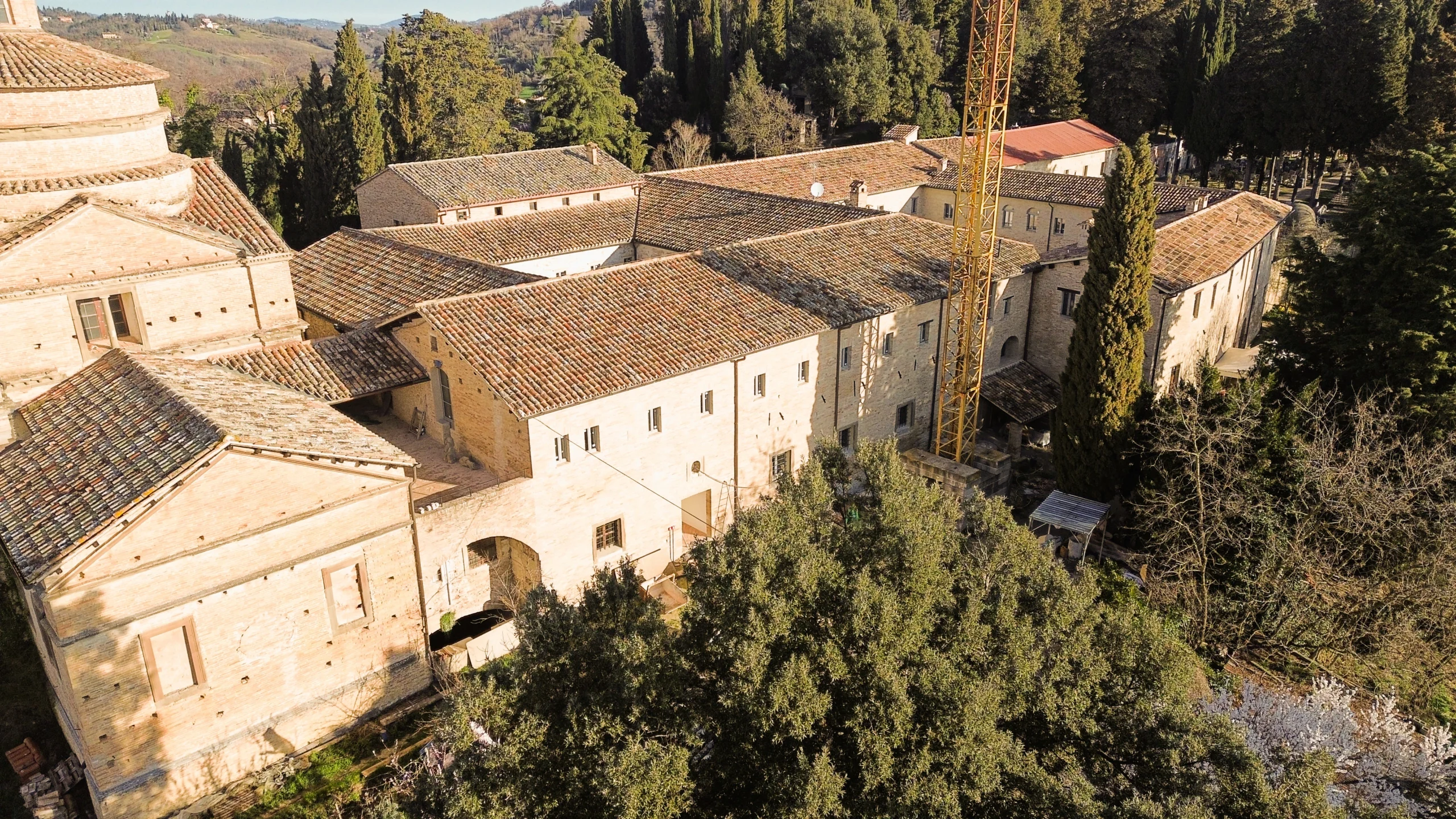
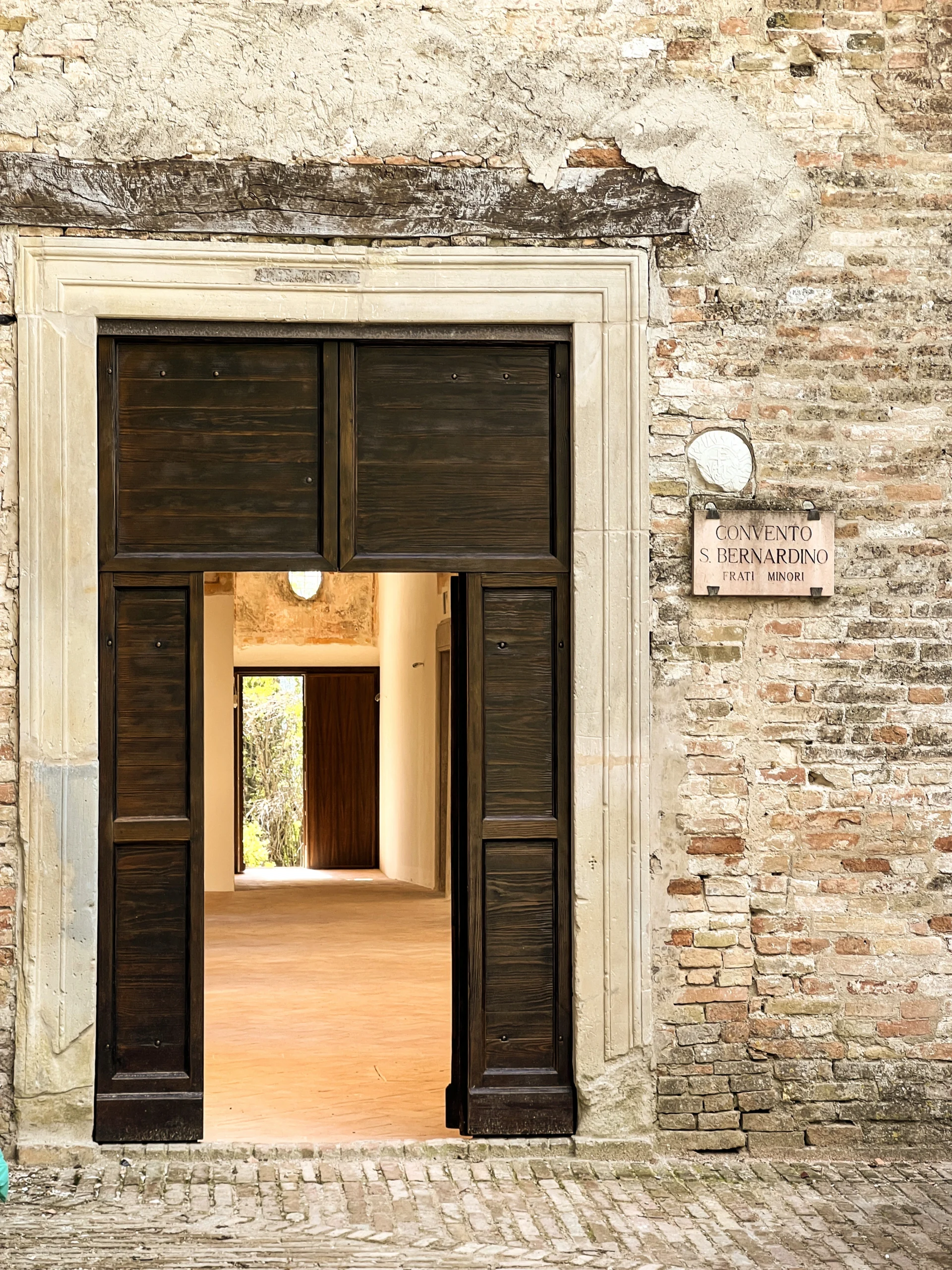
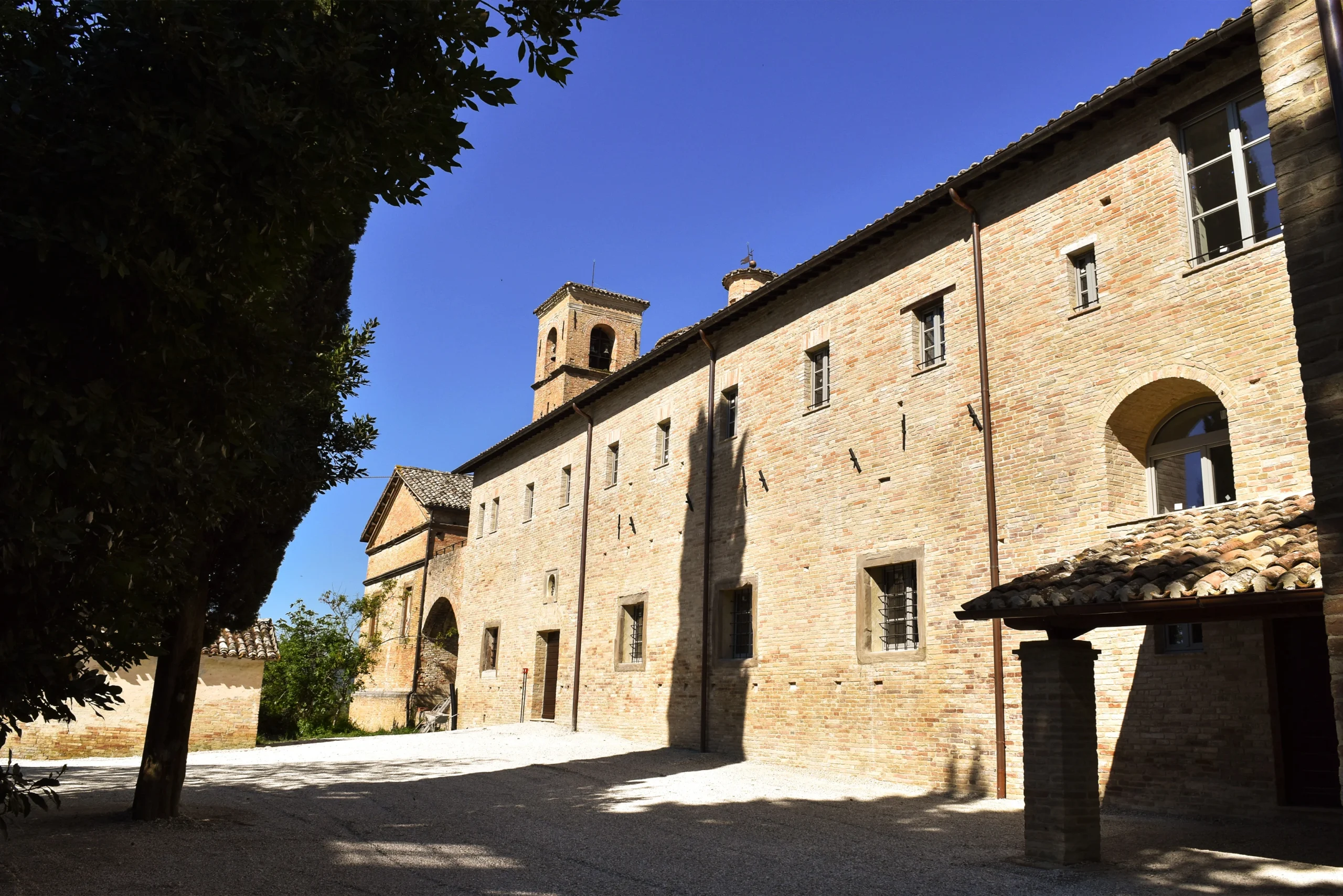
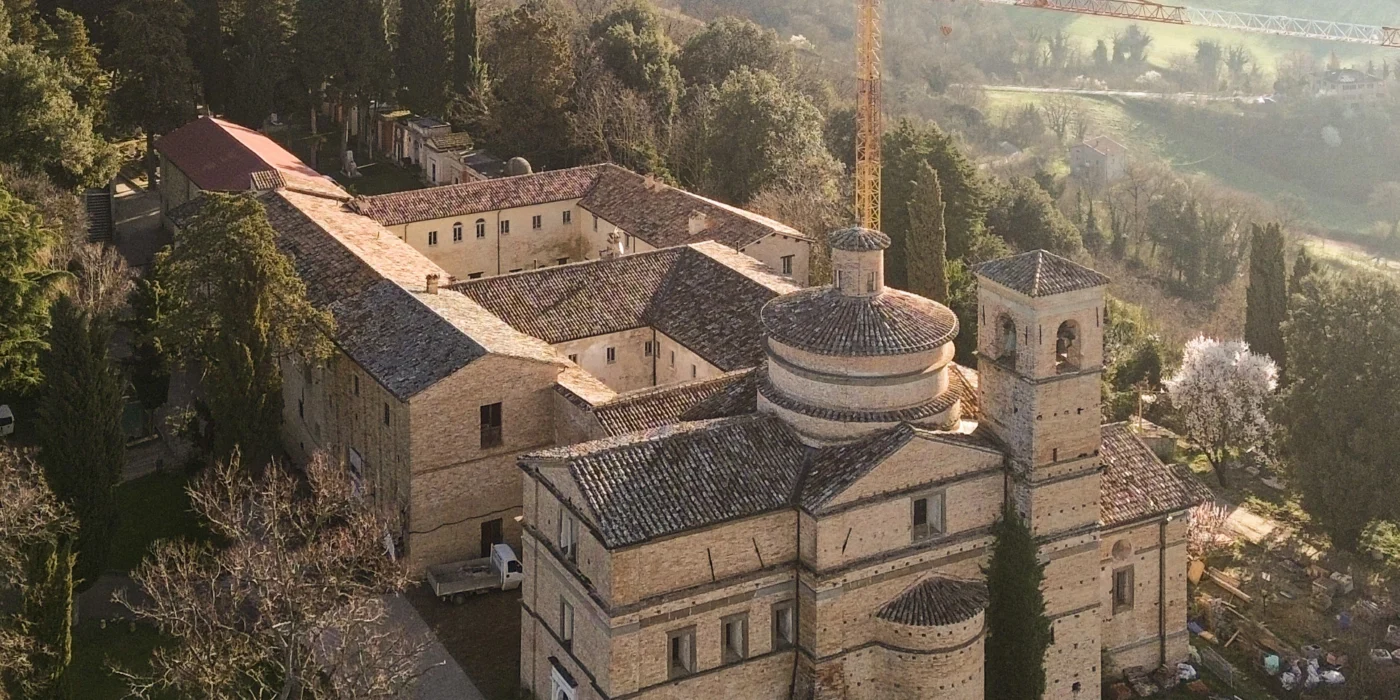
The Convent of San Bernardino is one of the most significant monastic architectural complexes in the Marche region: a multifaceted system that embodies centuries of construction history, seismic events, and changing uses.
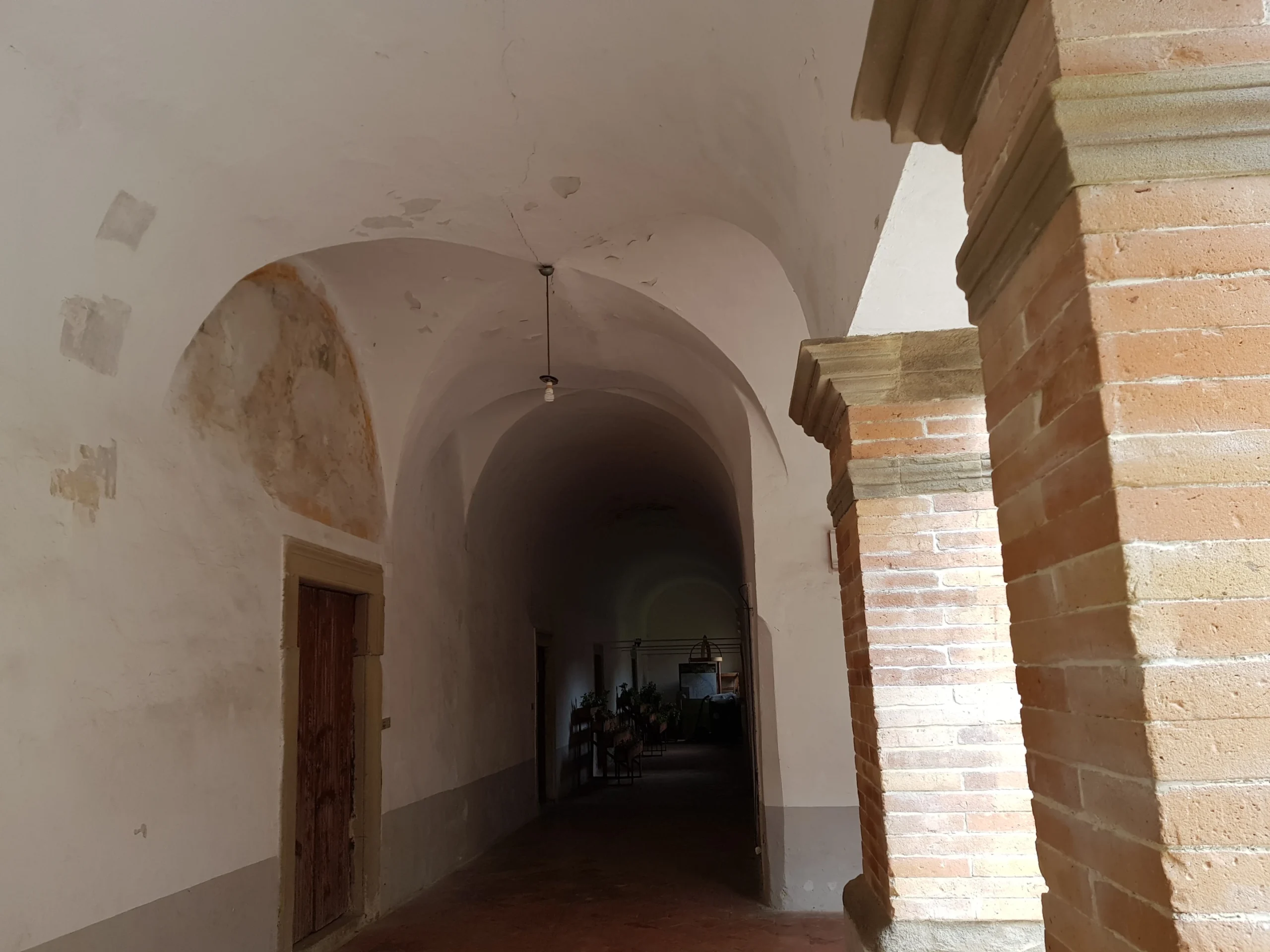
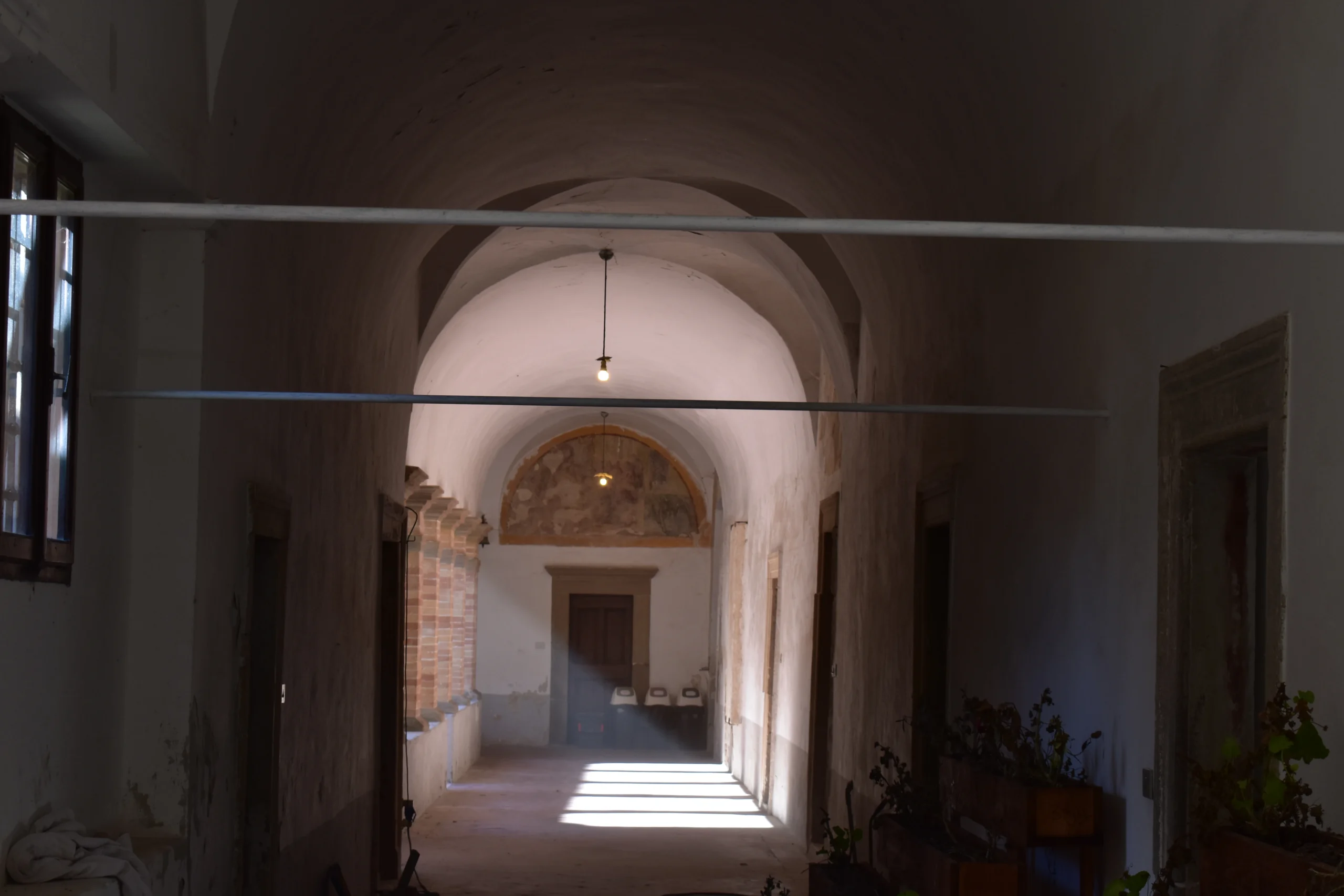
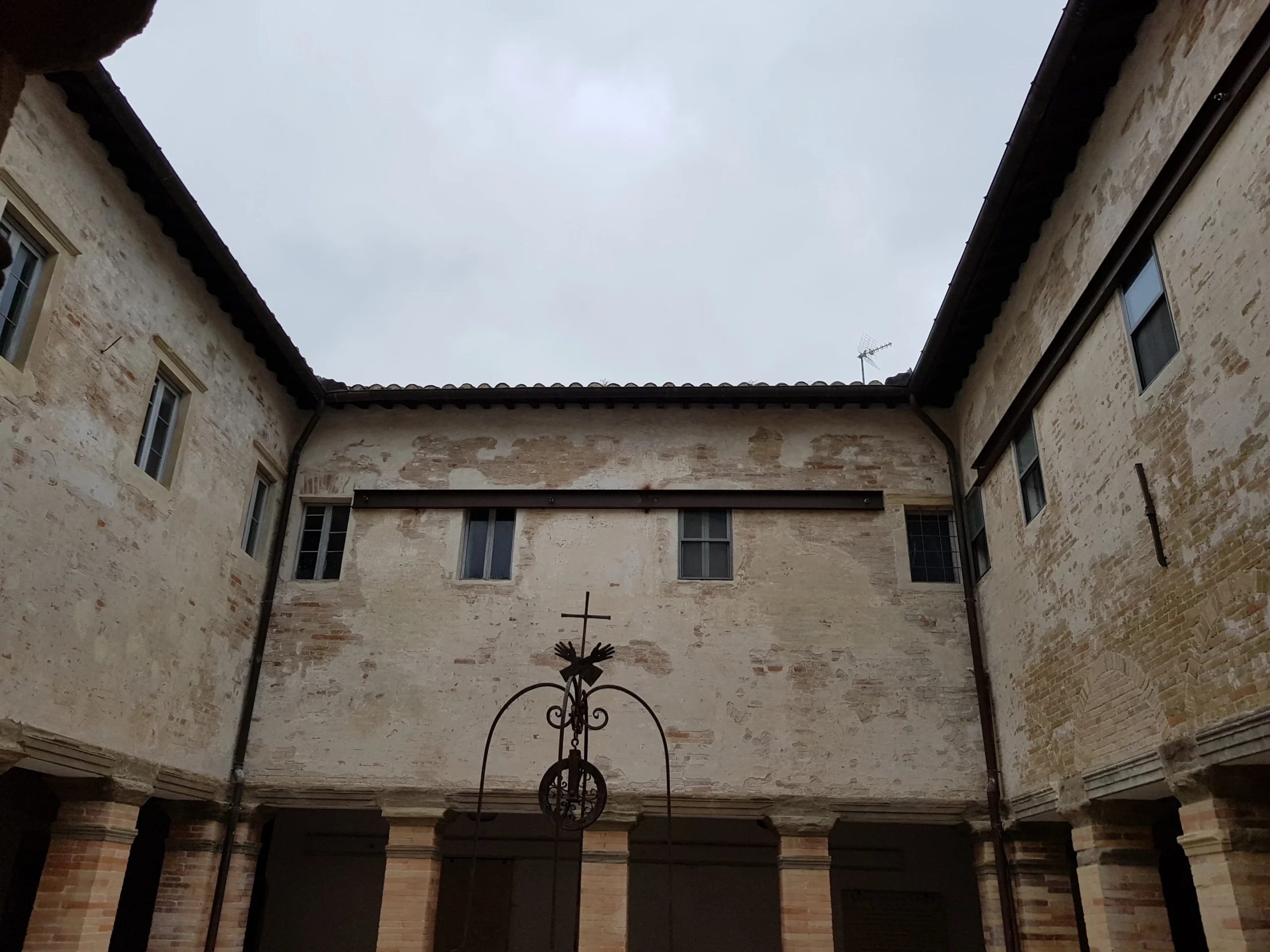
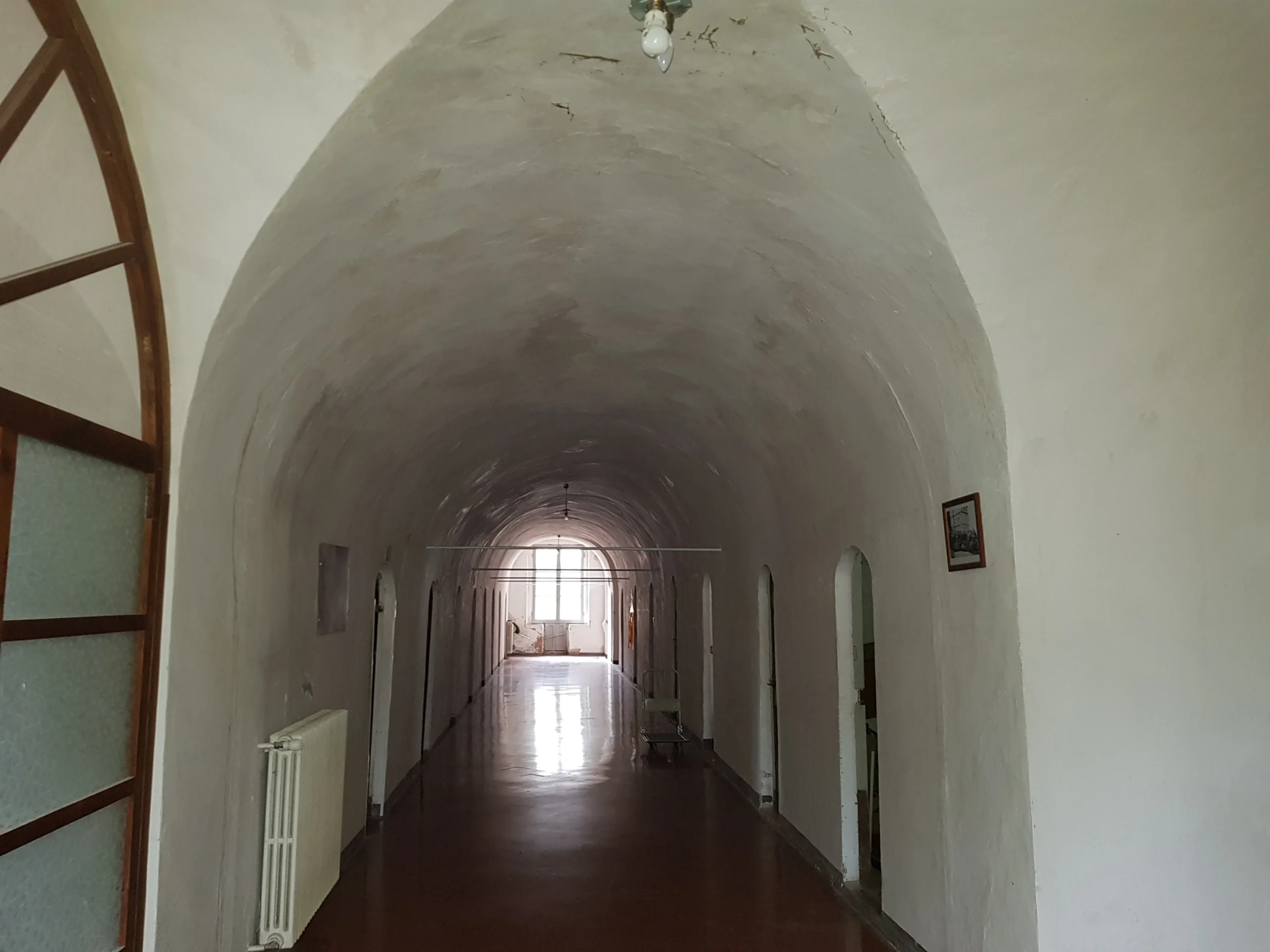
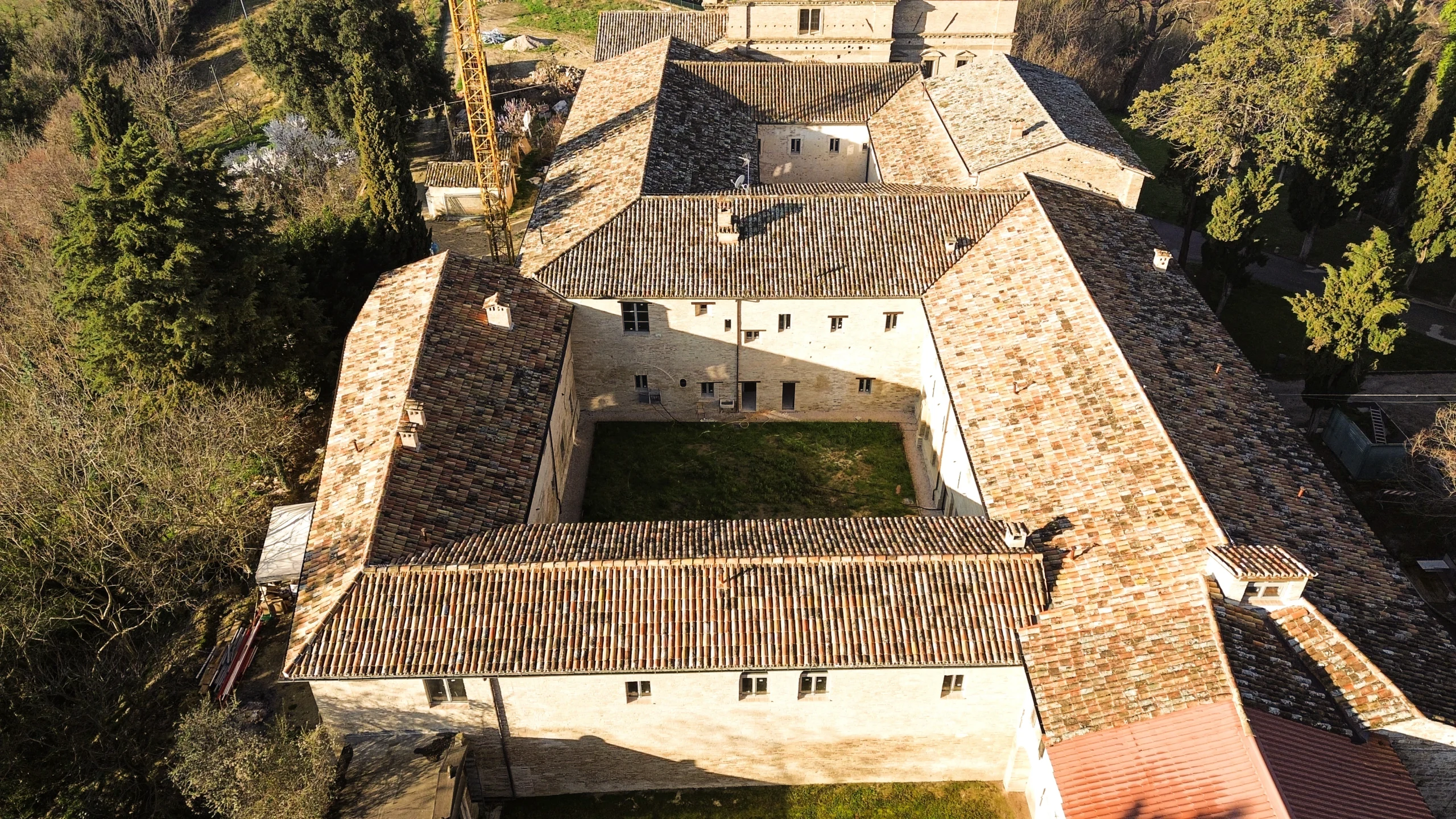
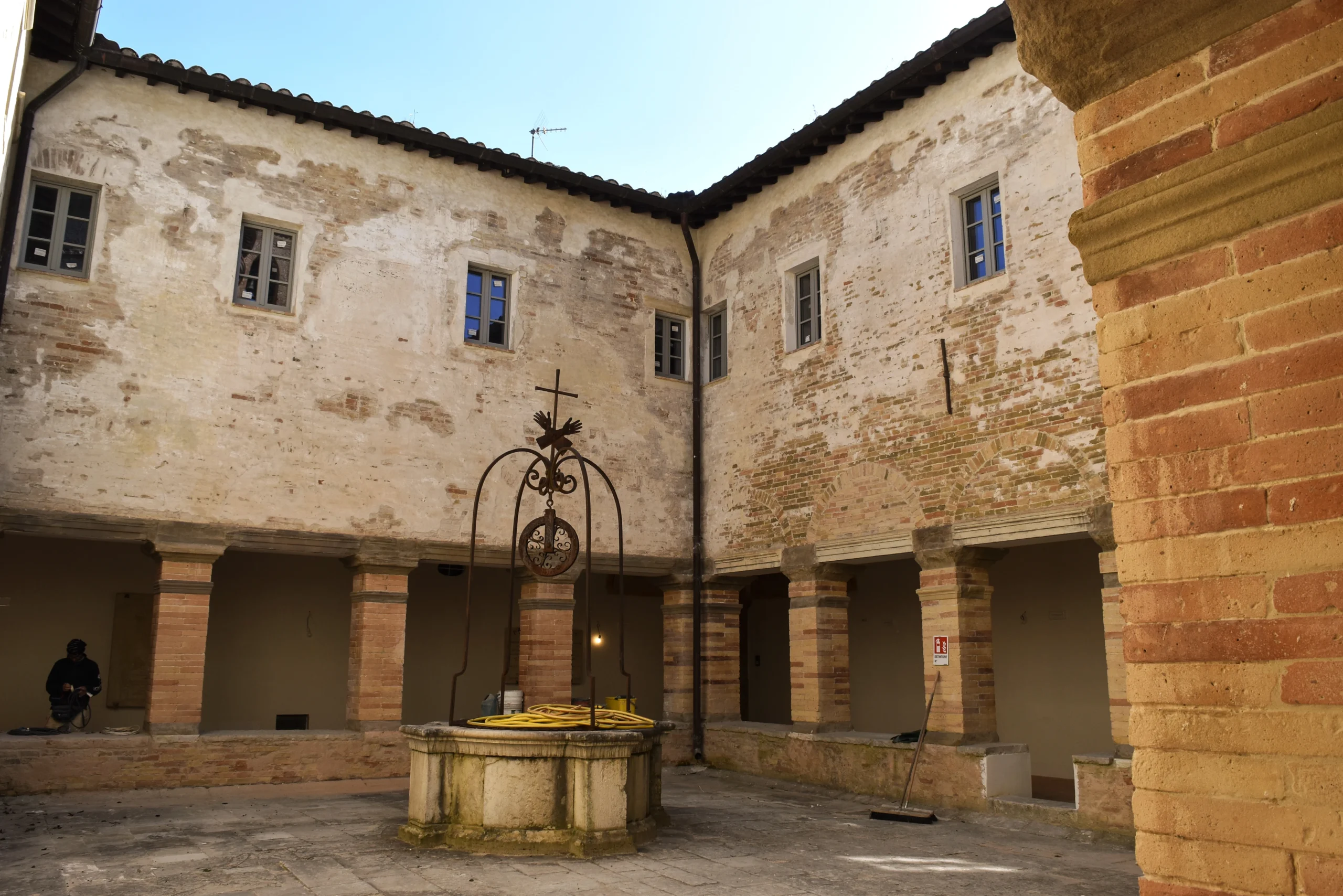
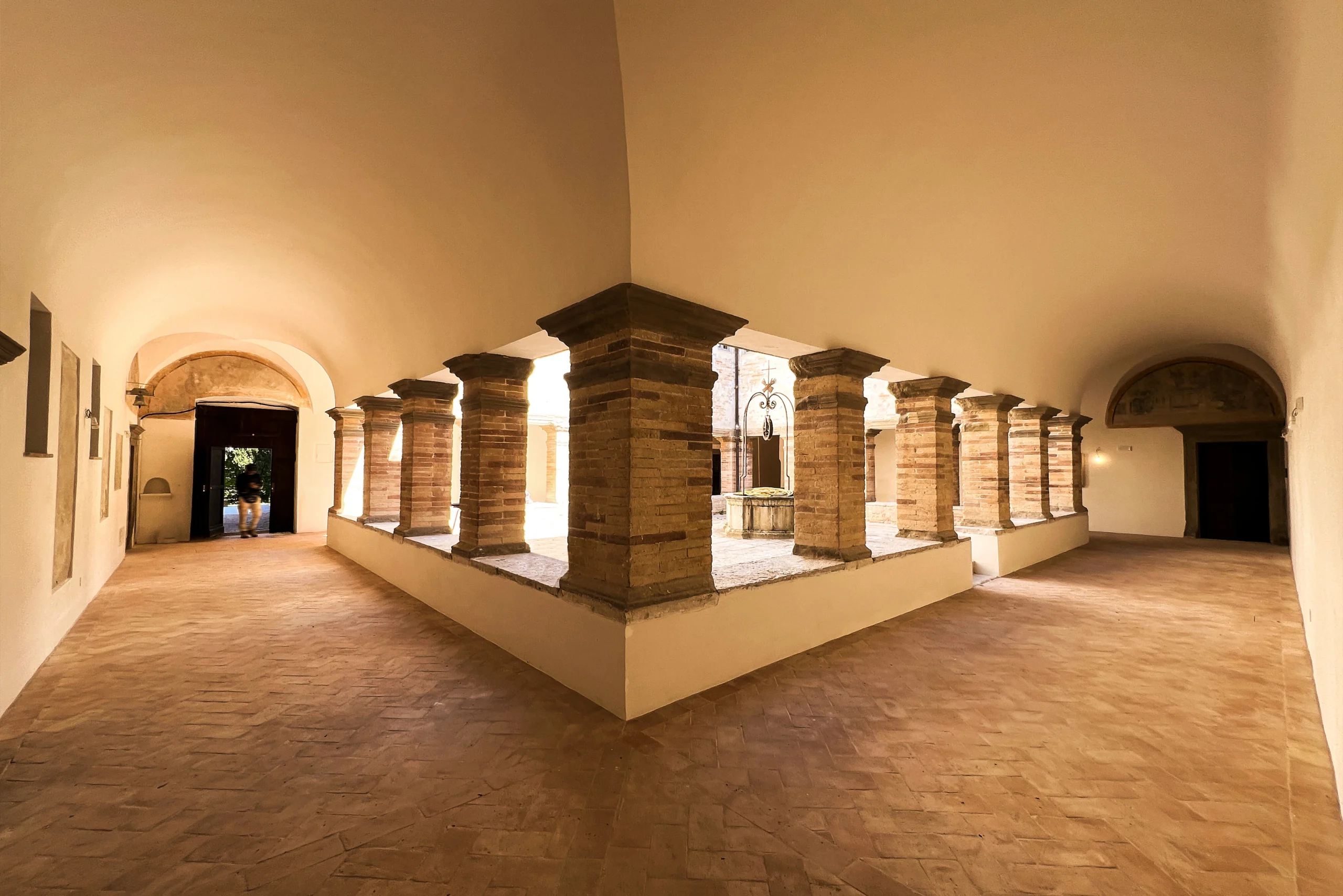
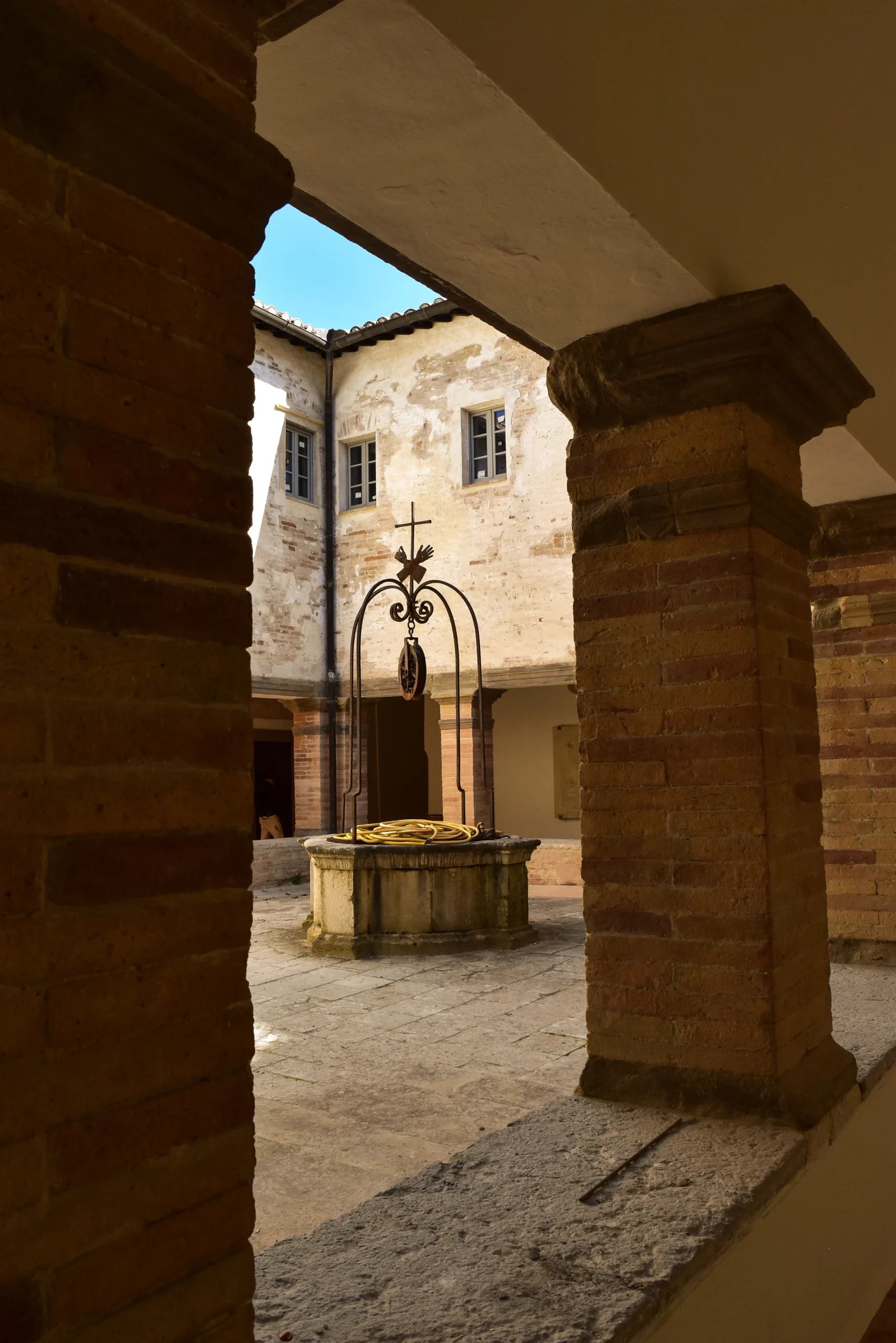
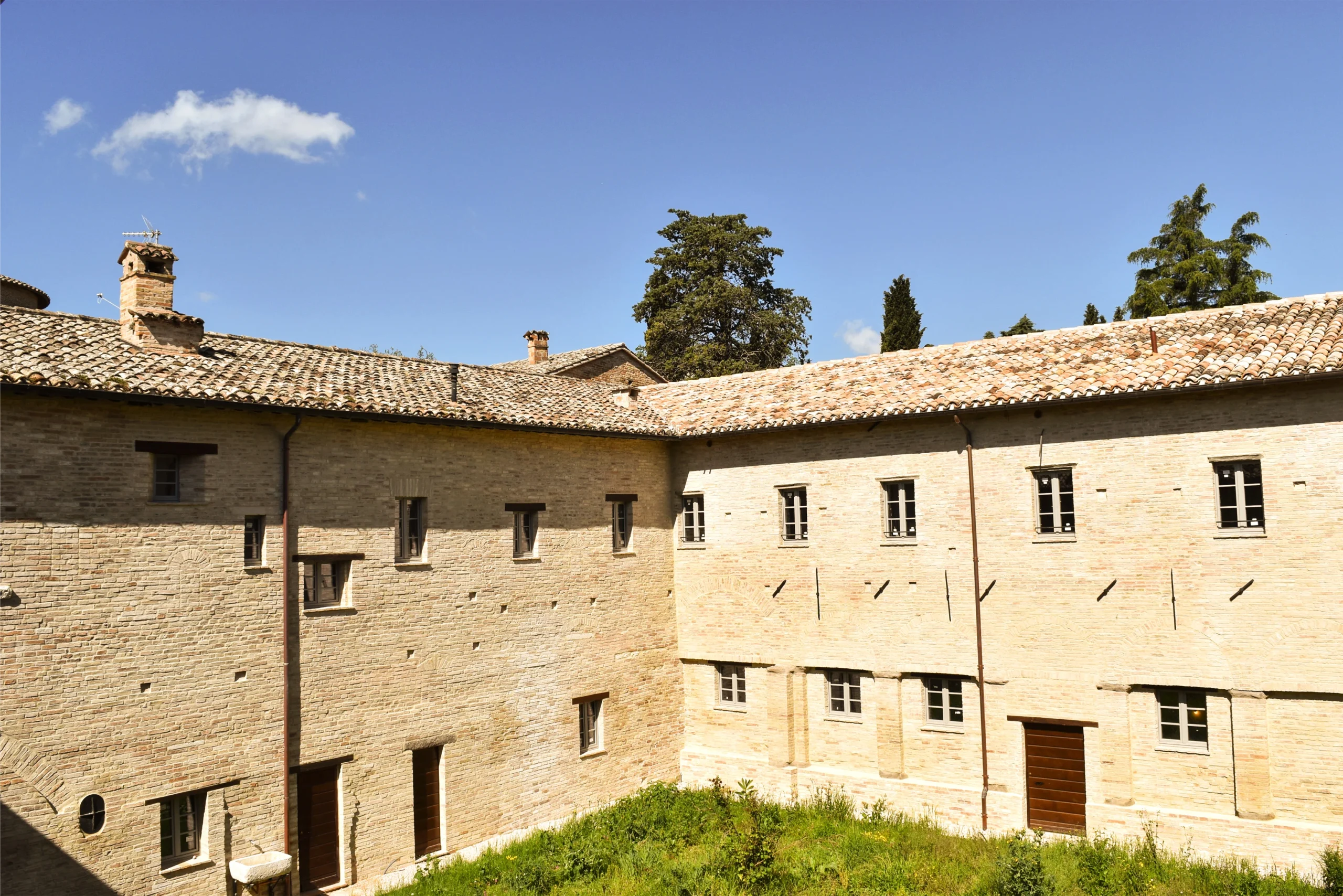
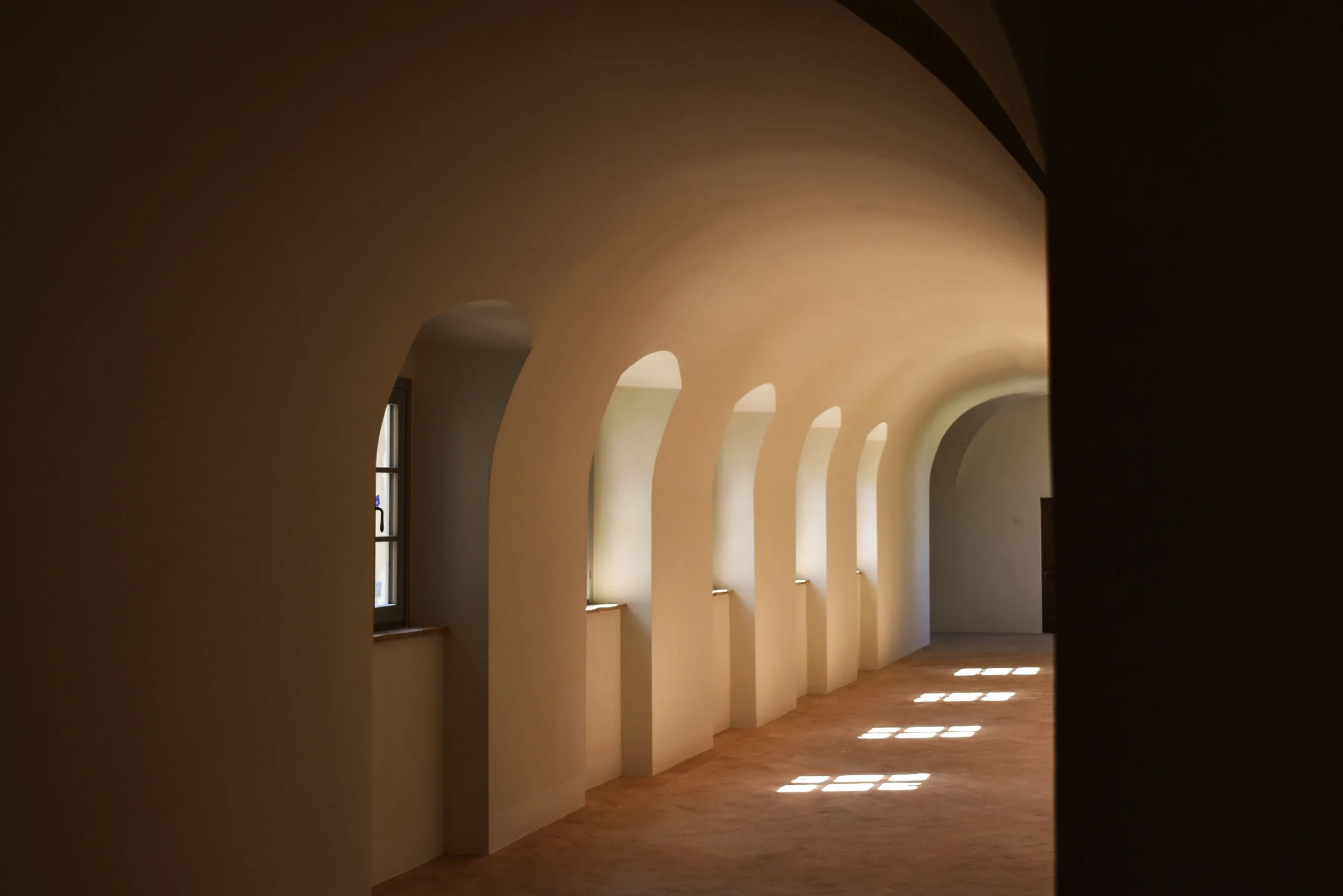
Set within the hilly landscape surrounding Urbino, the complex stands as a deeply rooted architectural presence, attributed to Francesco di Giorgio Martini and linked to the patronage of Federico da Montefeltro. The spatial organization revolves around two defining elements — the Martinian cloister and the garden courtyard — structuring the sequence of spaces through a rigorous balance between built form and landscape, monastic enclosure and openness to the surrounding territory.
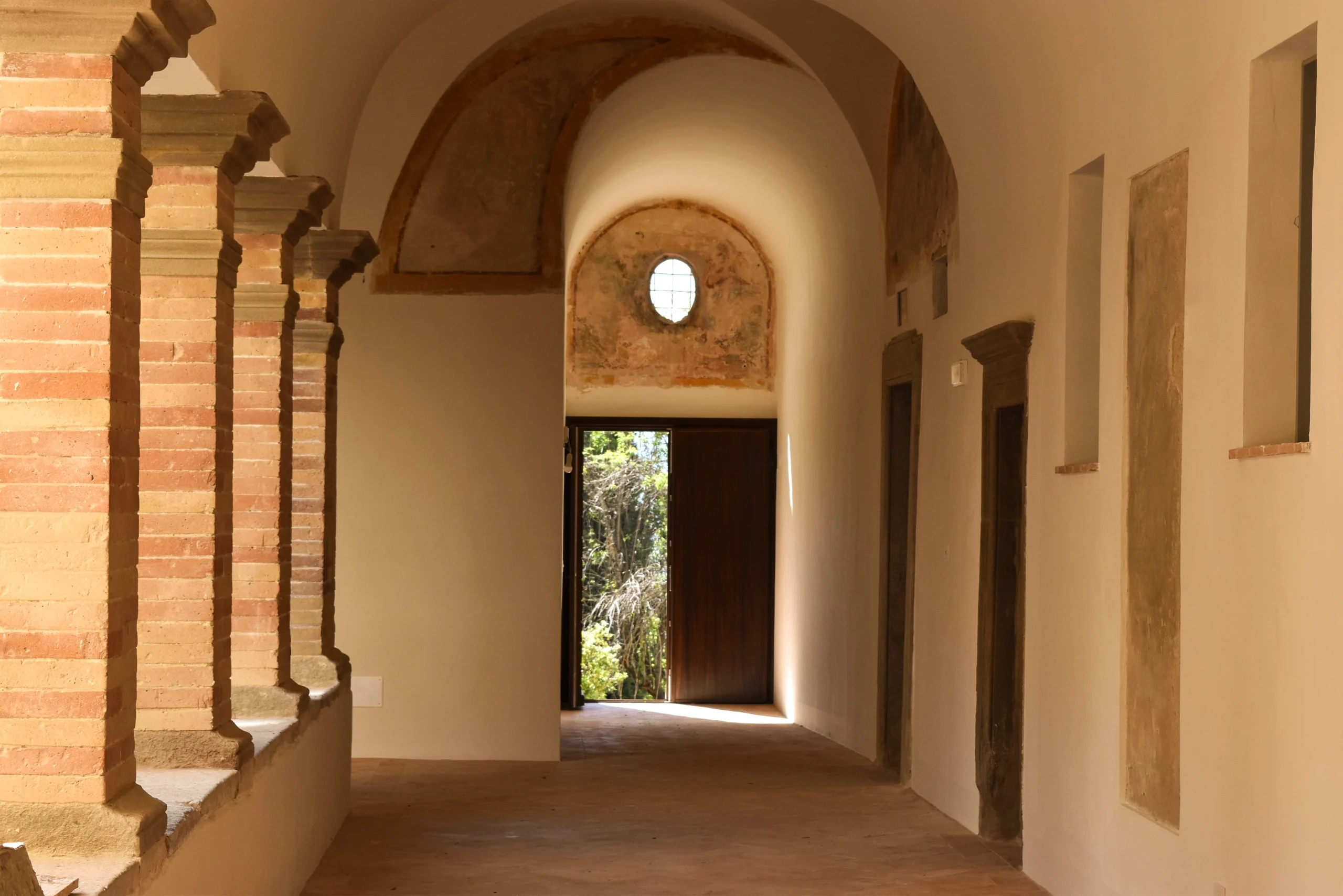
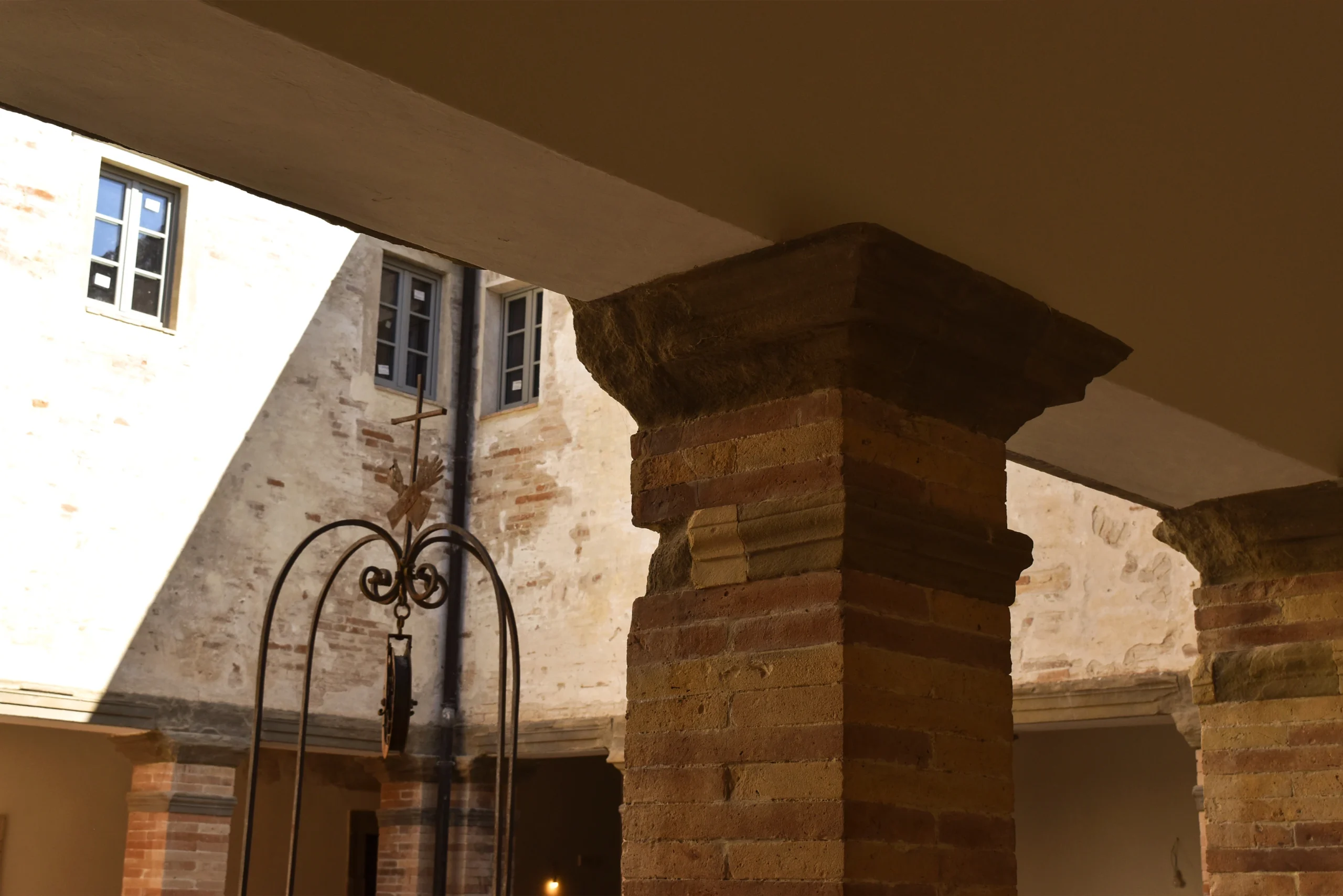
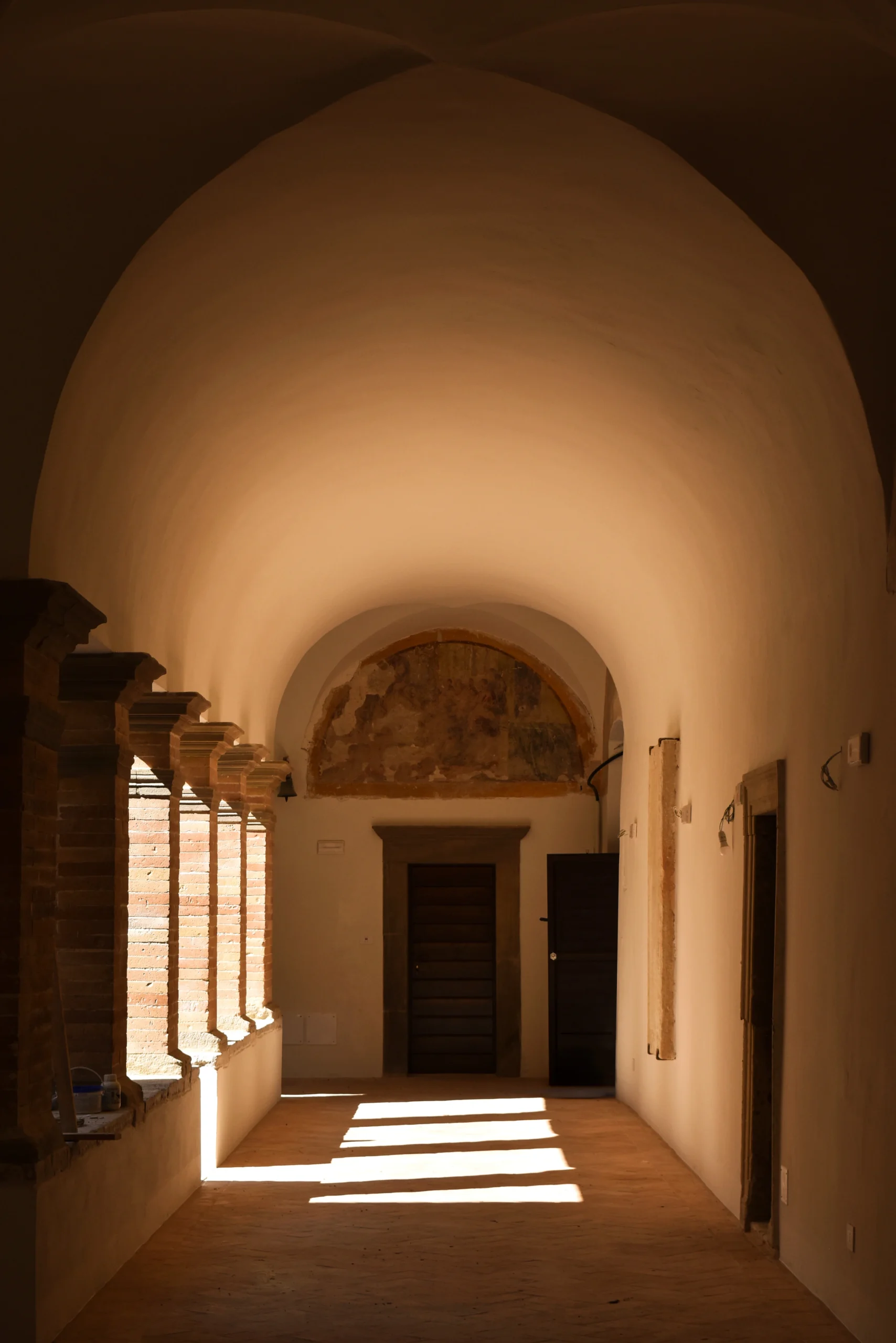
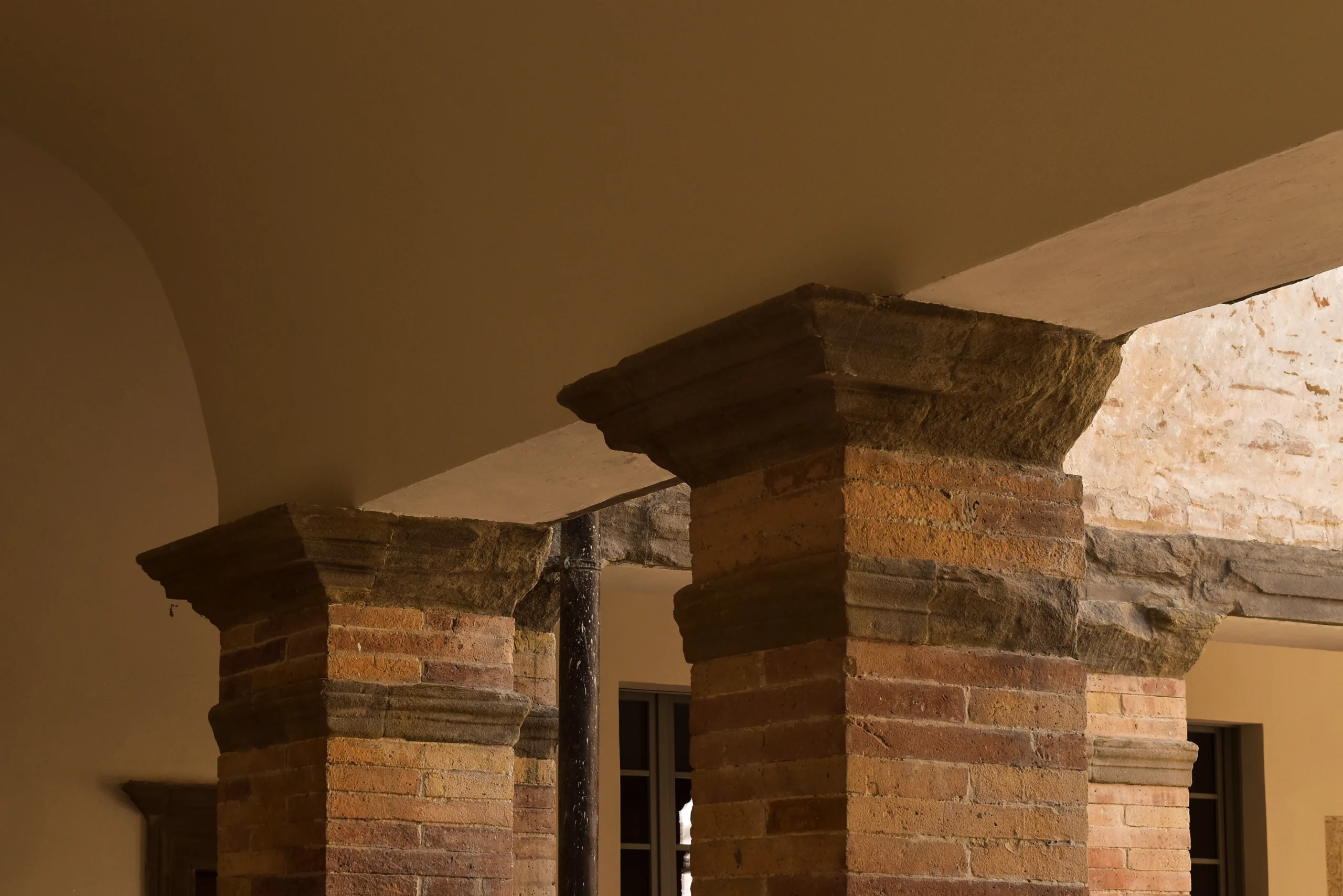
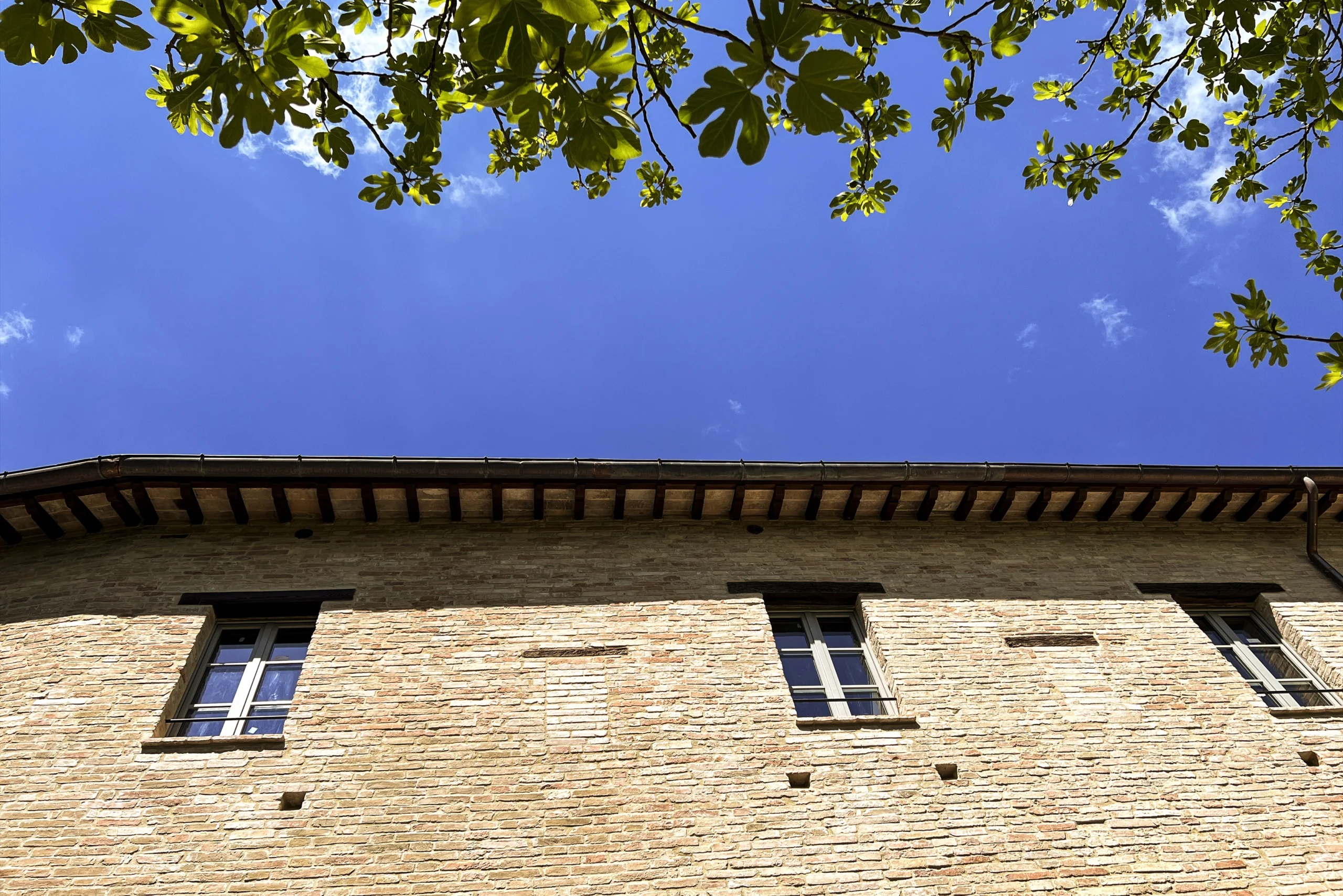
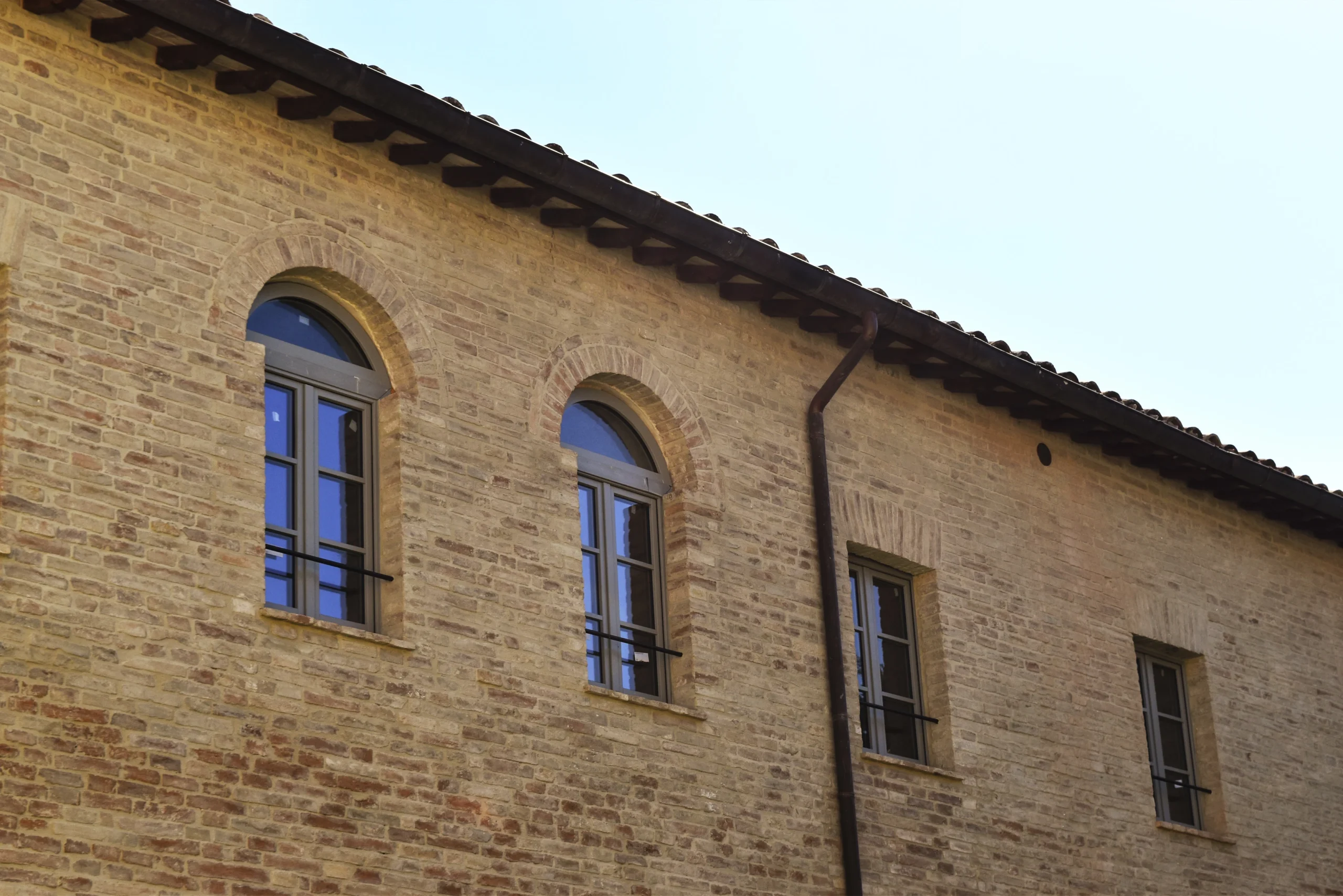
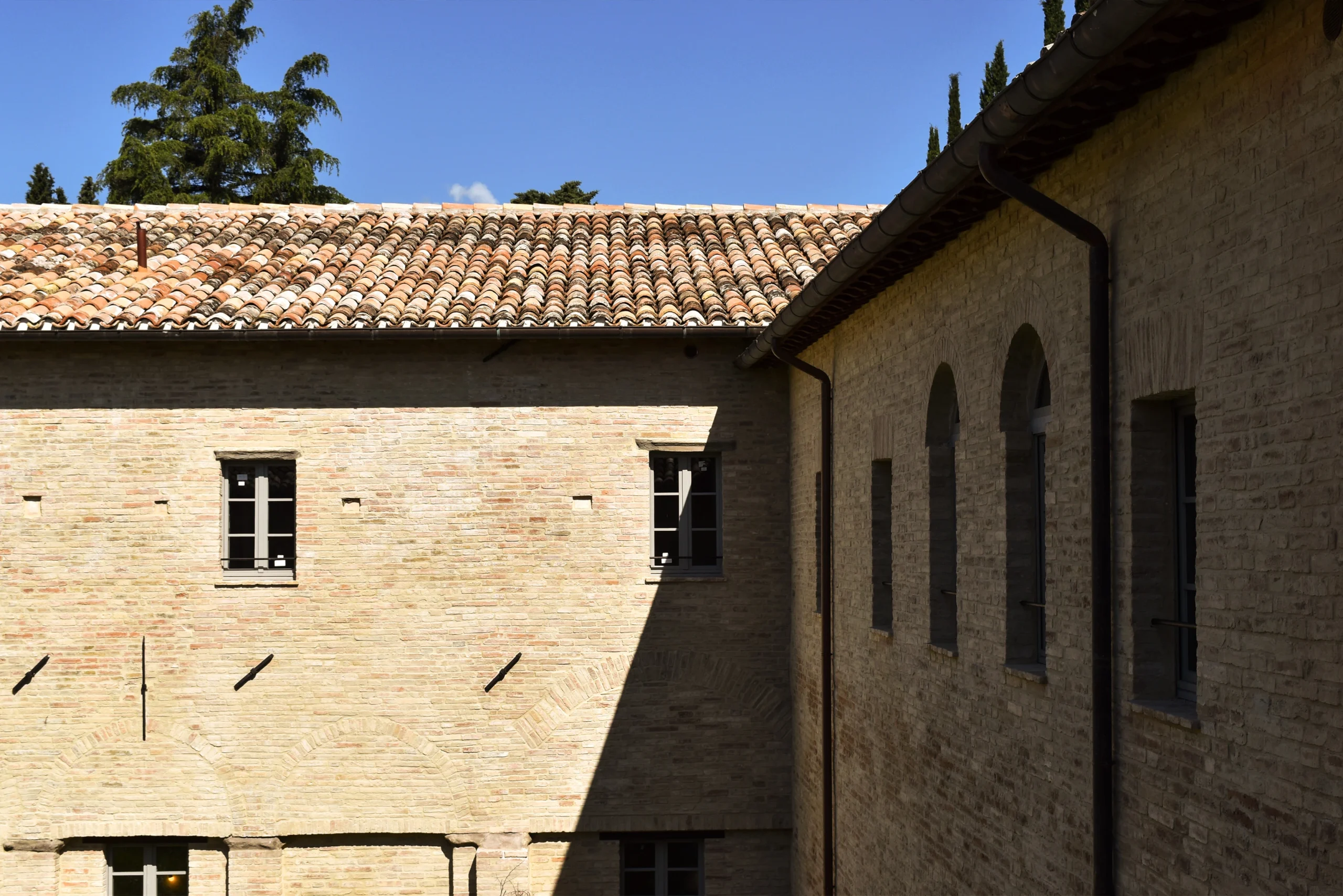
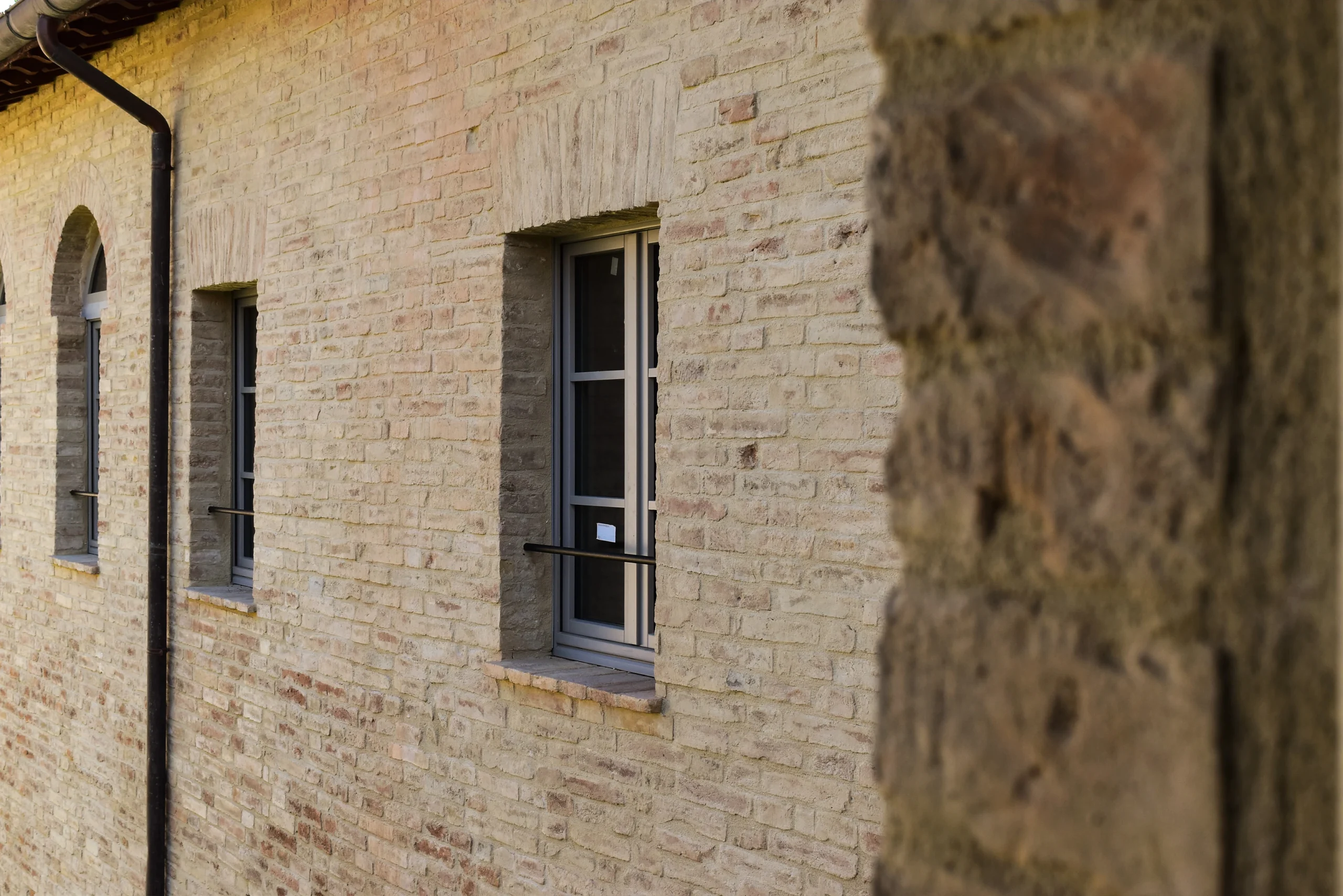
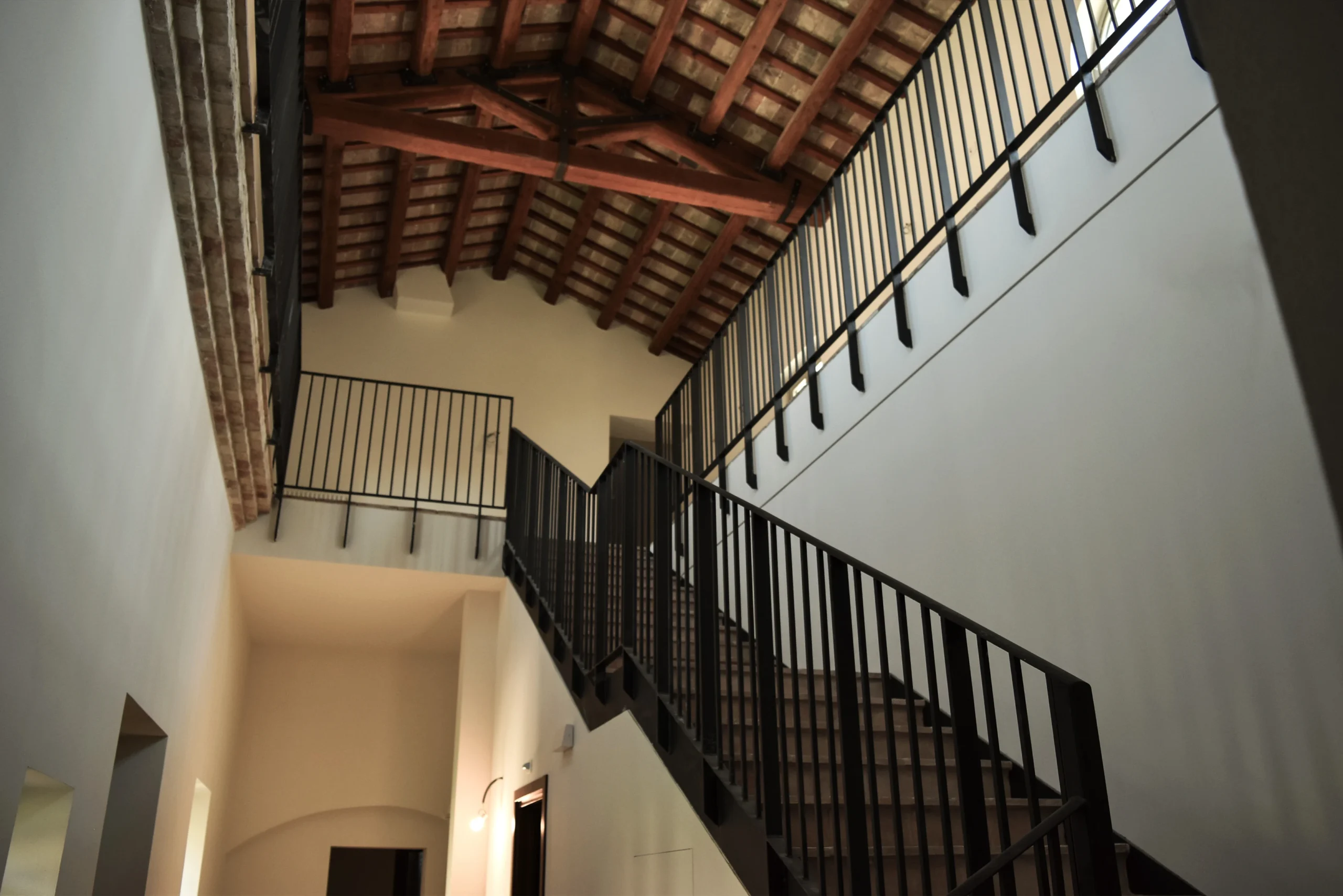
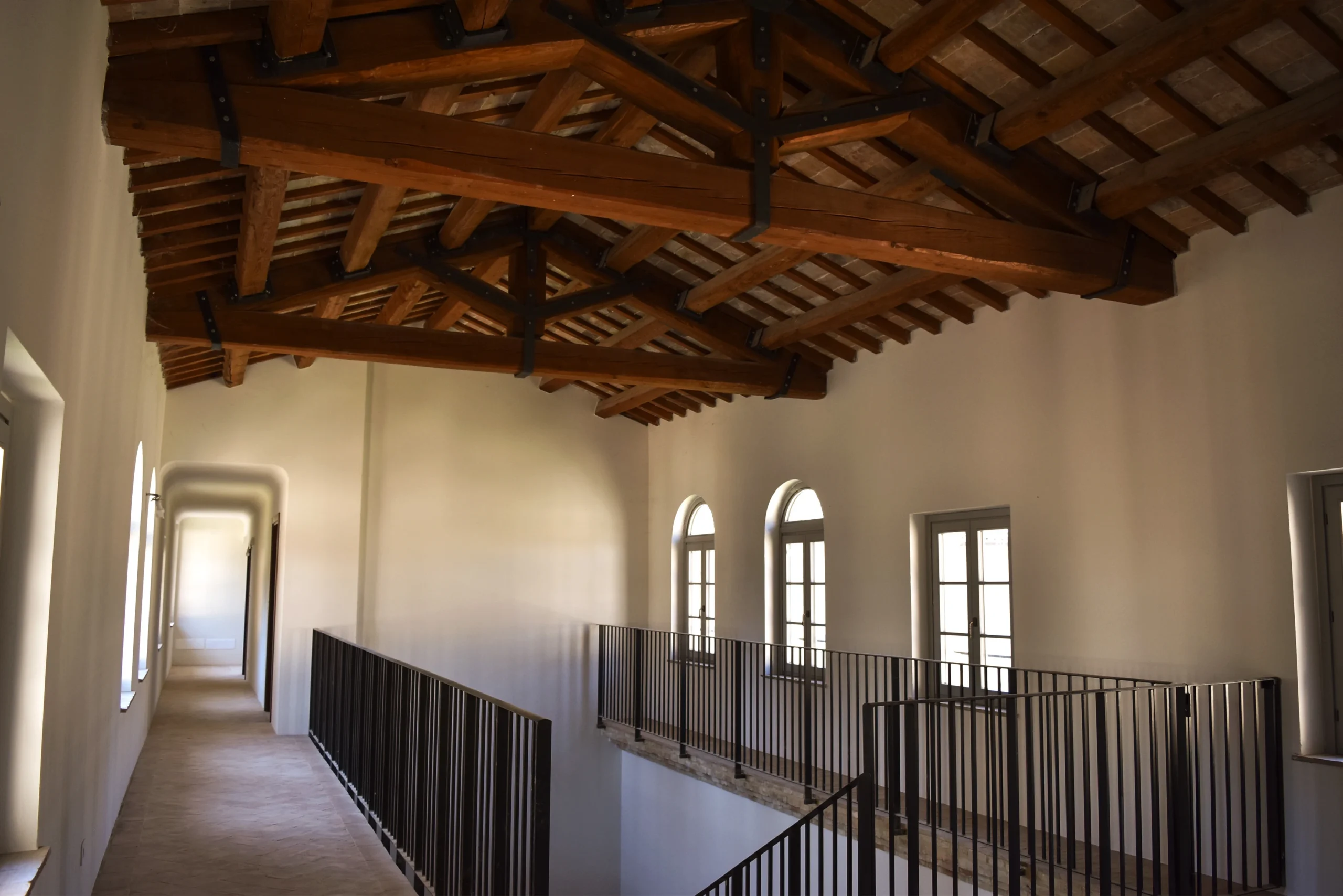
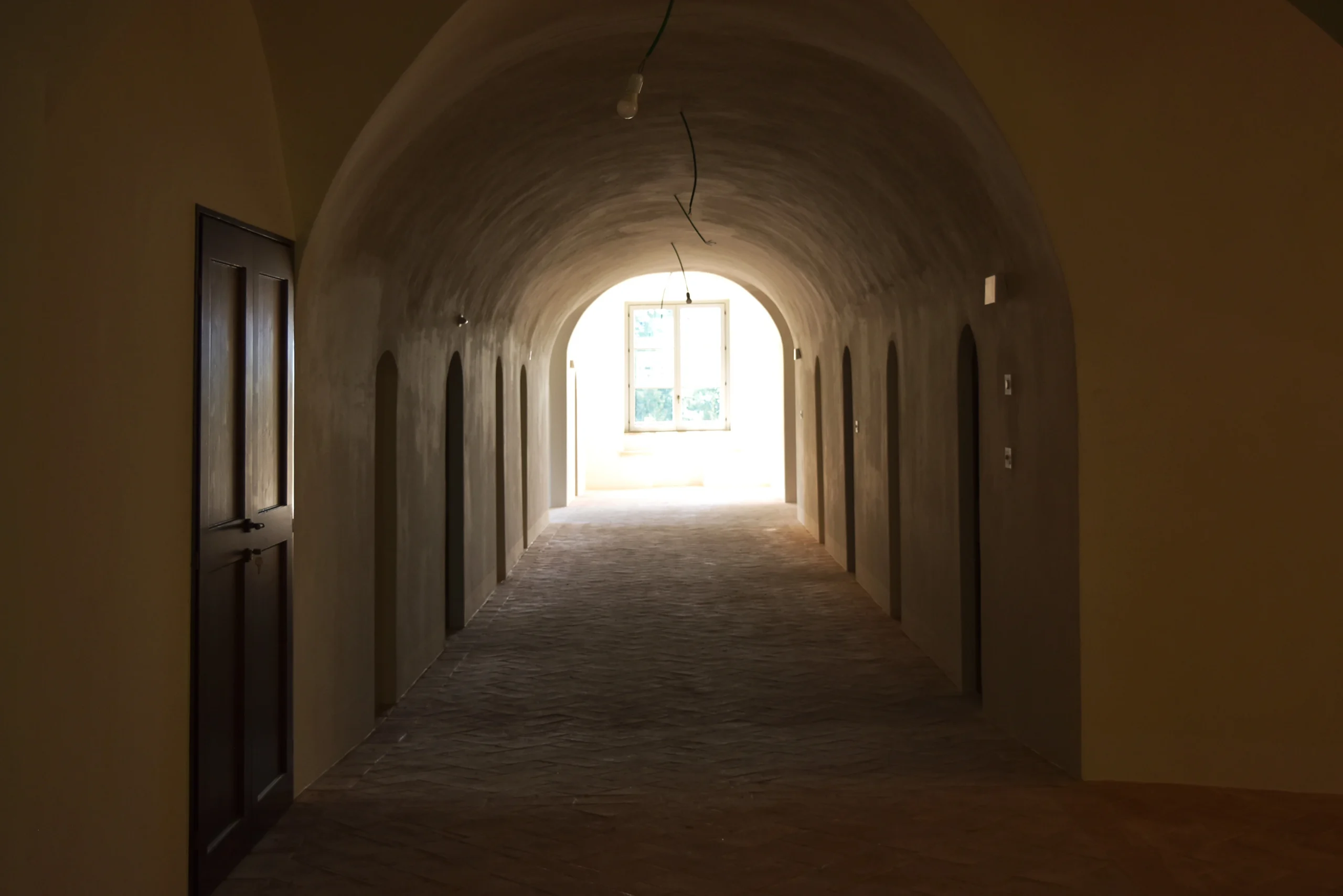
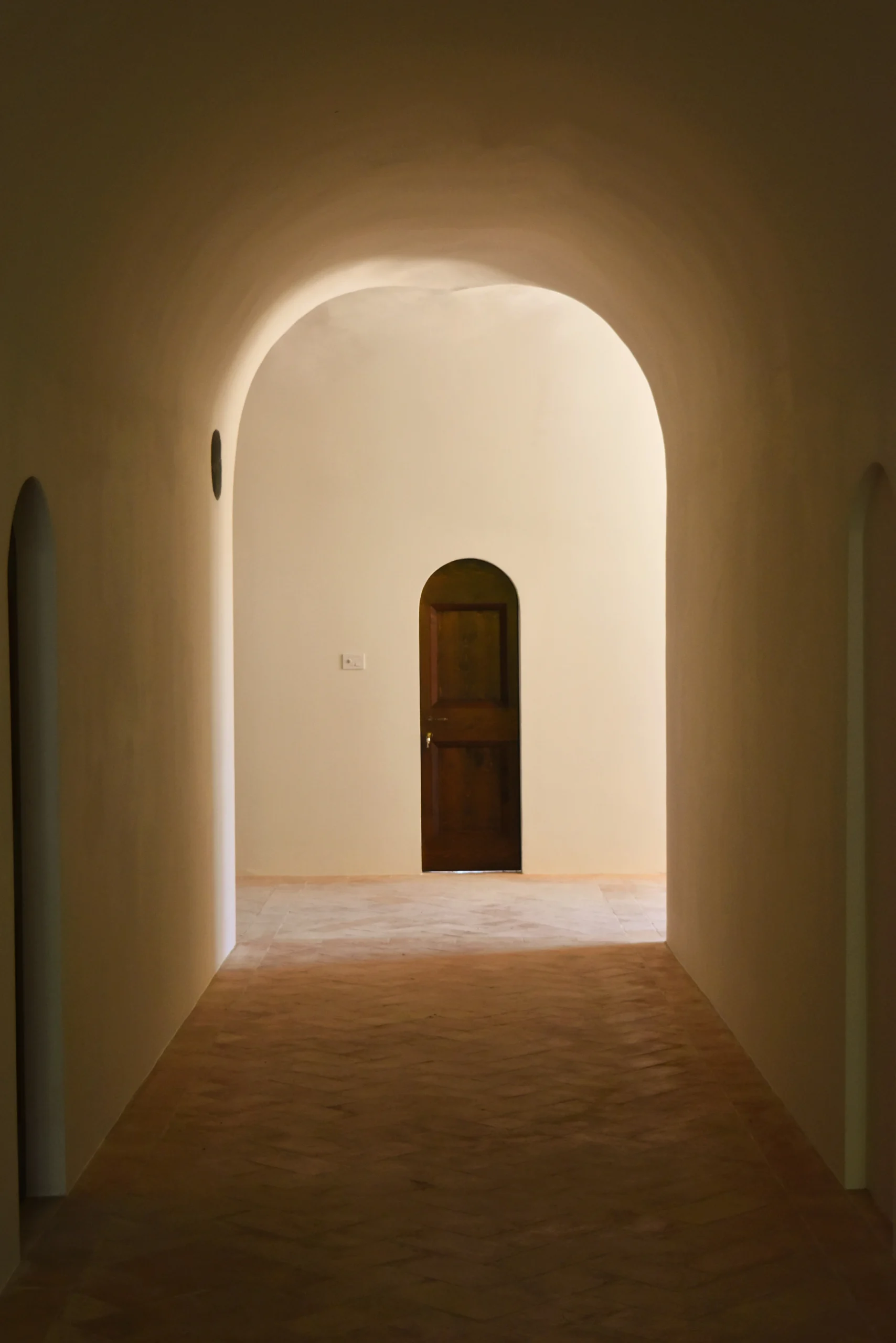
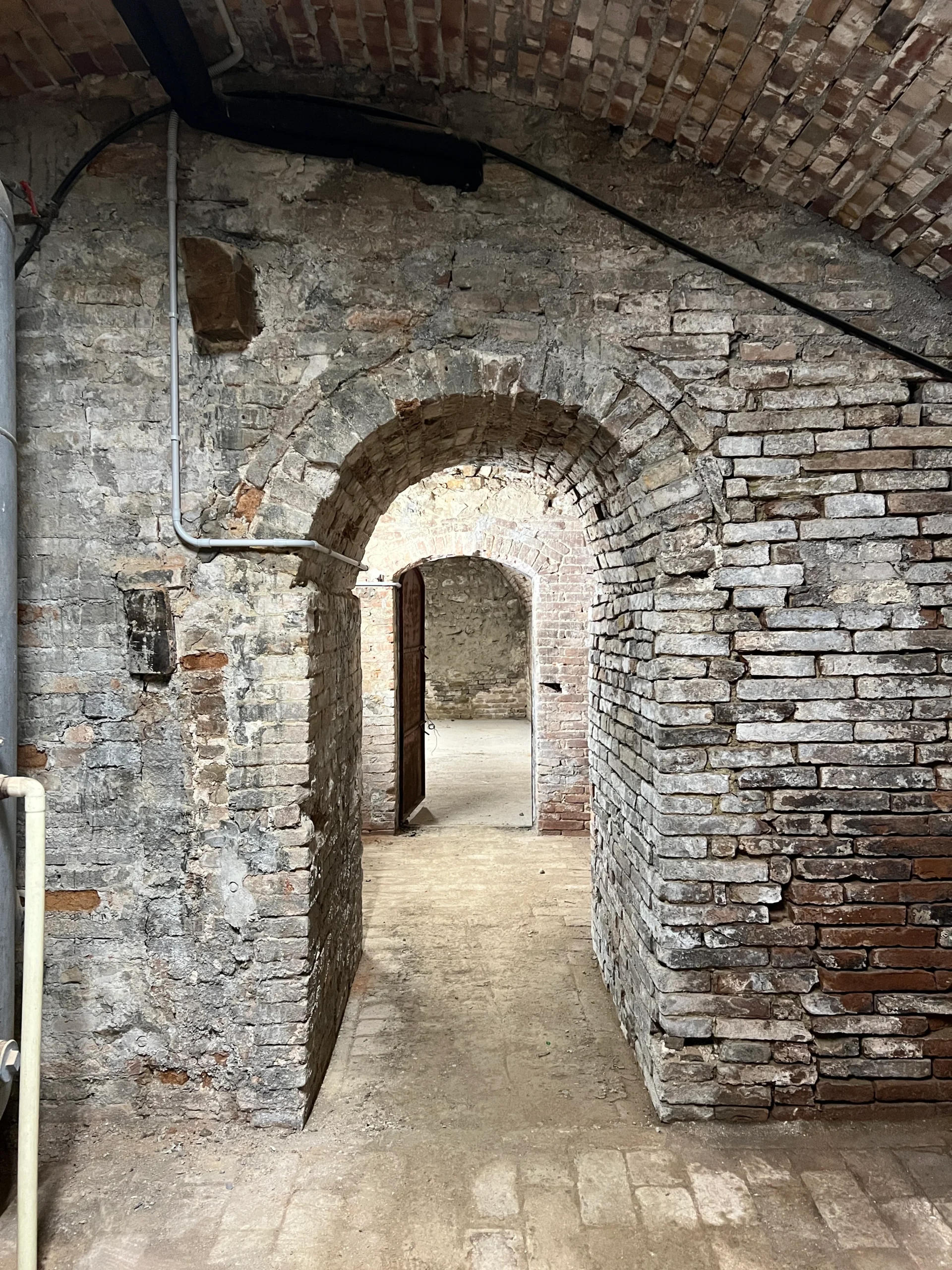
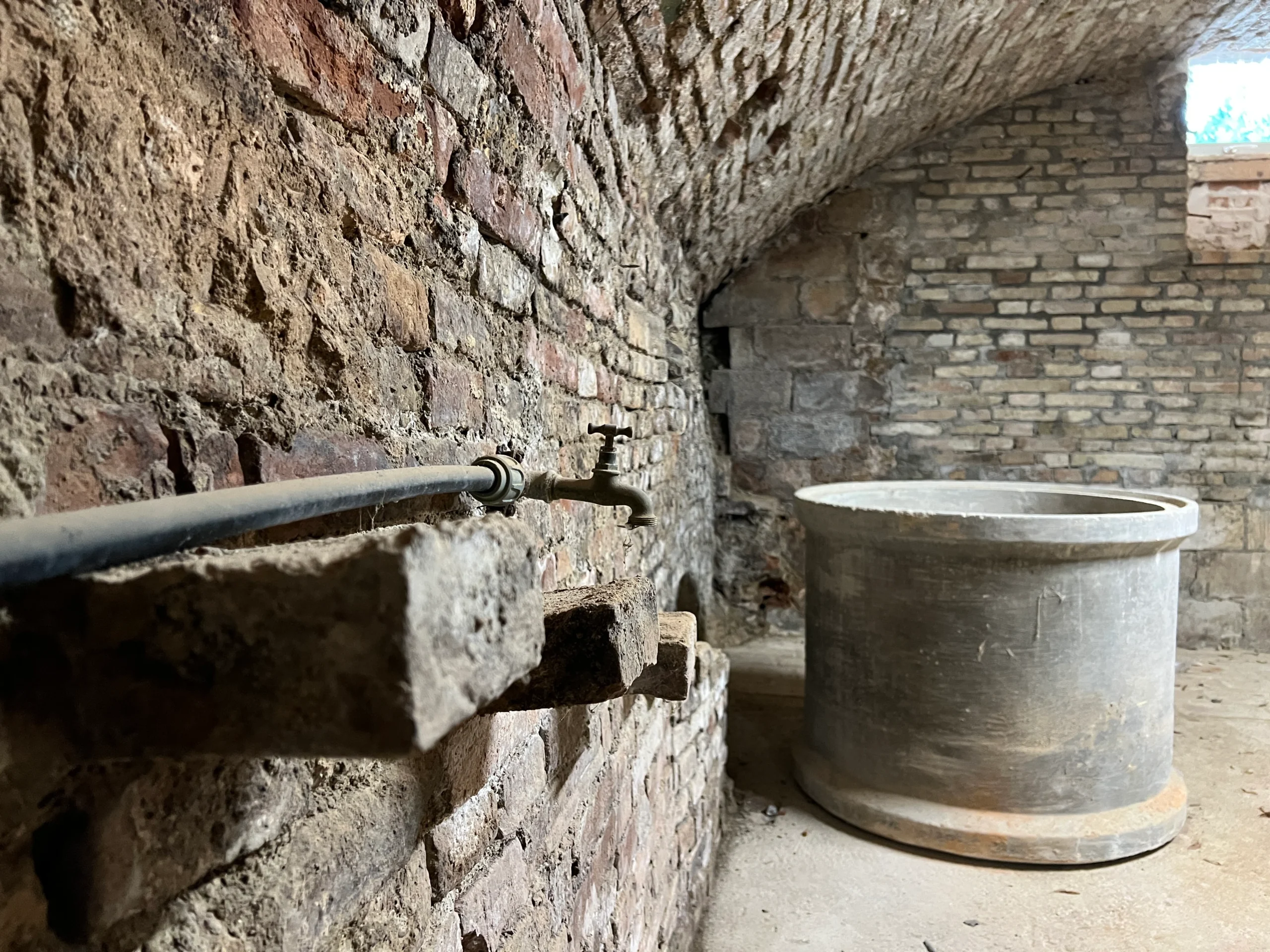
The architectural quality of the complex lies not in an isolated formal landmark, but in the coherence of an integrated system where masonry walls, arcades, roofing systems, and paving work together to define a precise identity deeply embedded in its context.
The 2016 Earthquake as a Revealer of Structural Vulnerabilities Accumulated Over Time
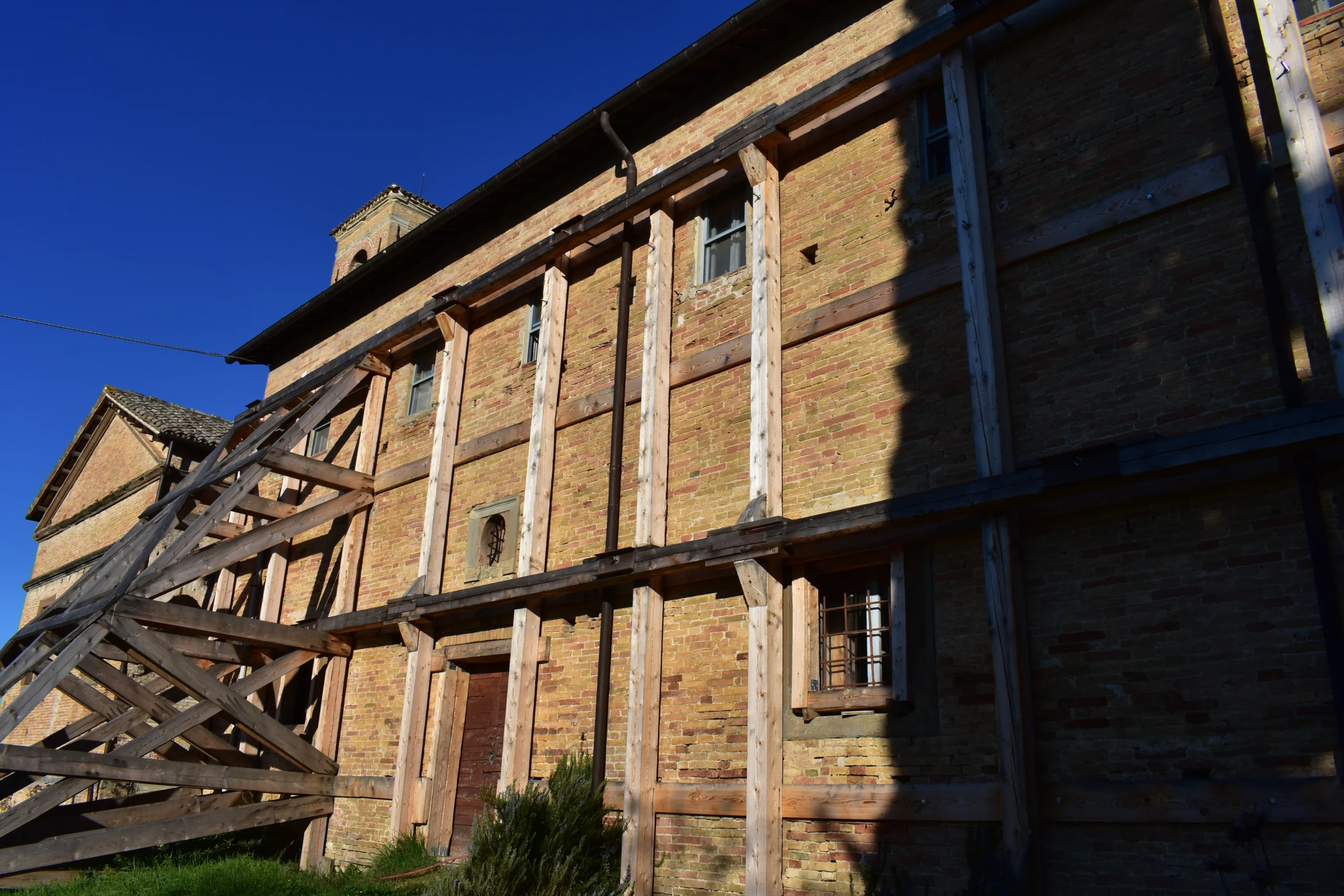
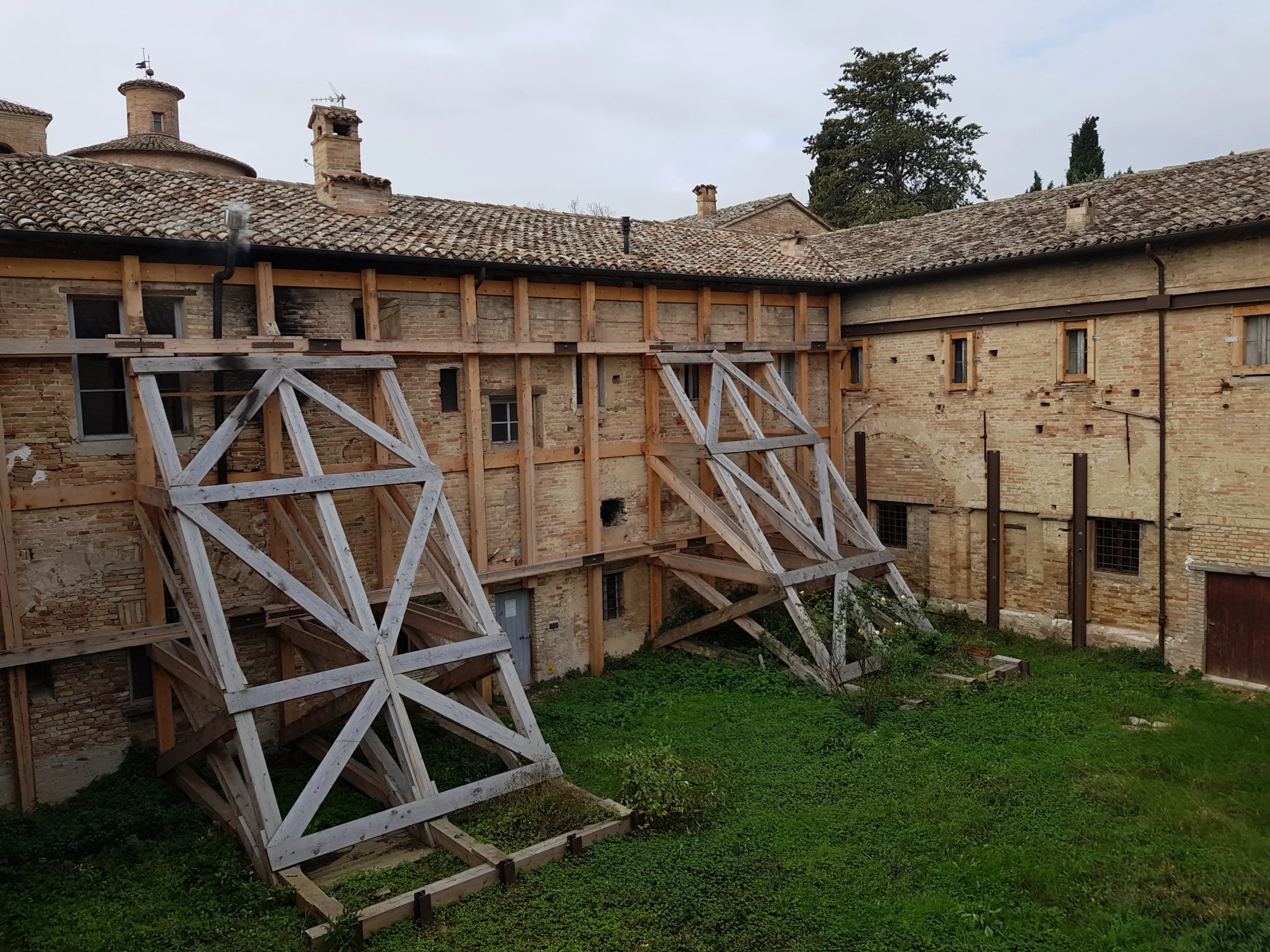
The seismic events exposed latent vulnerabilities, resulting in a damage classification of Level 3 out of 4 and requiring a systemic intervention across the entire building complex.
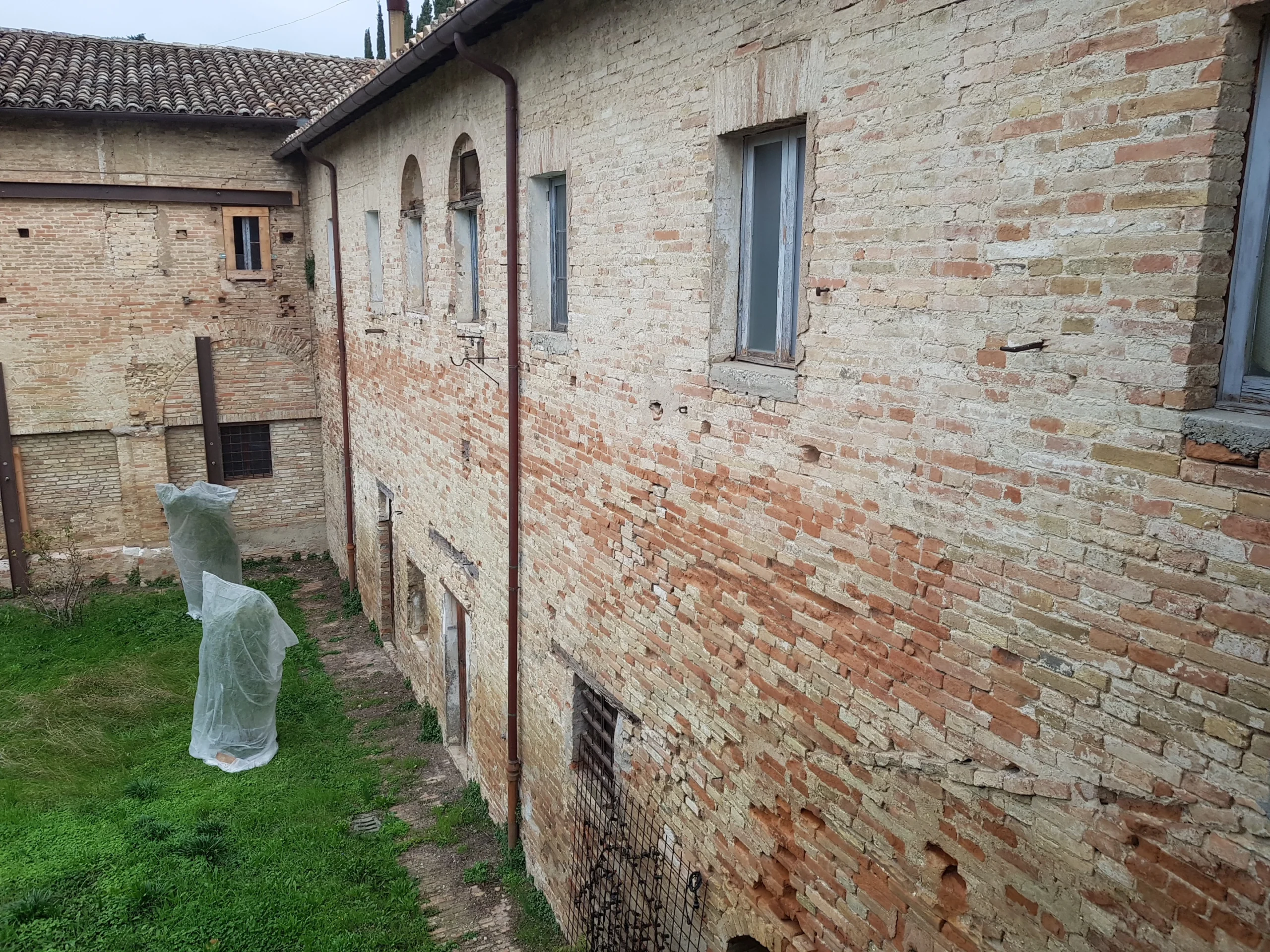
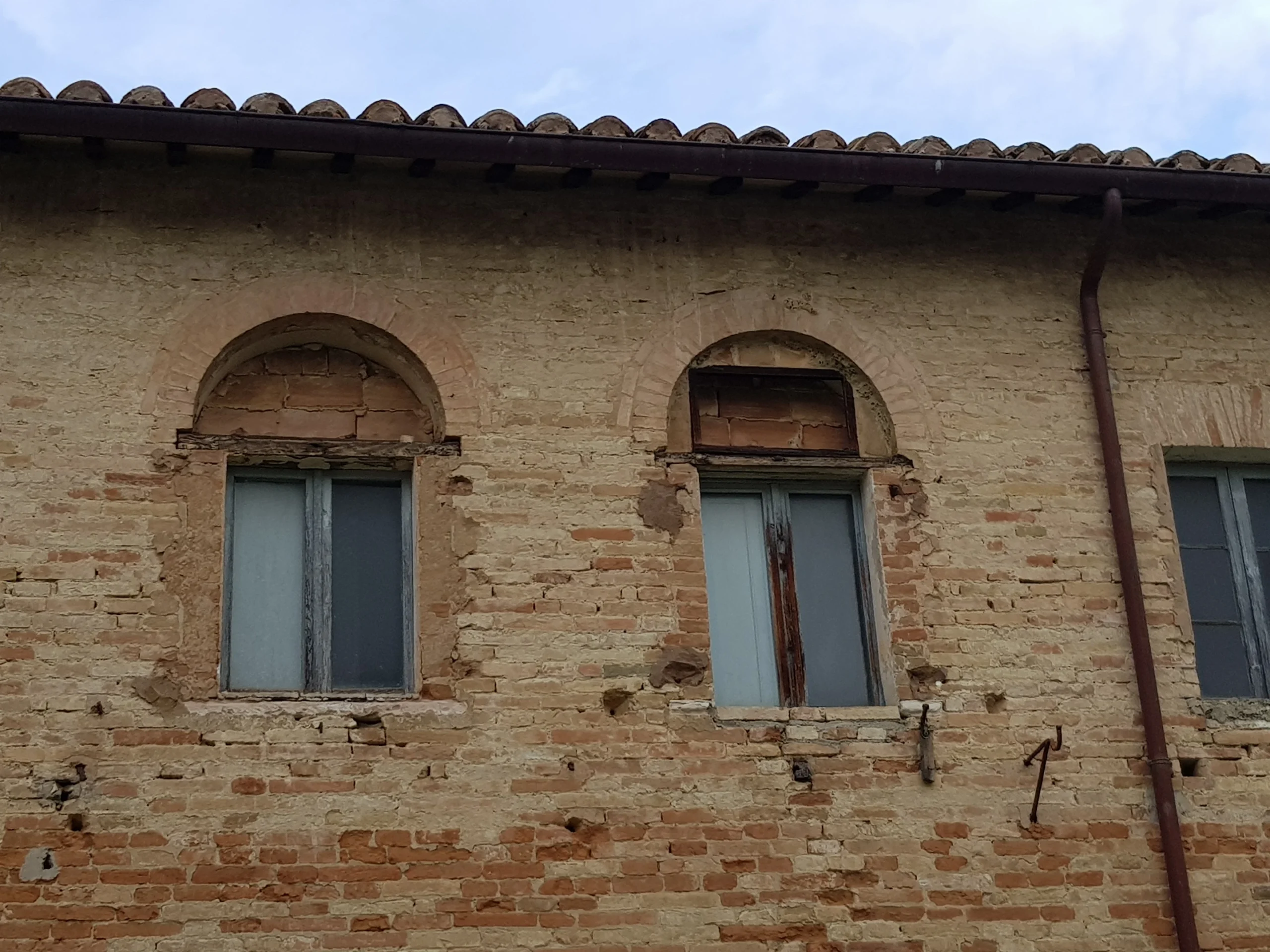
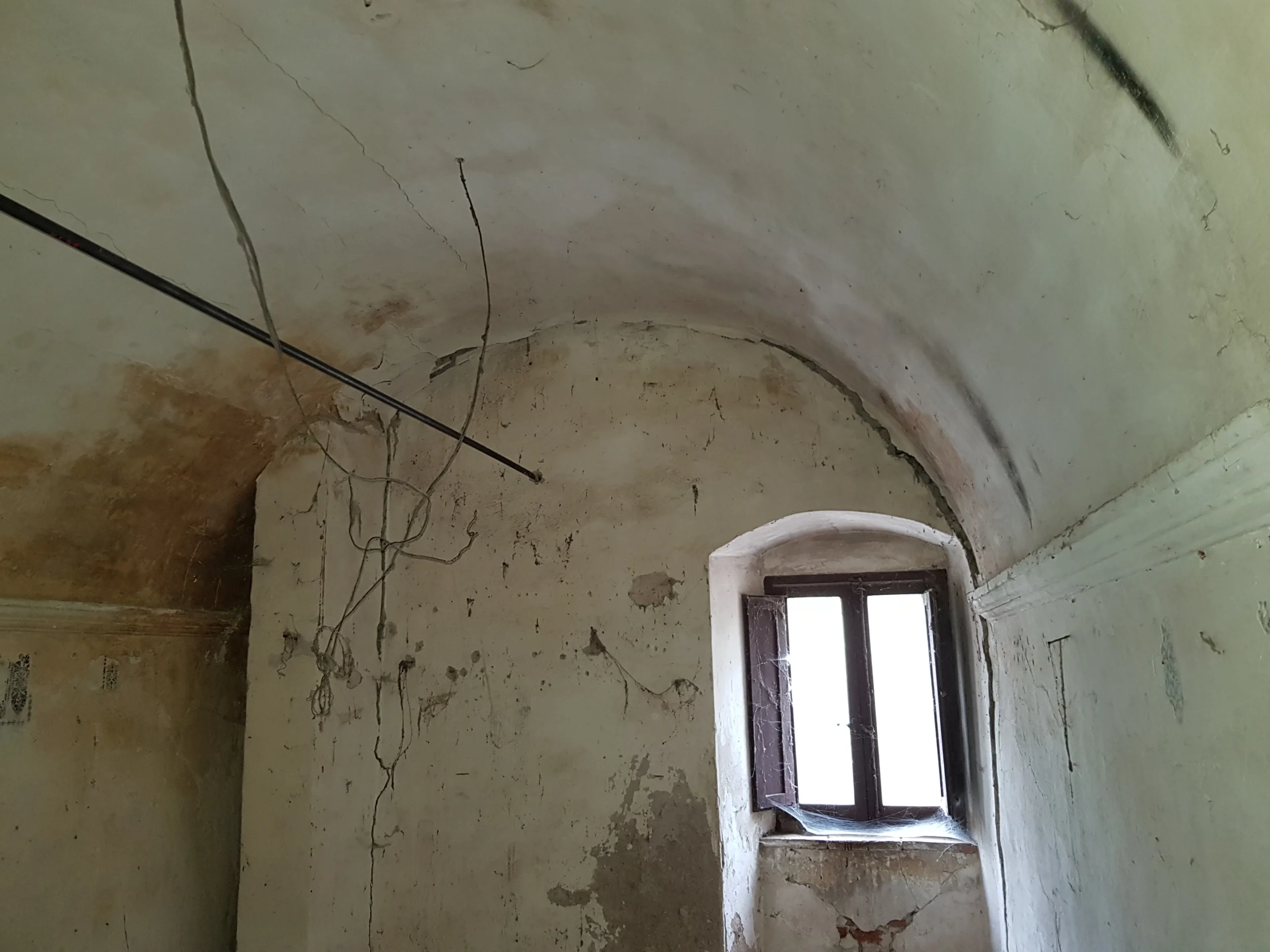
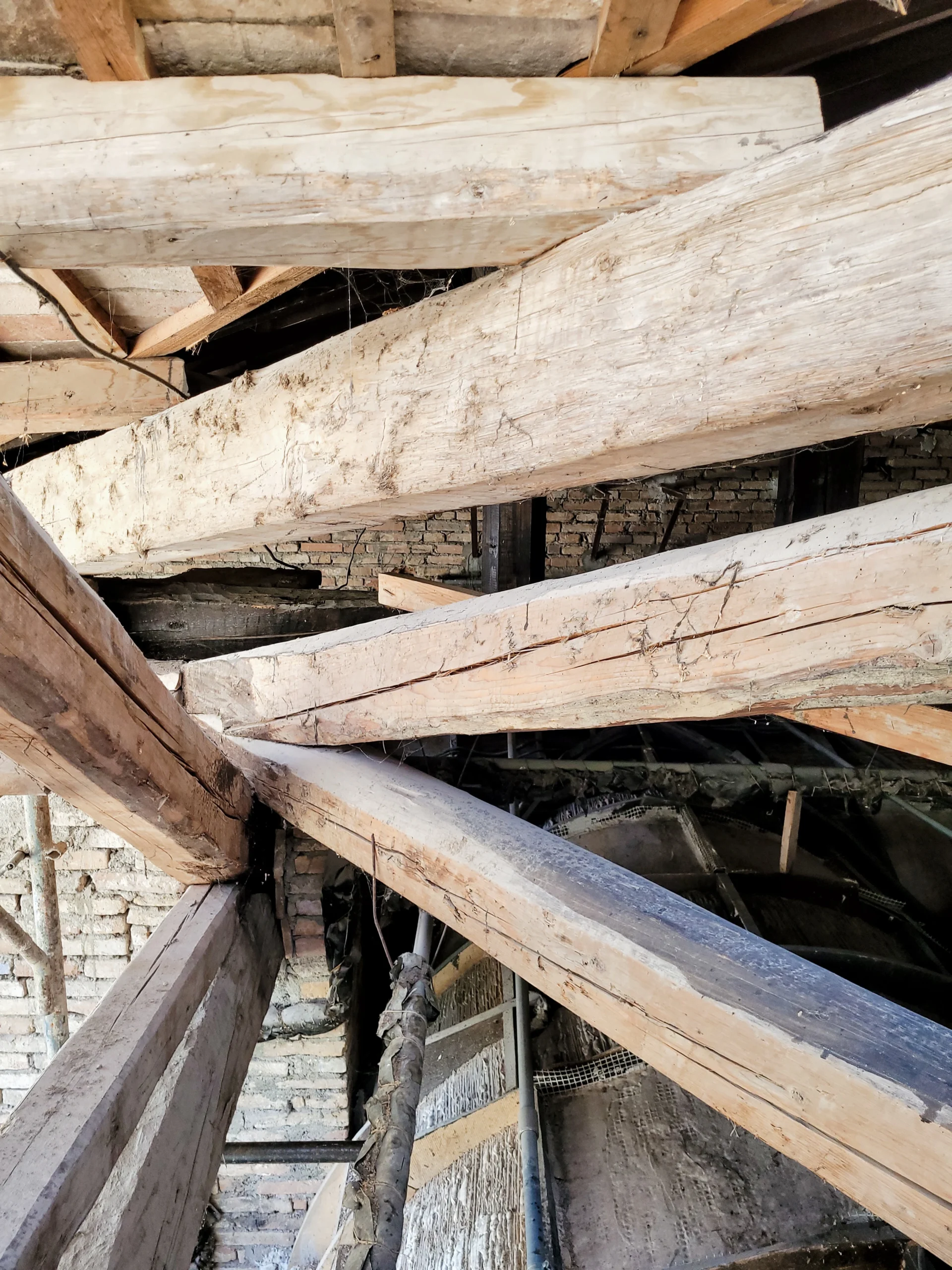
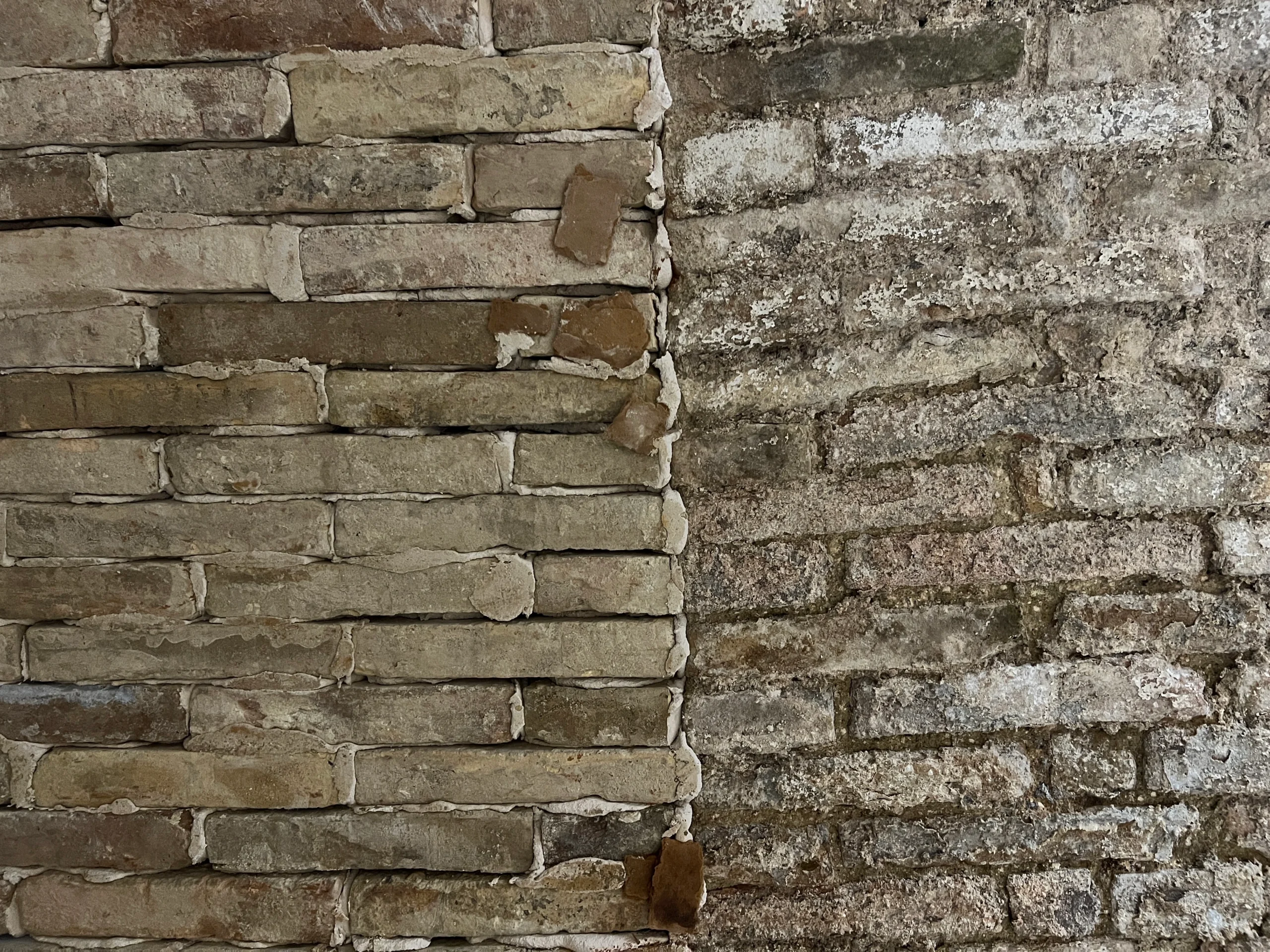
Preliminary investigations carried out before design development revealed widespread cracking in the load-bearing masonry, severe deterioration of timber roof elements, and water infiltration affecting interior quality and the conservation of finish layers. The heterogeneous nature of the structure — brick and stone masonry with often inadequate connections — contributed to amplifying the overall vulnerability of the building.
Understanding the structural behavior of the complex, even before intervening, became the methodological foundation of the entire design process.
Knowledge as the Basis for Intervention: Diagnostics as the Foundation of the Project
For Englobe’s technical team, the investigative phase is not a preliminary step but the core infrastructure upon which every operational decision is built.
The process relied on an integrated system of documentary research, advanced surveying, and targeted diagnostic investigations designed to provide a reliable understanding of structural performance without compromising the integrity of the historic asset. The methodology prioritized representative, non-invasive and minimally invasive testing capable of revealing masonry stratigraphy, construction techniques, and material conservation conditions.
An Integrated Strategy: Conservation, Seismic Upgrading, and Renewed Habitability
The strategy developed by Englobe approaches conservation, seismic upgrading, and functional adaptation as inseparable components of a single process.
The guiding principle is to restore vitality and full usability to the complex without freezing its character into a museum-like condition. Philological conservation of significant architectural elements, strengthening of global seismic performance, and spatial refunctionalization are developed in synergy, with architecture, structural engineering, and building systems operating as a continuous and coordinated framework.
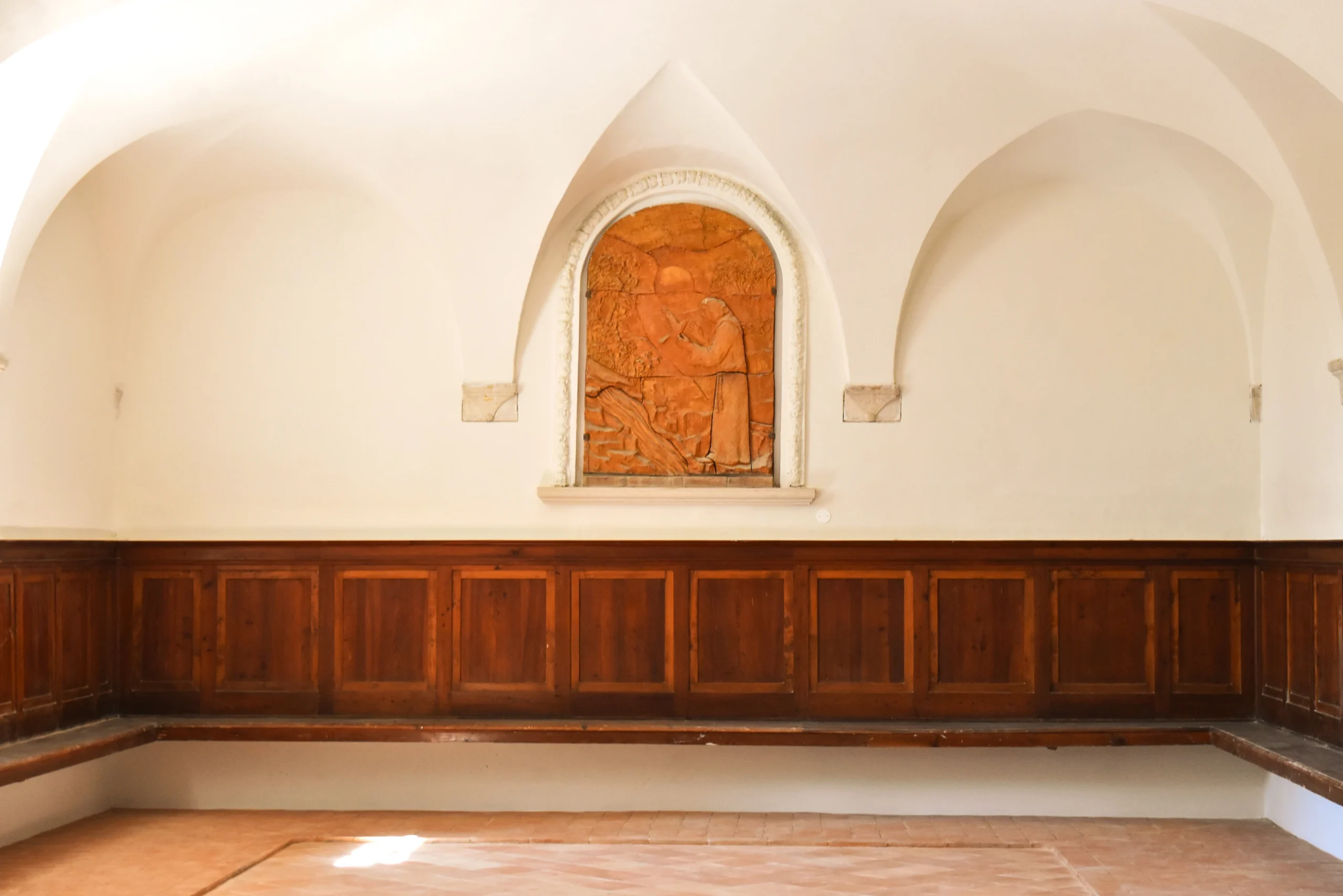
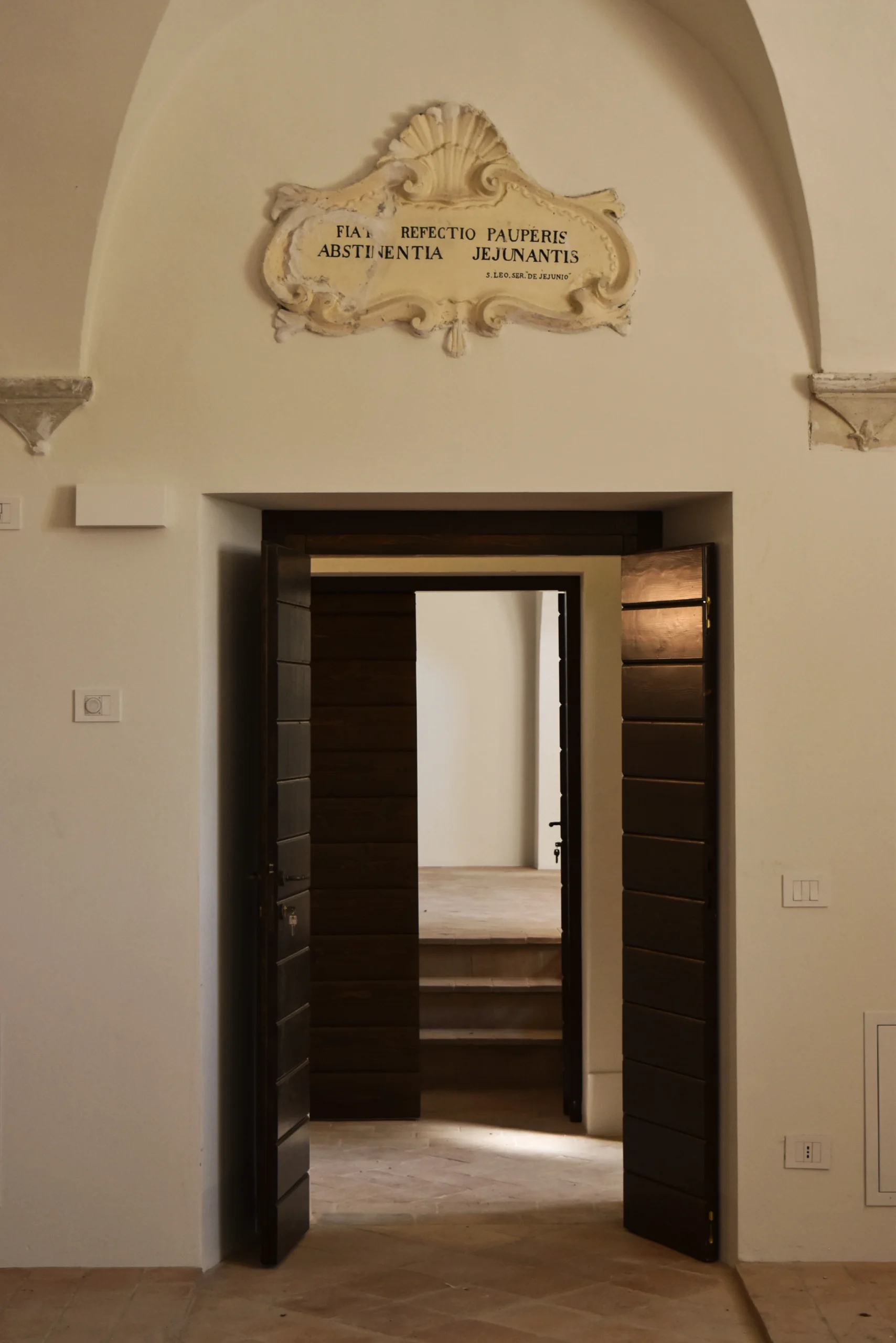
From a functional standpoint, the project restores the convent’s original spatial logic: the refectory and common rooms return to collective use, monastic cells are reorganized to accommodate new patterns of occupancy, and the garden courtyard regains its role as a central relational and open space. Universal accessibility systems and new vertical circulation connections ensure full usability of the complex through solutions carefully integrated into the historic structure.
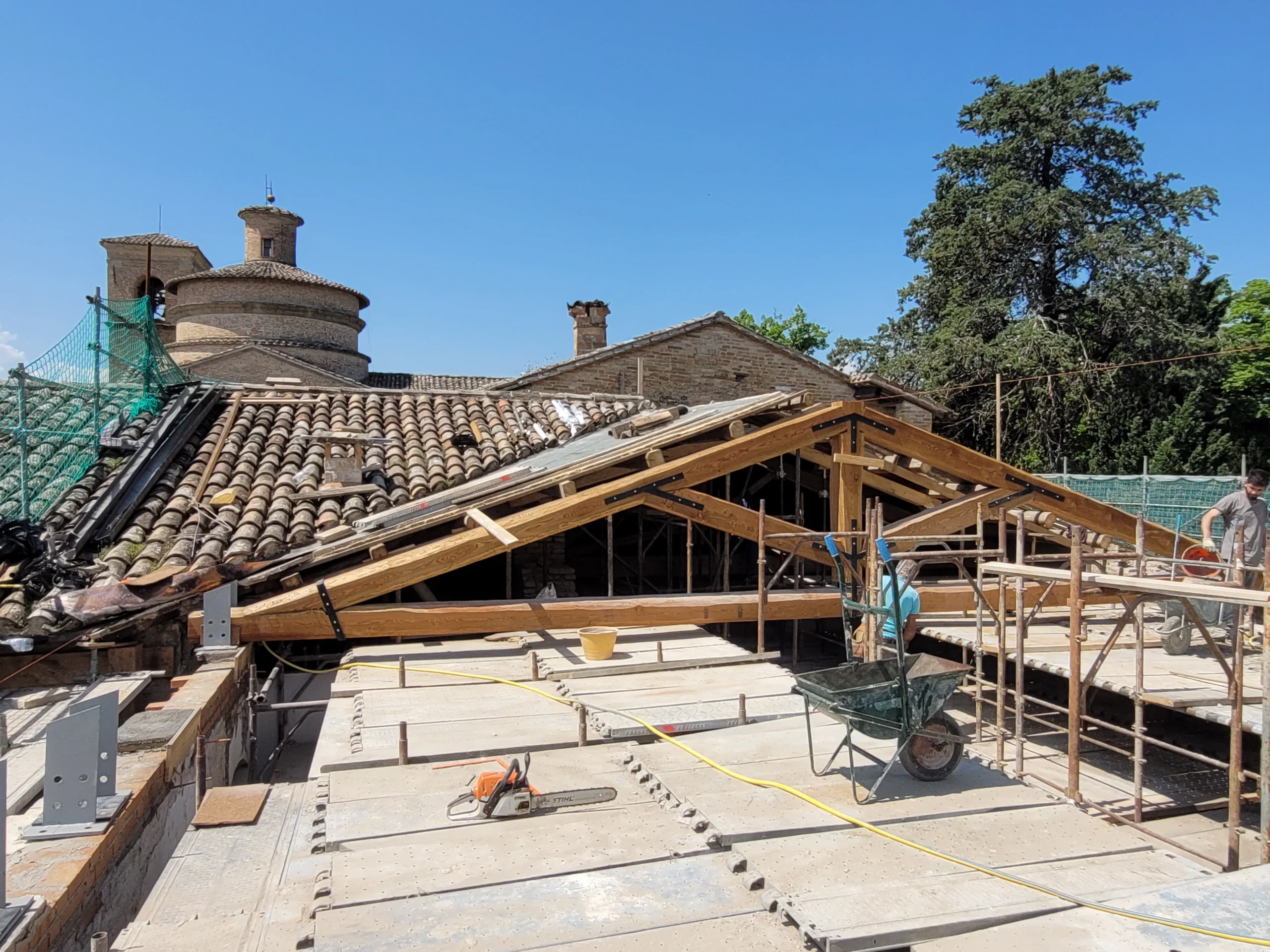
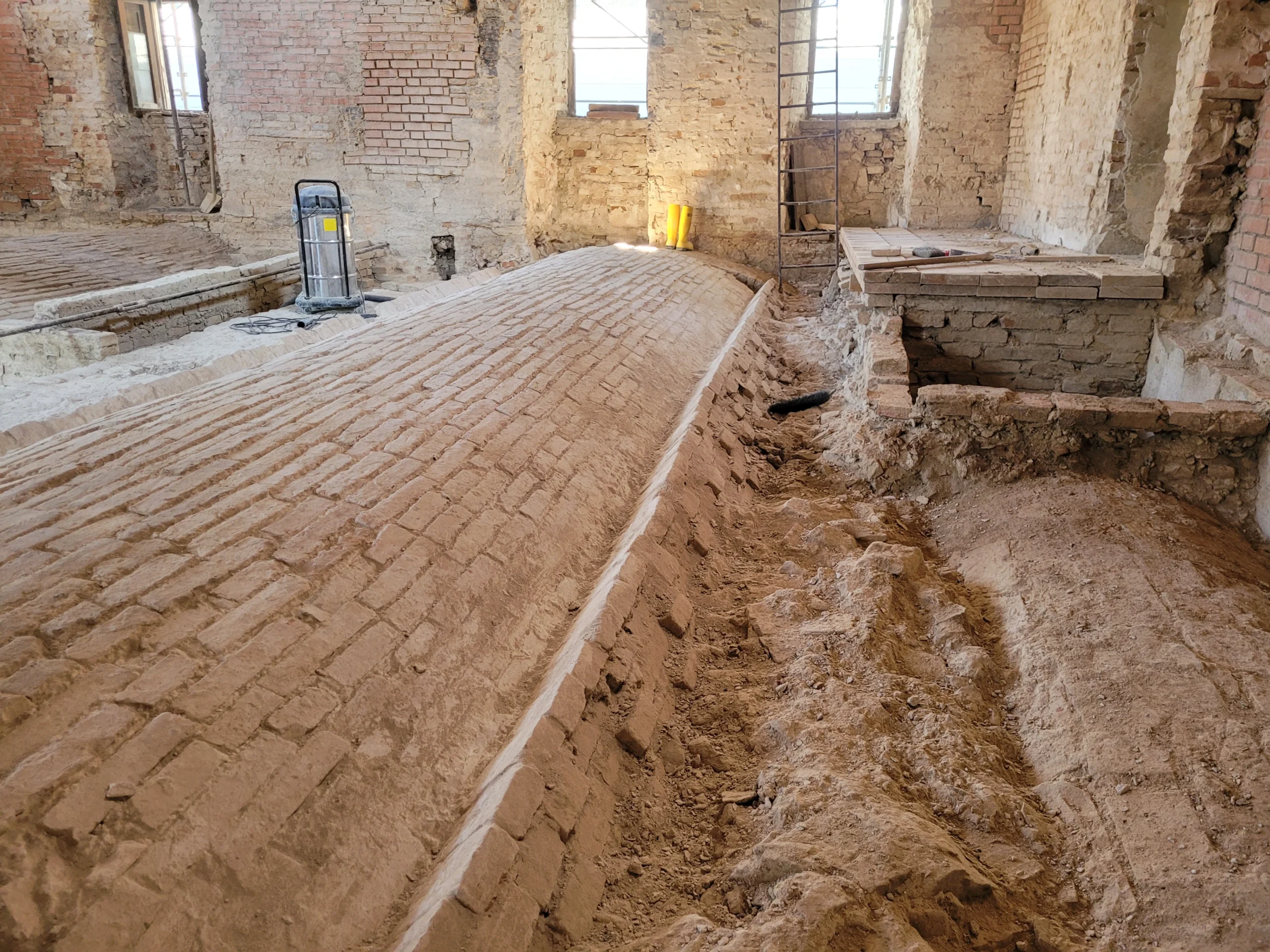
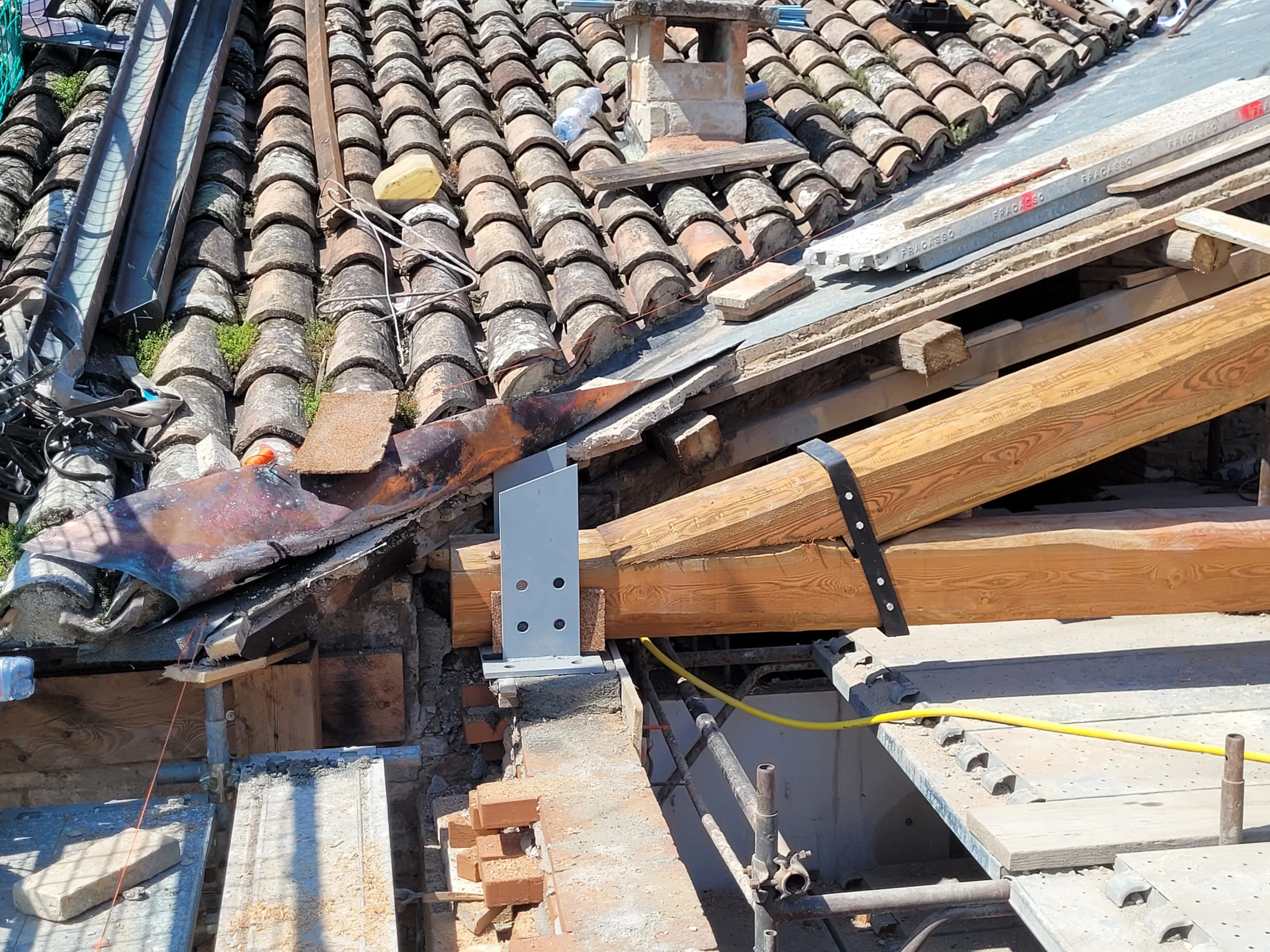
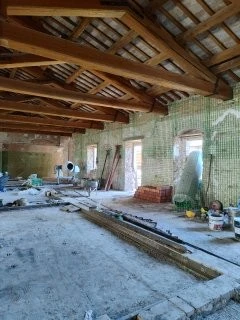
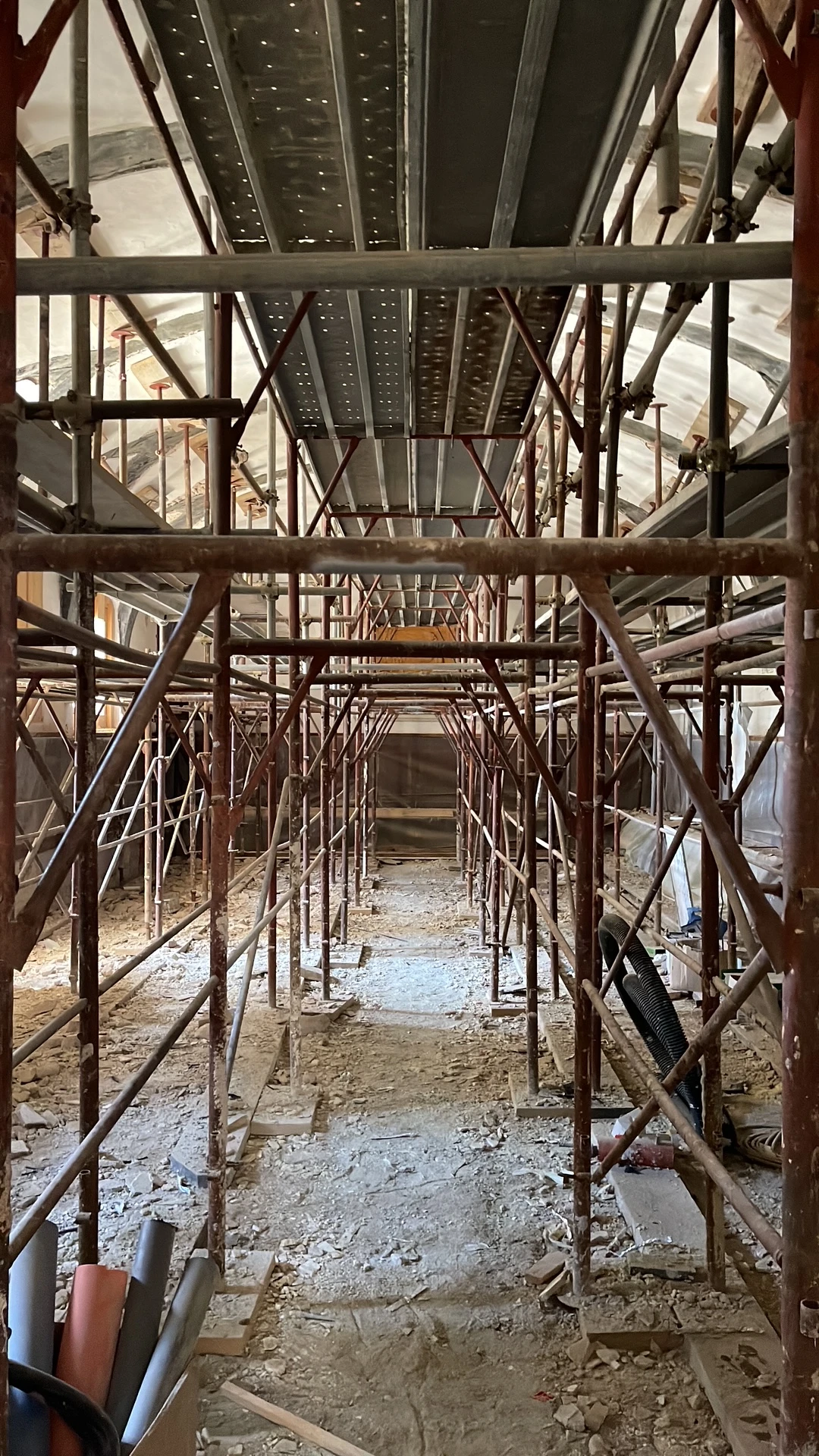
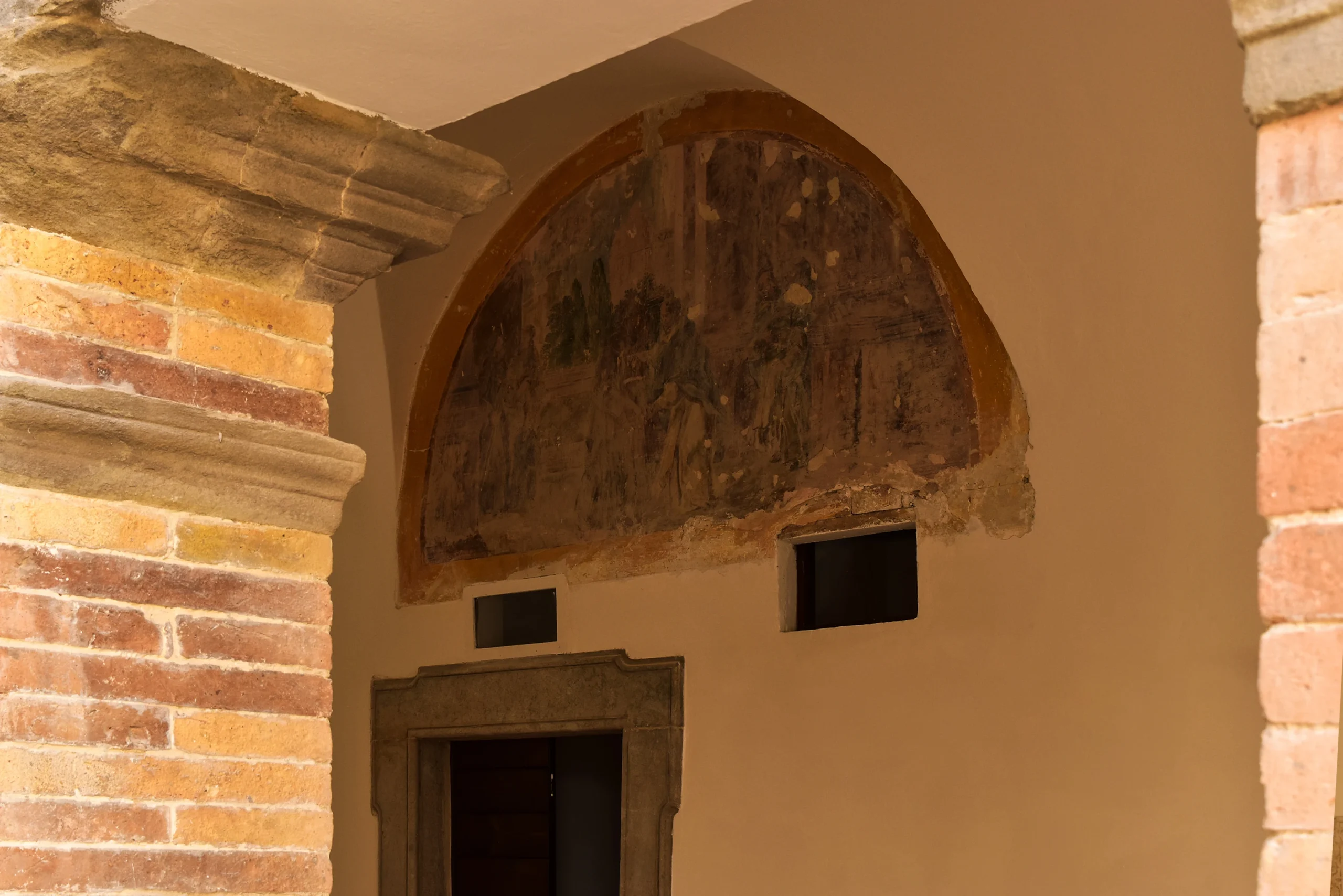
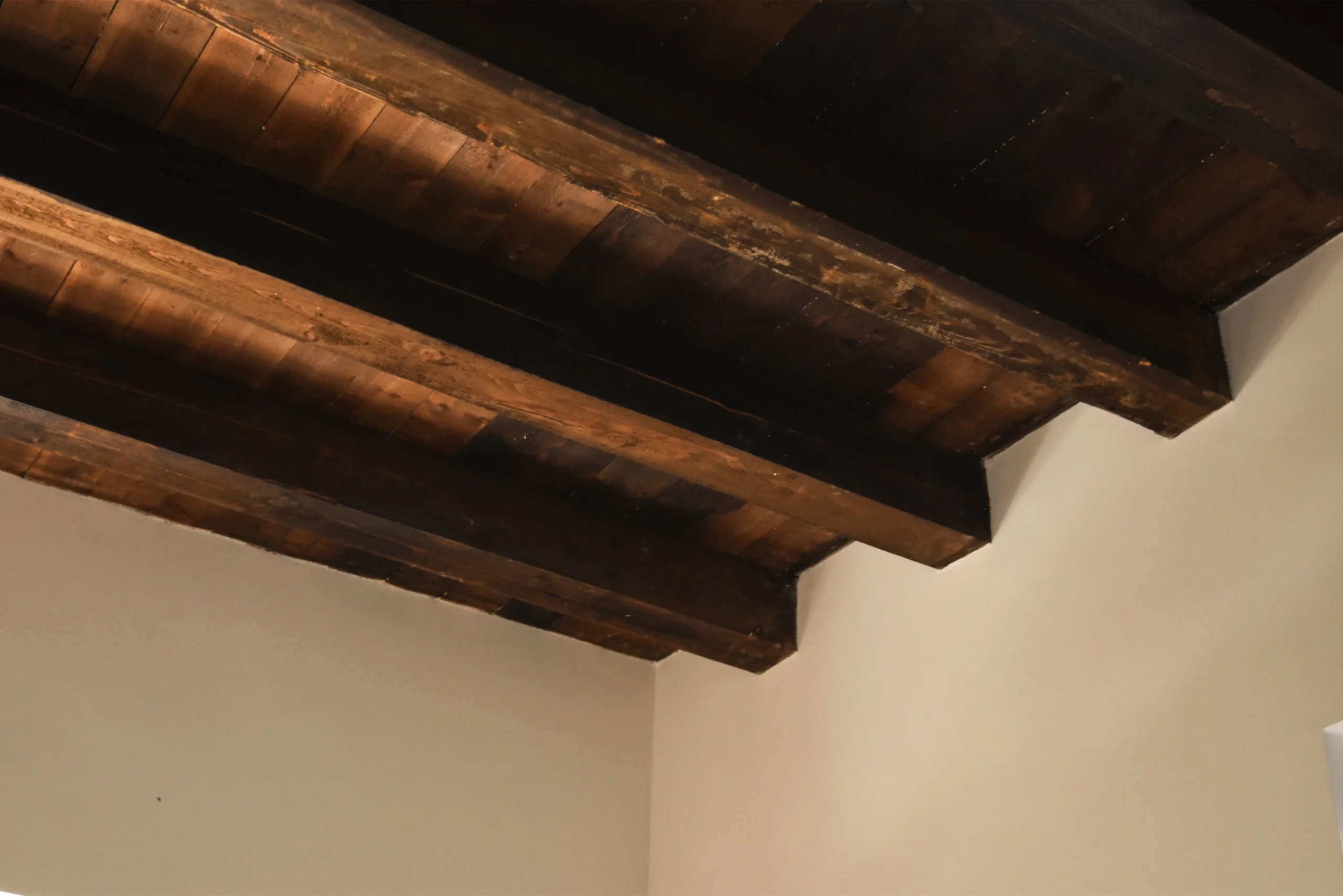
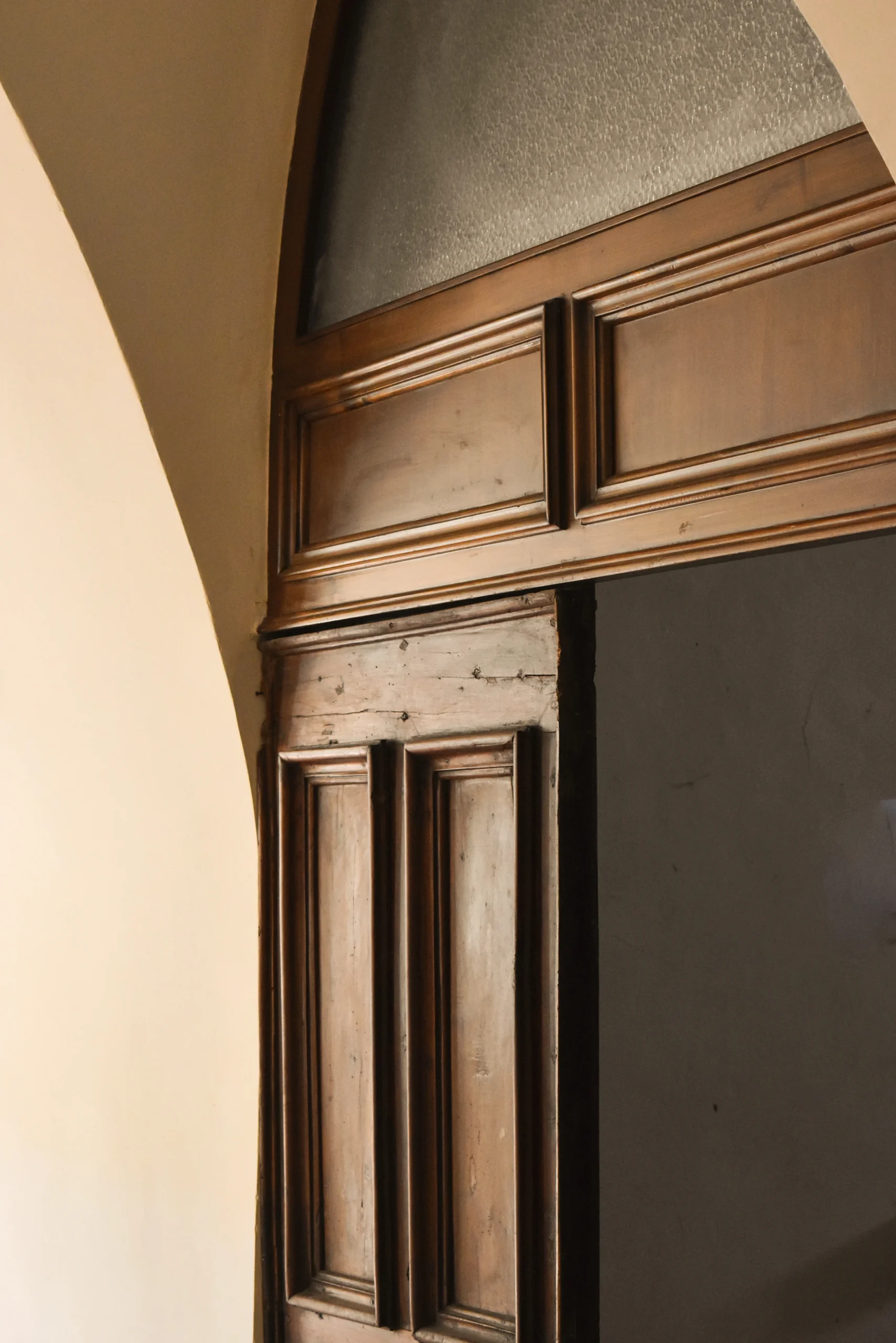
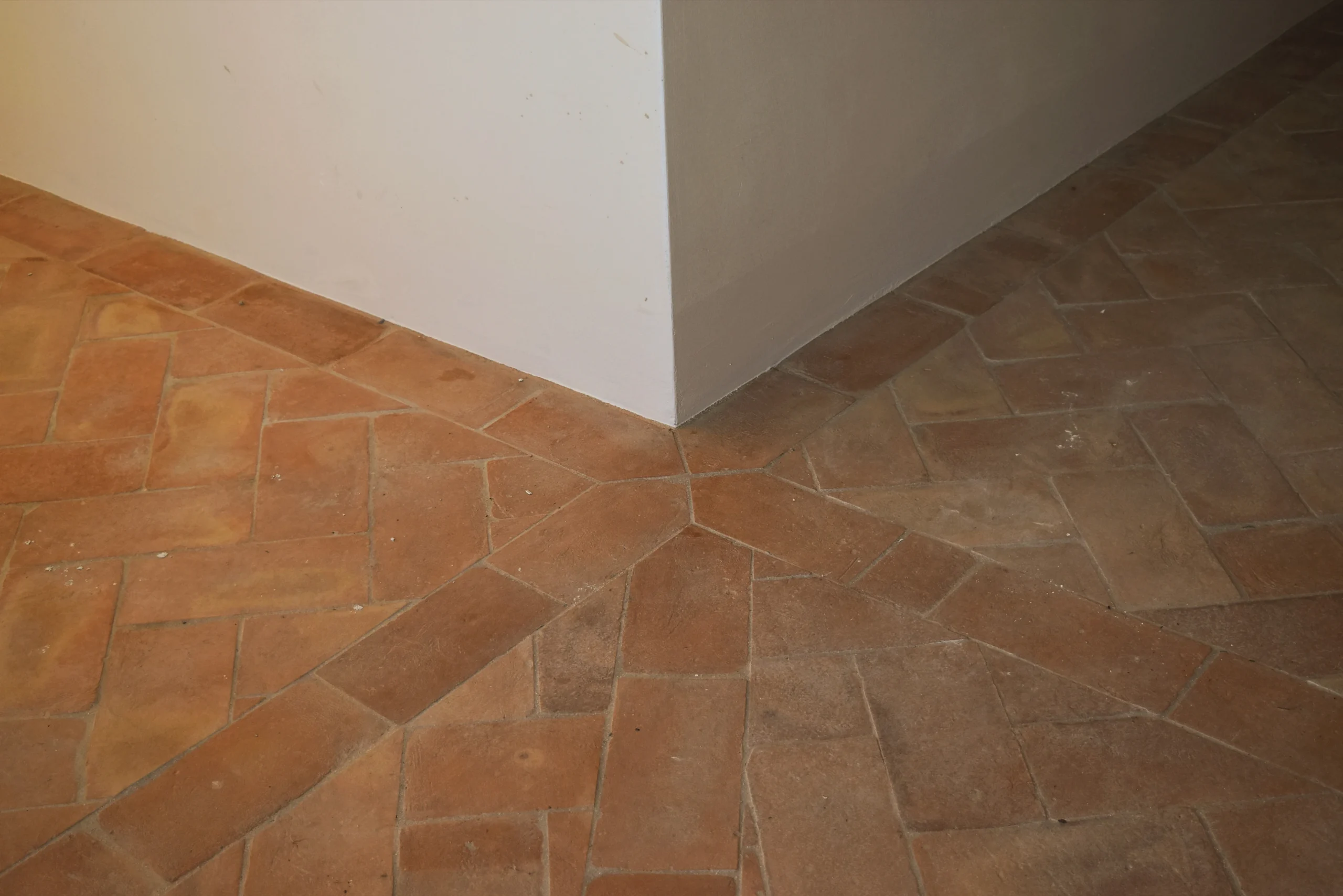
Material conservation represents the most delicate and revealing operation of the intervention. Terracotta flooring is dismantled, individually catalogued, and reinstalled in its original position, combining documentary rigor with perceptual continuity. Masonry surfaces are treated using compatible natural materials to recover chromatic depth consistent with original stratigraphy. Damaged vaults and cracked masonry are consolidated through the cuci-scuci technique — selective stitching and reconstruction using brick and hydraulic mortars — restoring structural continuity without compromising the readability of the historic fabric. Roofing systems are fully dismantled and rebuilt through a selective recovery and reuse process of original timber elements, while seismic upgrading takes the form of a coordinated system of distributed interventions designed to improve overall building performance without altering its material or volumetric perception.
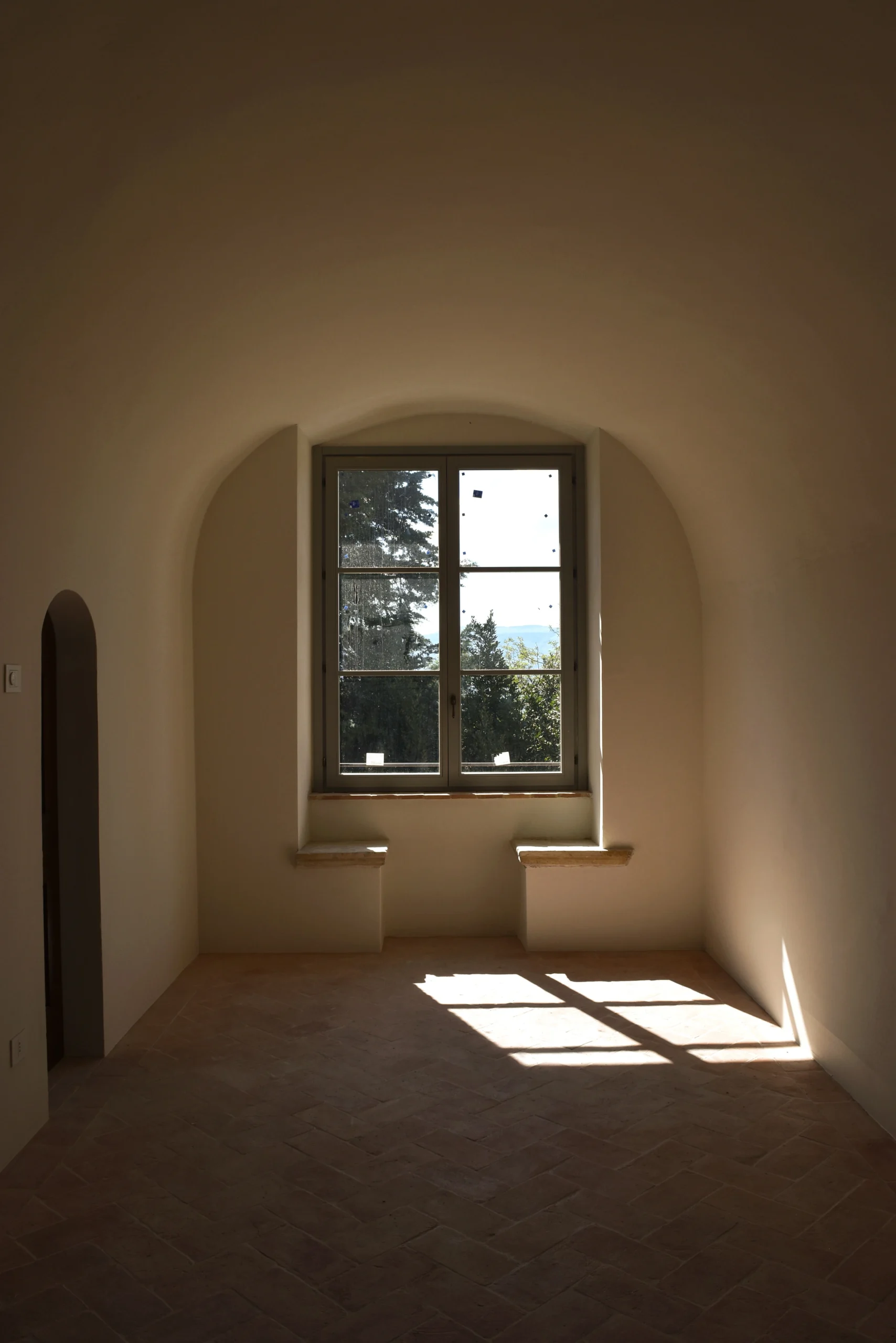
Performance enhancement is completed through discreet building systems integration. High-performance thermal windows, low-temperature radiant systems, hybrid HVAC solutions, and natural insulation materials significantly improve energy performance without altering opening proportions or the visual character of surfaces. Technology does not impose itself on heritage: it supports it, almost invisibly.
Beyond Restoration: Returning a Living Architectural Organism
The Convent of San Bernardino demonstrates how it is possible to intervene in a complex heritage asset through an integrated approach in which technology and culture interact throughout every phase of the process.
The result is neither the replication of a frozen past nor an uncritical superimposition of the present, but a calibrated balance in which architectural memory is restored not as an immobile document, but as a place to inhabit and experience. According to Englobe, this project confirms that restoration can be a contemporary act — capable of connecting knowledge, technology, and culture within a unified vision of the built heritage.
Perché San Bernardino è conosciuto anche come Mausoleo dei Duchi?
La denominazione riflette la volontà esplicita di Federico da Montefeltro, che concepì la chiesa come luogo di sepoltura dinastica per sé e per i propri successori. Costruita tra il 1482 e il 1491 fuori dalle mura di Urbino e attribuita a Francesco di Giorgio Martini, San Bernardino non è semplicemente un'architettura conventuale: è un dispositivo rappresentativo del potere signorile, in cui dimensione religiosa e commemorativa si fondono in un linguaggio formale di straordinaria misura.
Quale rapporto lega il complesso alla stagione artistica dei Montefeltro?
Secondo alcune ricostruzioni storiche, la chiesa ospitava originariamente la Pala Montefeltro di Piero della Francesca, oggi alla Pinacoteca di Brera, stabilendo un dialogo diretto tra spazio architettonico, committenza ducale e pittura rinascimentale. Un'opera pensata per un luogo specifico, all'interno di un progetto culturale in cui architettura e arti figurative si misuravano sullo stesso piano di ambizione. Leggere San Bernardino significa, anche per questo, attraversare l'intero sistema di relazioni che Federico costruì attorno alla propria corte.
PLACE
Urbino (PU)
CLIENT
Provincia Picena di S. Giacomo della Marca dei Frati Minori
WORK PERIOD
2021 / 2026
ACTIVITY
Construction Design
Design phase Safety coordination
Detailed Design
Preliminary design
Safety coordination for executive phase
TYPOLOGY
Conservative Rehabilitation
Restoration of Listed Cultural Heritage
INTENDED USE
Cultural
Multifunctional
Religious
Residential
WORK AMOUNT
€ 8.000.000,00
WORKING GROUP
Dott. Geol. Alberto Antinori
Dott.ssa Elisa Saracino
Englobe