What happened in Fermo on October 23, 2026?
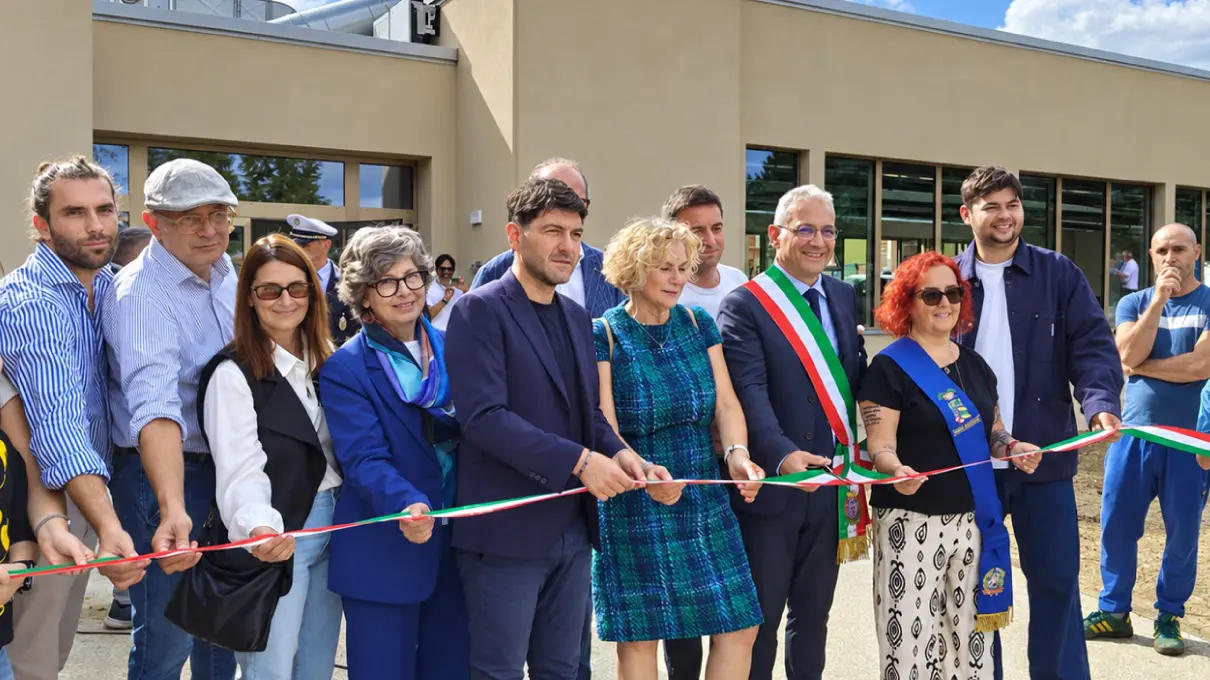
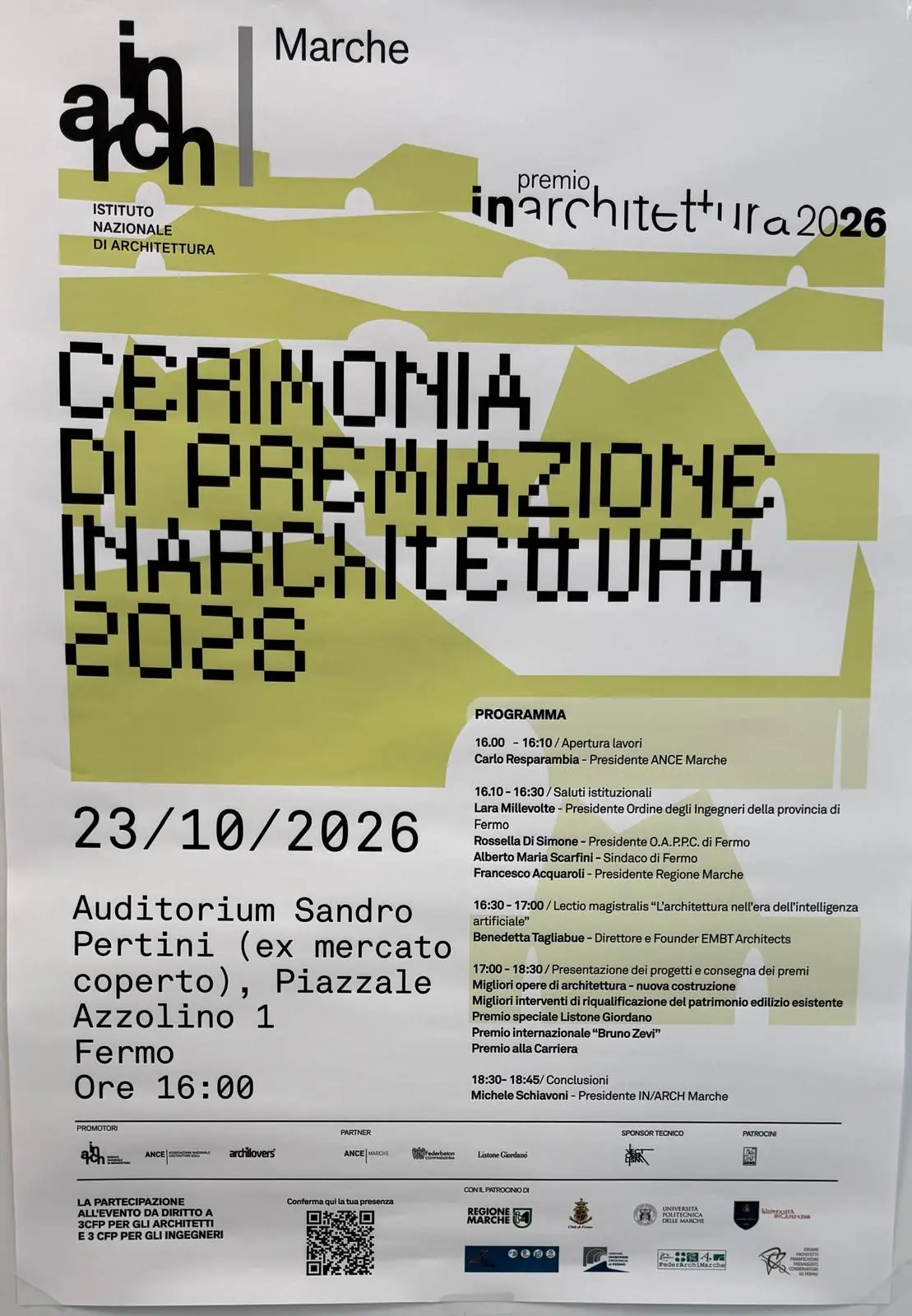
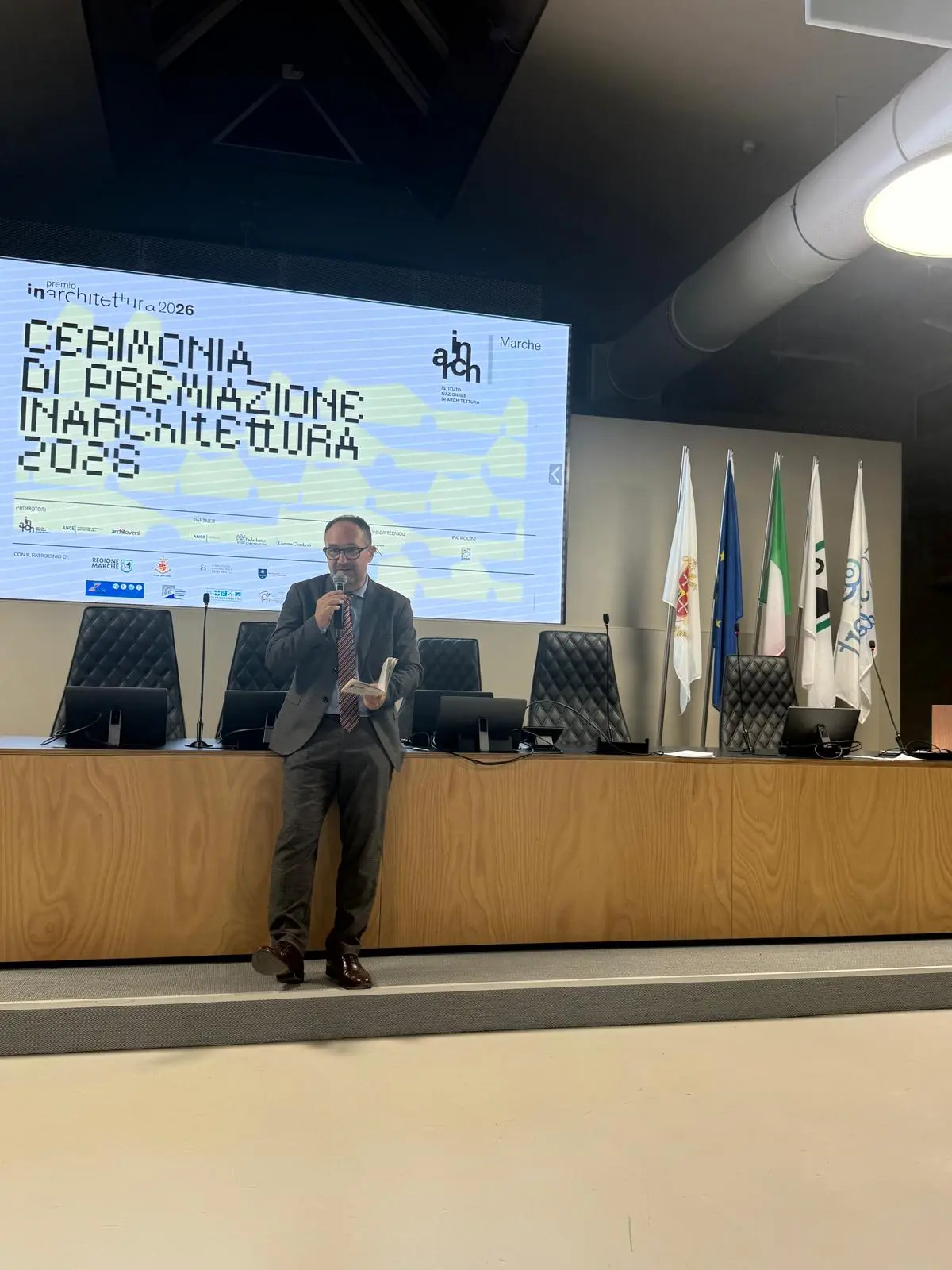
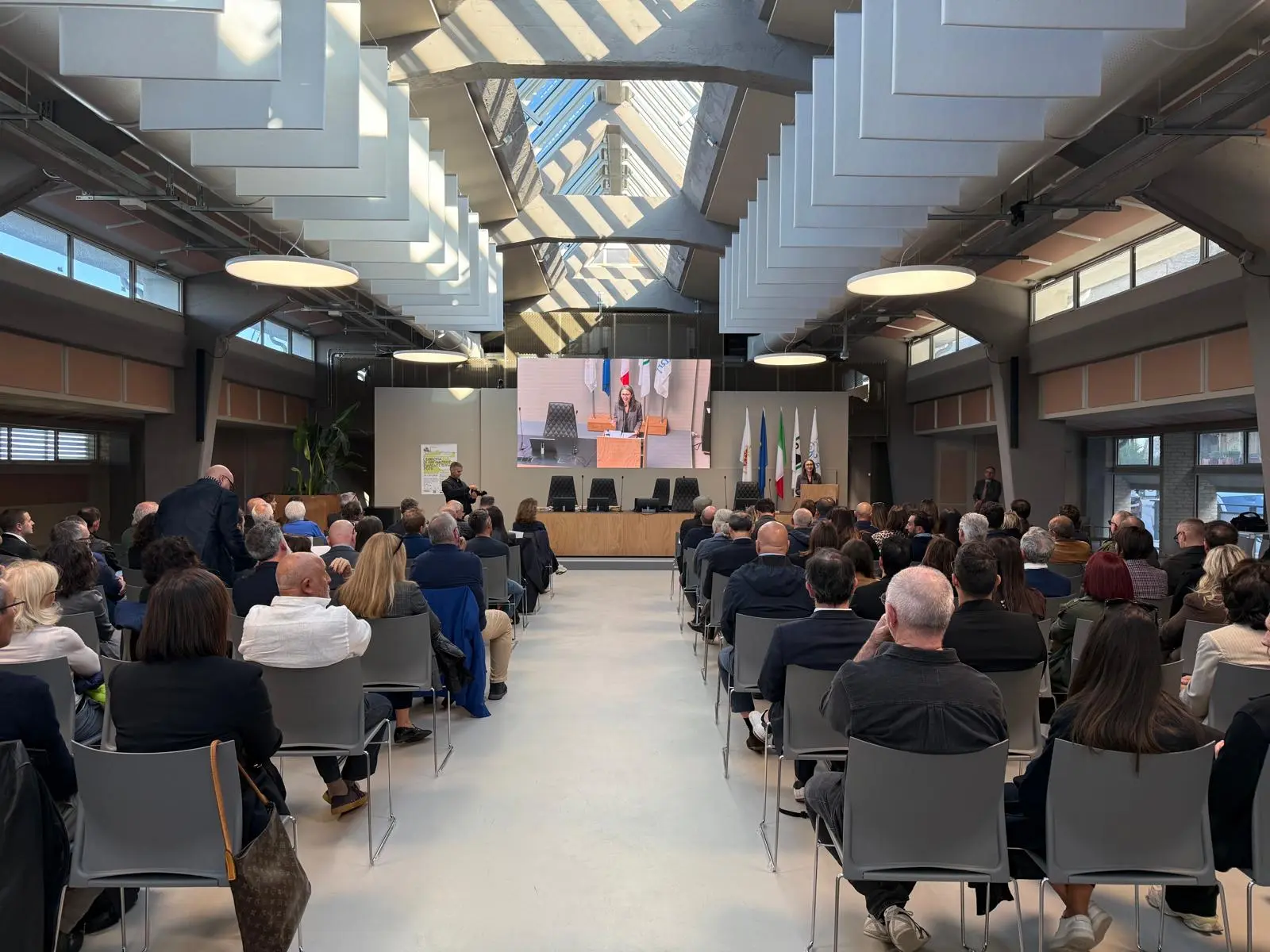
Fermo hosted the regional ceremony of the In/Architettura 2026 Awards, presented by Italy’s National Institute of Architecture (In/Arch) together with ANCE, the national association of building contractors, and Archilovers, honoring the best completed architecture in the Marche and Umbria regions.
The venue was no accident. The Sandro Pertini Auditorium occupies the city’s former covered market, a building that changed its use without losing its character: a fitting setting for an award focused on how places are built and transformed. The jury reviewed 79 entries, 56 from Marche and 23 from Umbria. The winning projects now move on to the national round, scheduled in Venice in mid-November.
What are the In/Architettura Awards, and why do they honor the whole building team?
The In/Architettura Awards were founded in 1961 through a partnership between In/Arch and ANCE, and they only consider completed buildings: each award goes jointly to the client, the architect and the contractor.
That is what sets them apart. Michele Schiavoni, president of In/Arch Marche, noted that the Institute was founded by the architecture critic Bruno Zevi and is recognized and funded by Italy’s Ministry of Culture and Ministry of Infrastructure. Fermo hosted the sixth edition of the current format, in which a regional selection leads to a national one. For the past three editions, the Marche chapter has also run the awards for Umbria, which no longer has a chapter of its own.
Vice president Simona Cerolini explained the idea in plain terms: a building is the work of many hands, from contractors to craftspeople to design professionals, and the award should recognize all of them. As she put it, you only get a quality result when the entire chain of people behind it delivers quality. The event had been presented a few days earlier at Palazzo dei Priori, Fermo’s city hall, with Giampiero Gallucci, the city’s commissioner for the environment and urban appearance.
Who spoke at the ceremony, and who was on the jury?
After opening remarks by Carlo Resparambia, president of ANCE Marche, and welcome addresses from local officials, the highlight of the afternoon was a keynote lecture by Benedetta Tagliabue, chair of the jury, who joined by video from her studio in Barcelona.
The program included remarks by Lara Millevolte, president of the Fermo Province Order of Engineers; Rossella Di Simone, president of the Fermo Order of Architects, Planners, Landscape Architects and Conservators; Mayor Alberto Maria Scarfini; and Francesco Acquaroli, president of the Marche Region. Di Simone urged the audience to look beyond the awards and use the occasion to reflect on the architect’s role today and tomorrow, and on the profession’s ethical responsibilities. In/Arch national president Barbara Beltrame Giacomello described the awards as a way to trace the evolution of Italian architecture over time.
Tagliabue, founder and director of EMBT Architects, spoke on “Architecture in the Age of Artificial Intelligence.” Her firm, founded with Enric Miralles, designed the Santa Caterina Market in Barcelona and the Scottish Parliament in Edinburgh, among other works. Serving on the jury with her were:
- Michele Schiavoni, president of In/Arch Marche
- Carlo Resparambia, president of ANCE Marche
- Andrea Margaritelli, past national president of In/Arch and representative of Listone Giordano
- Dario Nanni
- Gianluigi Mondaini, Polytechnic University of Marche
- Michela Francioni, director of technical services for the City of Porto San Giorgio
- Elisabetta Parisi Presicce, board member of In/Arch Marche
- Giuliana Salmaso, architect
Schiavoni delivered the closing remarks.
Which projects won in the new construction category?
In Marche, the winners were the Sforzacosta Preschool, The Rising Stones in Castelplanio and the Fano Waterfront and Seaside Plaza; in Umbria, the Alma Agritourism Estate in Assisi and the Valfabbrica Cemetery Expansion.
The three Marche projects could hardly be more different, yet they share one idea: building relationships before building volumes. In Sforzacosta, the jury recognized a school where daylight and greenery connect indoors and outdoors under a single unifying roof. In Castelplanio, The Rising Stones takes the vineyard rows, the lay of the land and the memory of the place and translates them into contemporary architecture, without imitation and reusing what was already there. In Fano, a fragmented shoreline becomes a continuous public space where infrastructure, landscape and pedestrian and bike routes work together again.
- Sforzacosta Preschool (Marche). Client: ABF Andrea Bocelli Foundation. Architect: BDR bureau. Contractor: Subissati S.r.l.
- The Rising Stones, Castelplanio (Marche). Client: Società Agricola Capriotti. Architect: GAME (Gabriele Marinelli Architetto). Contractor: EdilCres di Claudio Moronci.
- Waterfront and Seaside Plaza, Fano (Marche). Client: City of Fano. Architect: SUPERSPATIAL architettura. Contractor: Rockolors S.r.l.
- Alma Agritourism Estate, “architecture of position,” Assisi (Umbria). Client: Melrose Società Agricola S.r.l. Architects: Alessandro Buffi and Matteo Sannipoli. Contractor: Edilizia Ceccarelli S.r.l.
- Valfabbrica Cemetery Expansion (Umbria). Client: Town of Valfabbrica. Architect: Andrea Dragoni. Contractors: Baldoni Amerigo S.r.l. and Edilizia F.lli Antoniacci S.n.c.
In Umbria, the Alma estate was chosen for the way it settles into a landscape of great historic value, with both restraint and character. In Valfabbrica, Dragoni explores monumental forms and their symbolic meaning, distilling the language of the past down to its essentials.
Which projects on existing buildings won?
In the category for the rehabilitation of existing buildings, the Marche winners were The Stone Forest and the Threshold of the Sibyl, the Butterfly House and the Trabocco Ecomuseum; in Umbria, “Spello. Flower Carpets of Stone,” Casa AR and the Tower of the Capitano del Popolo in Assisi.
This is the category that speaks most directly to anyone working in historic town centers, on protected heritage or in areas struck by earthquakes. In Montemonaco, a few carefully placed interventions and traditional materials give the site a remarkable evocative power. In Cessapalombo, rebuilding becomes an opportunity for regeneration, giving equal weight to safety, sustainability and architectural quality in the landscape of the Sibillini Mountains. In Montecarotto, an archaeological structure comes back to life through solutions measured in both form and materials.
- The Stone Forest and the Threshold of the Sibyl (Il Bosco di Pietra e la Soglia della Sibilla), Montemonaco (Marche). Client: Town of Montemonaco. Design: architect Monia Germani and engineer Quintilio Siquini. Contractors: DAPAM S.r.l. and Cuadra Euroinfissi S.n.c.
- Butterfly House (Casa delle Farfalle), Cessapalombo (Marche). Client: Town of Cessapalombo. Architect: C10. Contractor: G.L.C. Appalti S.r.l.
- Trabocco Ecomuseum, Montecarotto (Marche). Clients: Town of Montecarotto and Legambiente Verdeacqua. Design: engineer and architect Lorenzo Goffi. Contractor: Edil Rosorani S.r.l.
- “Spello. Flower Carpets of Stone” (Spello. Infiorate di pietra), Spello (Umbria). Client: Town of Spello. Architect: Massimo Berzetta Architetto (Oikos, SAB, Sintagma). Contractors: Zambelli S.r.l. and BIES S.r.l.
- Casa AR, Assisi (Umbria). Clients: Gigliola Petrini and Mario Romagnoli. Architect: Alessandro Bulletti Architetti. Contractor: Edil Global S.r.l.
- Rehabilitation of the Tower of the Capitano del Popolo, Assisi (Umbria). Client: City of Assisi. Architect: Bruno Mario Broccolo. Contractor: Danilo Scacaroni.
In Umbria, Spello stands out: replacing the utility networks in the historic center became a chance to restore the original paving and reuse the stone, with the infrastructure carefully concealed. Casa AR stitches a fragmented property into a single whole that joins building, garden and landscape. In Assisi, the Tower of the Capitano del Popolo has reopened to the public with a new interior route, restrained and reversible, that makes the monument’s historical layers legible. Reversibility and the legibility of what time has left behind: these are the criteria shared by every winning project in a historic setting.
Who won the Listone Giordano Special Award and the Bruno Zevi Award?
The Listone Giordano Special Award went to Interno Marche in Tolentino and to Casa AR in Assisi; the Bruno Zevi Award went to the Quodlibet Studio book series “Città e paesaggio” and to Edicola 518 in Perugia.
The Listone Giordano award focuses on the quality of materials. Interno Marche, built for Moschini S.p.A., designed by ORAstudio and executed by Alma di Mancini S.r.l., was recognized for its meticulous use of wood down to the smallest detail, giving the spaces their identity. Casa AR was honored for approaching a building under significant historic and cultural protection with a contemporary eye and a tribute to the masters of Italian design.
The Bruno Zevi Award honors those who bring architecture to a wider public. In Marche, it went to Quodlibet’s “Città e paesaggio” (City and Landscape) series, which has for years published established scholars and first-time young researchers with equal rigor. In Umbria, it went to Edicola 518, an abandoned newsstand in Perugia’s historic center that has become an international hub for independent publishing, where architecture is discussed well beyond the classroom.
Who received the 2026 Lifetime Achievement Award?
The 2026 Lifetime Achievement Award went to Vincenzo Acciarri for Marche and Teodolo Manganelli for Umbria.
Past recipients include Danilo Guerri, Paolo Castelli and Innocenzo Prezzavento. Acciarri is one of the last architects in Marche shaped by the Modern Movement, with Alvar Aalto as his touchstone. Trained in Florence and Venice, he has produced dynamic works, each different from the last, yet always consistent.
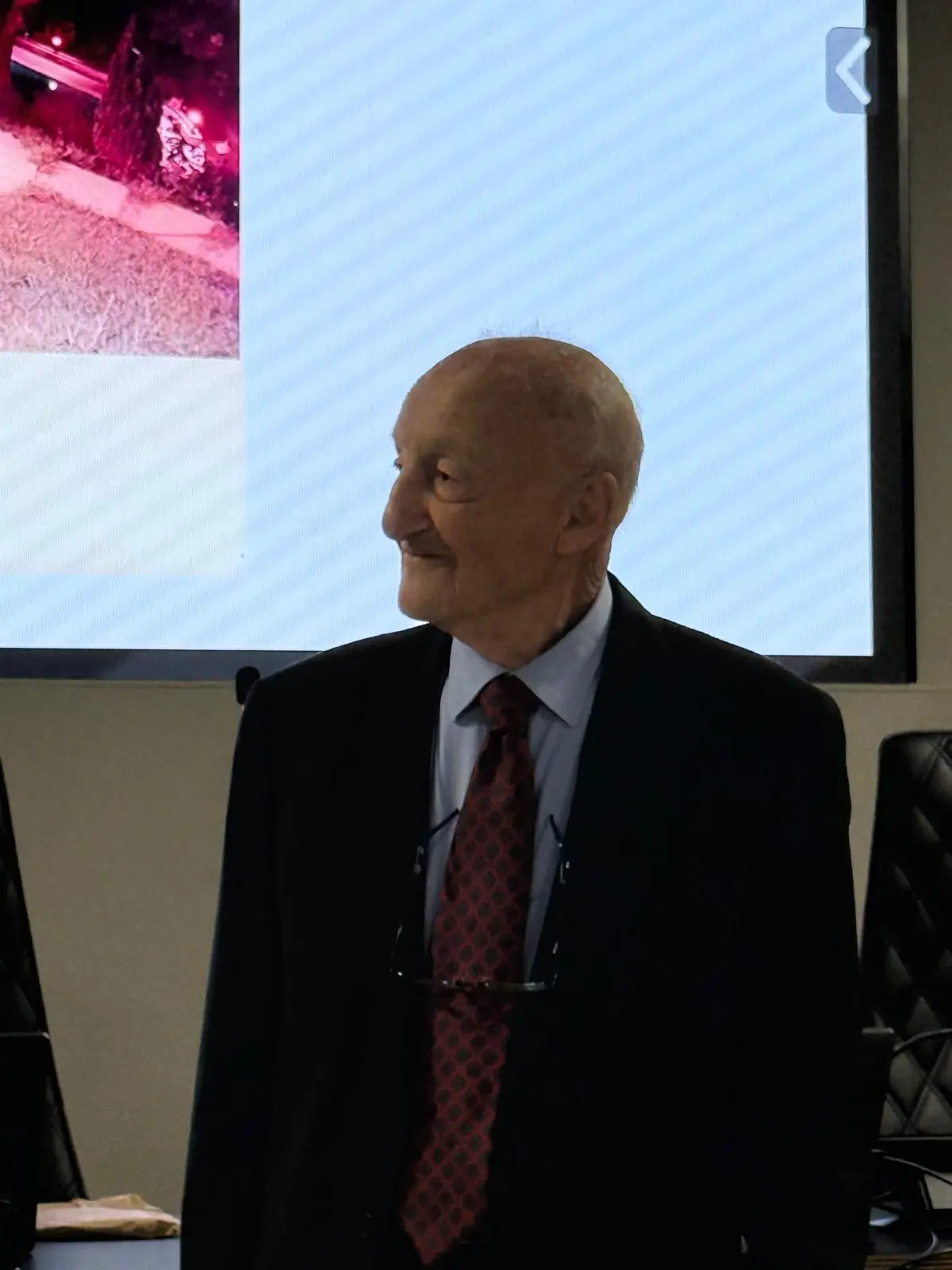
Manganelli, a native of Gubbio, received the award in his nineties. He studied architecture in Rome in the 1950s under masters such as Vincenzo Fasolo, Guglielmo De Angelis d’Ossat and Pier Luigi Nervi. From the 1960s he worked in Milan alongside Paolo Tilche, the Castiglioni brothers, BBPR and Vico Magistretti. Those years produced a rationalism all his own, driven by drawing, which for him has always been a tool for controlling every stage of a project, never a display of virtuosity.
Who else was in the audience?
Alongside the winners, Fermo brought together a professional community that has worked around In/Arch and its awards for years.
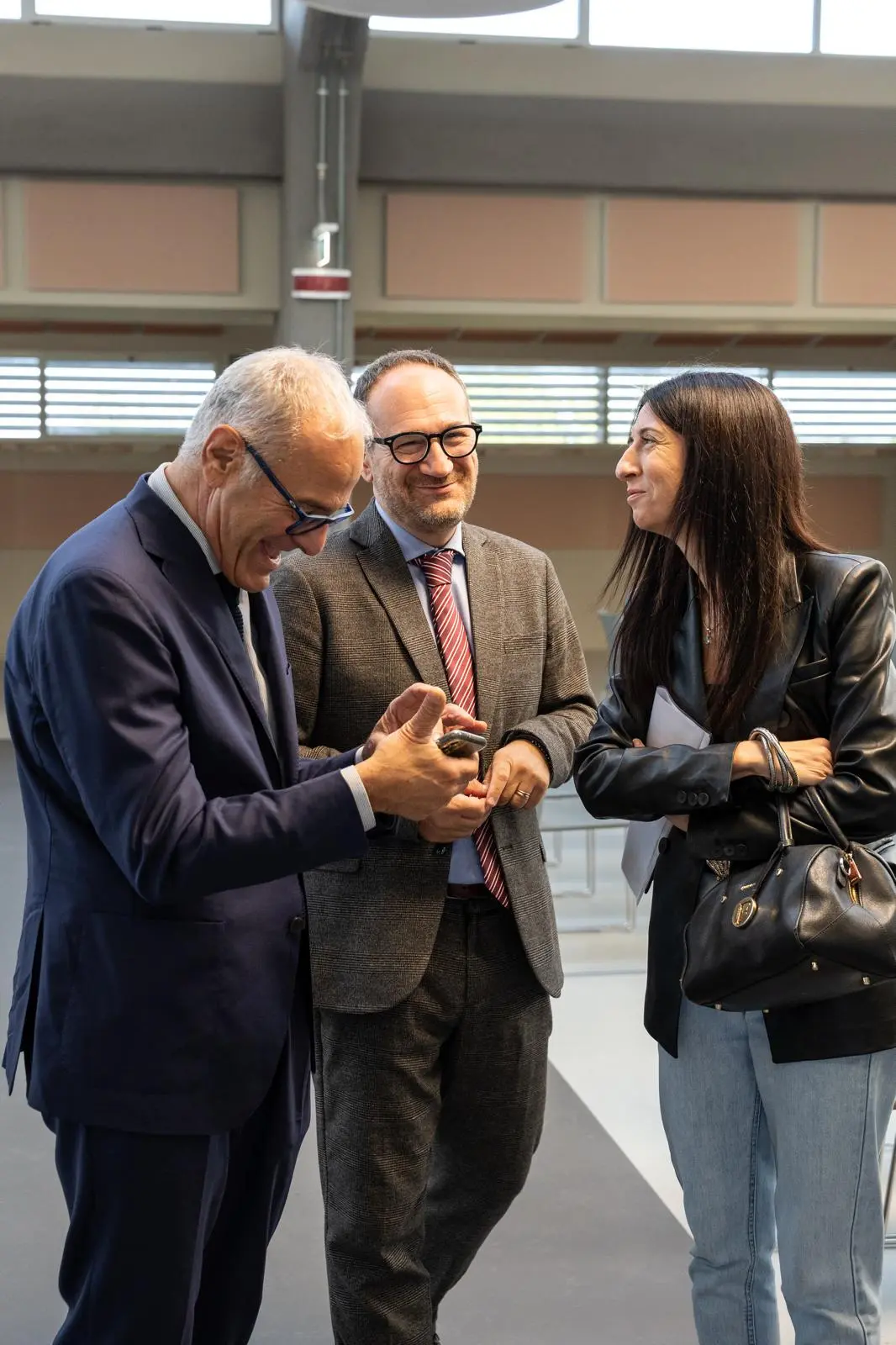
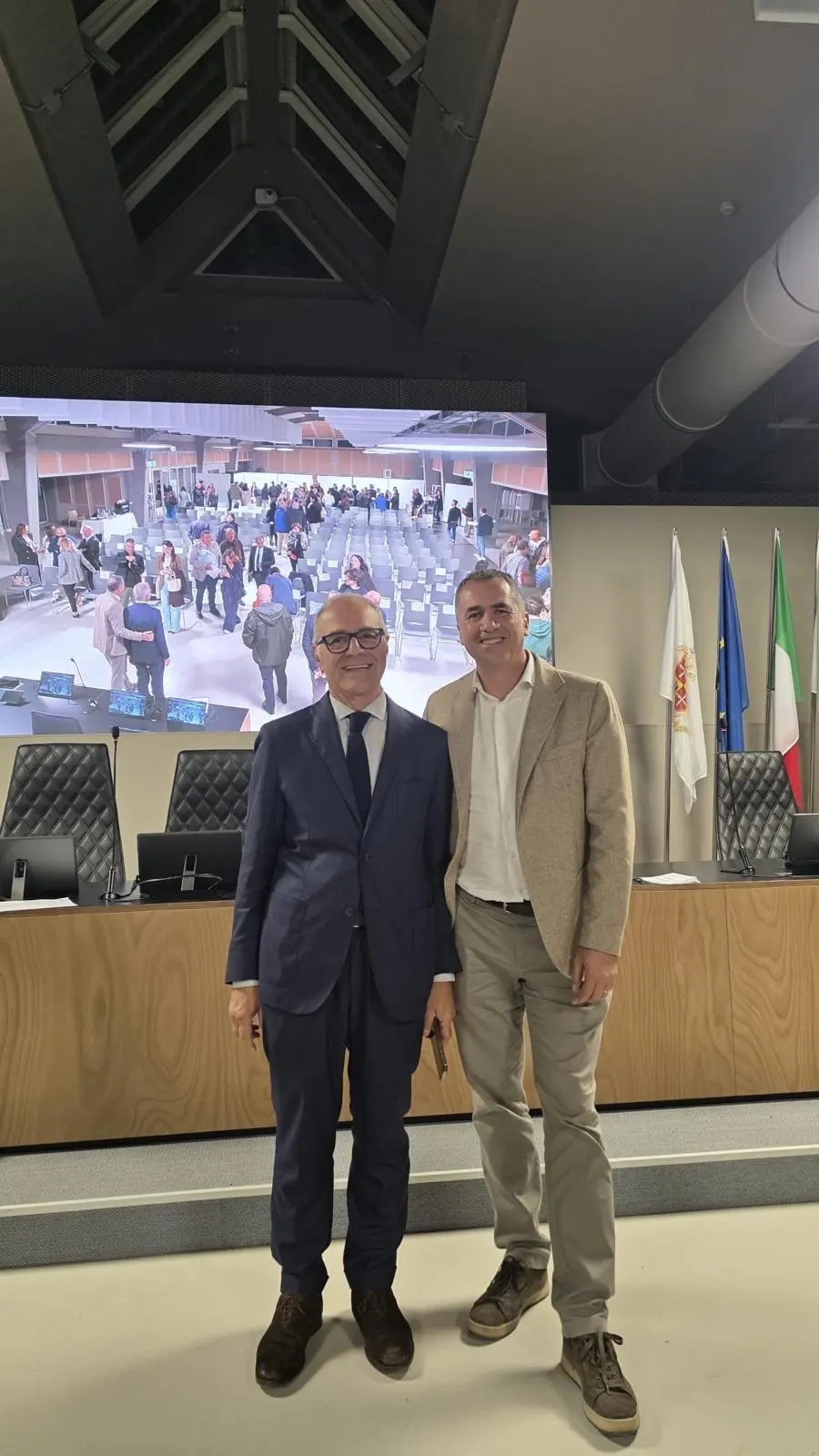
Among those attending was engineer Marco Montagna, Business Developer at ENGLOBE, who led In/Arch Marche for twelve years until 2025, together with current president Michele Schiavoni and Andrea Margaritelli, past national president of In/Arch and owner of Listone Giordano. The connection with Benedetta Tagliabue is also a professional one: EMBT Architects and ENGLOBE jointly developed the winning proposal for the covered market in L’Aquila, a true collaboration in which the expertise of both firms came together. For one afternoon, Fermo was a reminder that good architecture comes from people, institutions and builders who keep finding each other.
Why do the In/Architettura Awards honor the client, architect and contractor together?
Since 1961, the awards have treated every completed building as the result of a shared process. Quality comes from the client, the design and the construction site working together, which is why the award goes to all three.
What was the "Salpavi" that Teodolo Manganelli talks about?
Salpavi, short for SALame, PAne and VIno (salami, bread and wine), was an informal gathering of designers in 1960s Milan, the scene in which Manganelli came of age professionally. In 2023, his hometown of Gubbio dedicated an exhibition to him under the same name.