ENGLOBE Opens an Institutional Dialogue on Cultural Heritage in North Macedonia
On June 16, a day of institutional meetings took place in Skopje, bringing ENGLOBE into dialogue with the main public and private stakeholders responsible for the protection of cultural heritage in North Macedonia.
The meetings, organized with the support of Eva Netkovska for ITA North Macedonia, involved three interlocutors with different roles and areas of expertise — the Ministry of Culture, the municipal administration of Skopje and the local company Universal Balkan — but all connected to one underlying issue: how to structure a stable collaboration between Italian know-how and a Macedonian heritage protection system which, despite a considerable historical and archaeological heritage, faces clear operational and management limitations.
A Widespread Heritage and a Fragmented Governance System
The picture emerging from the meetings is that of a sector organized across multiple levels, not always coordinated with one another. The National Conservation Centre, heir to the responsibilities of the former Institute for the Protection of Monuments of Yugoslavia, supervises more than one thousand historic buildings, from archaeological sites to mosques, from hammams to churches.
Alongside it, the National Institute for the Protection of Cultural Heritage carries out coordination, control and inspection functions delegated by the government, while financial resources — approximately two million euros per year — are managed by the Ministry of Tourism and Cultural Heritage Protection.
This multi-voiced structure, according to what emerged during the meeting, struggles to translate into a unified intervention strategy, further complicated by the fact that many historically significant properties remain under the direct jurisdiction of the Ministry of Culture, effectively removing them from the decision-making capacity of individual municipalities.
The Ministry of Culture and the Hypothesis of a Bilateral Cooperation Protocol
During the meeting with the Ministry of Culture — attended, among others, by the Director of the Archaeological Museum of Skopje, Magdalena Manaskova, and representatives of the National Conservation Centre and the National Institute for the Protection of Cultural Heritage — ENGLOBE presented its organizational model as a consortium oriented toward integrated design.
This structure makes it possible to manage an intervention from architectural restoration to urban planning, reducing the number of interlocutors and, with them, the risks of time and cost dispersion typical of fragmented procurement processes.
On this basis, the proposal of the cultural-tourism “Roads” was introduced, not as a stand-alone project but as a method: an approach capable of connecting urban planning, restoration and museum exhibition design within territorial enhancement routes.
The Macedonian side expressed a specific request: to build a formalized collaboration framework, following the model of the protocol already signed with the Turkish government agency TIKA.
The hypothesis on the table is the signing of a Bilateral Cooperation Protocol between Englobe and the Ministry of Culture, potentially under the patronage of the Embassy of Italy, defining on one side the expertise made available by the Italian consortium and on the other the intervention priorities of the Macedonian government.
The immediate operational step is the transmission, through Yohanna Grujoska, of a document outlining the areas of mutual interest.
Skopje 2028 and a Municipal Administration Behind Schedule
The discussion with the Secretary General of the City of Skopje, Slavche Trpevski, and Paulina Ribarska provided a more critical picture. The municipal administration acknowledged a significant delay in project development and in the use of available resources, an issue addressed only in recent months.
The main bottleneck remains the one already identified during the ministerial meeting: the direct jurisdiction of the Ministry of Culture over much of the city’s historic building stock limits the autonomous scope of action of the city.
This is the context in which Skopje’s designation as European Capital of Culture 2028 is taking shape. The foundation established to coordinate the cultural interventions connected to the event formally exists, but still lacks the governing bodies required to make it operational — a fact that shows how the path toward 2028 is, at present, still in a preliminary phase.
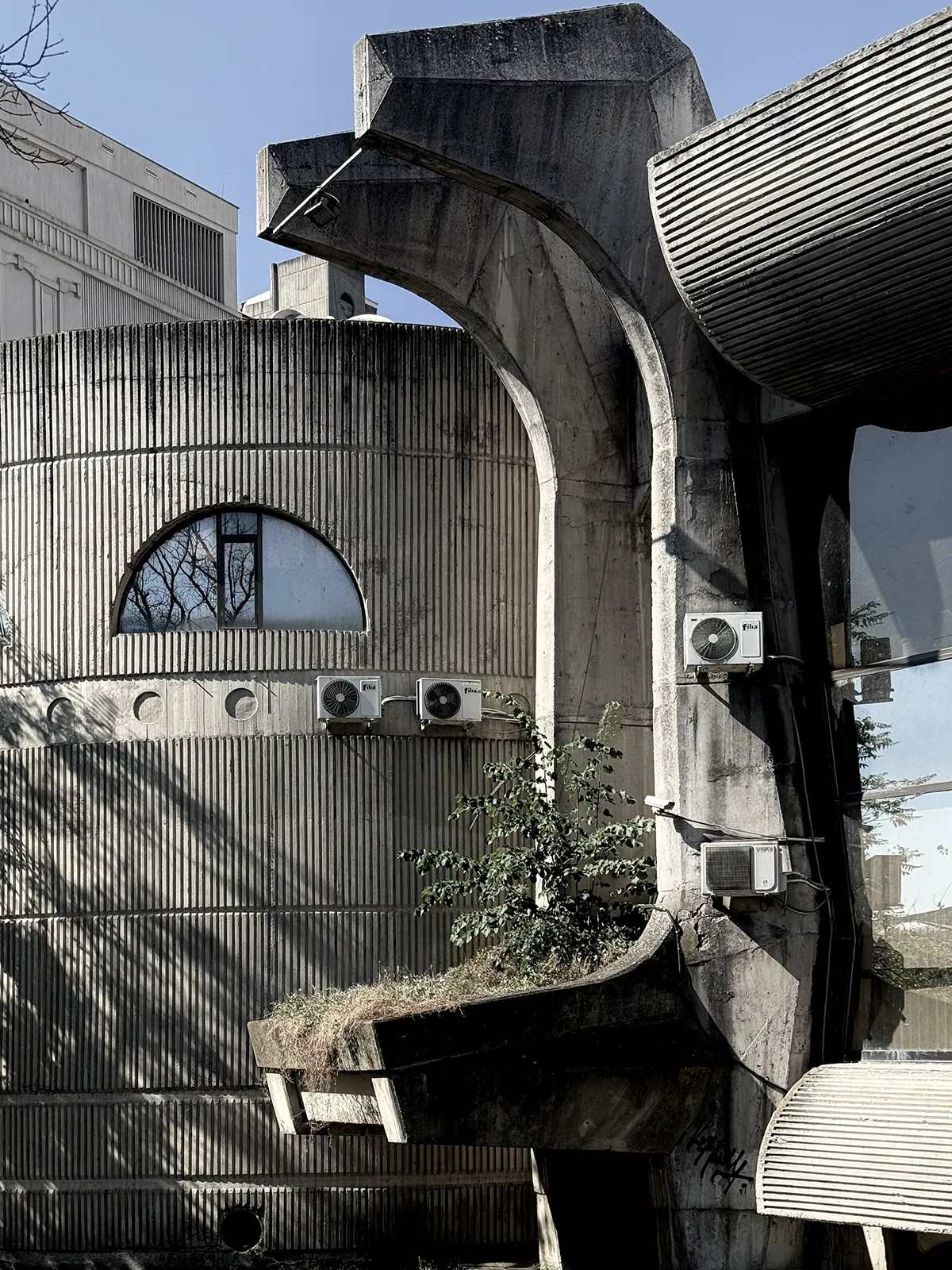
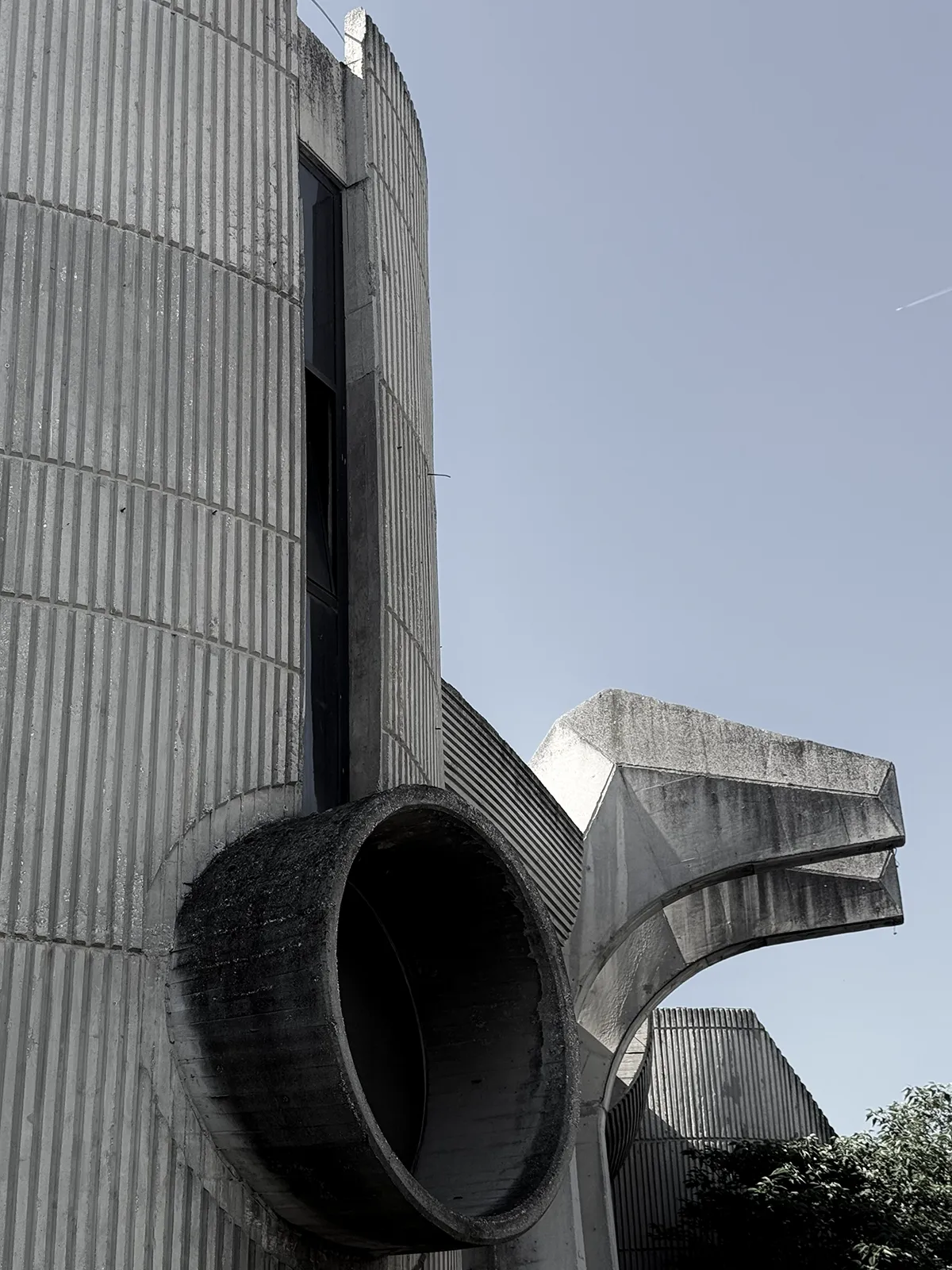
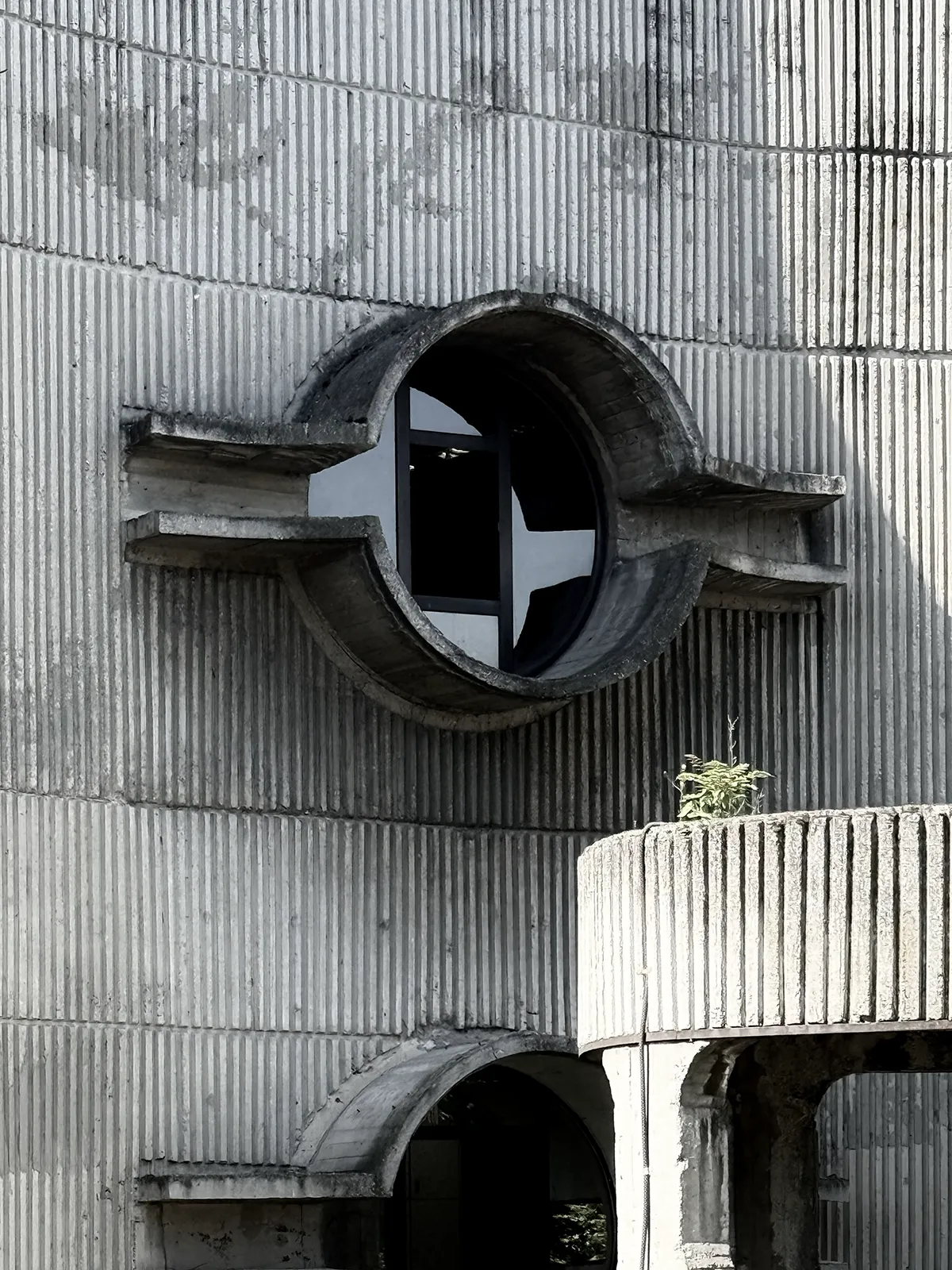
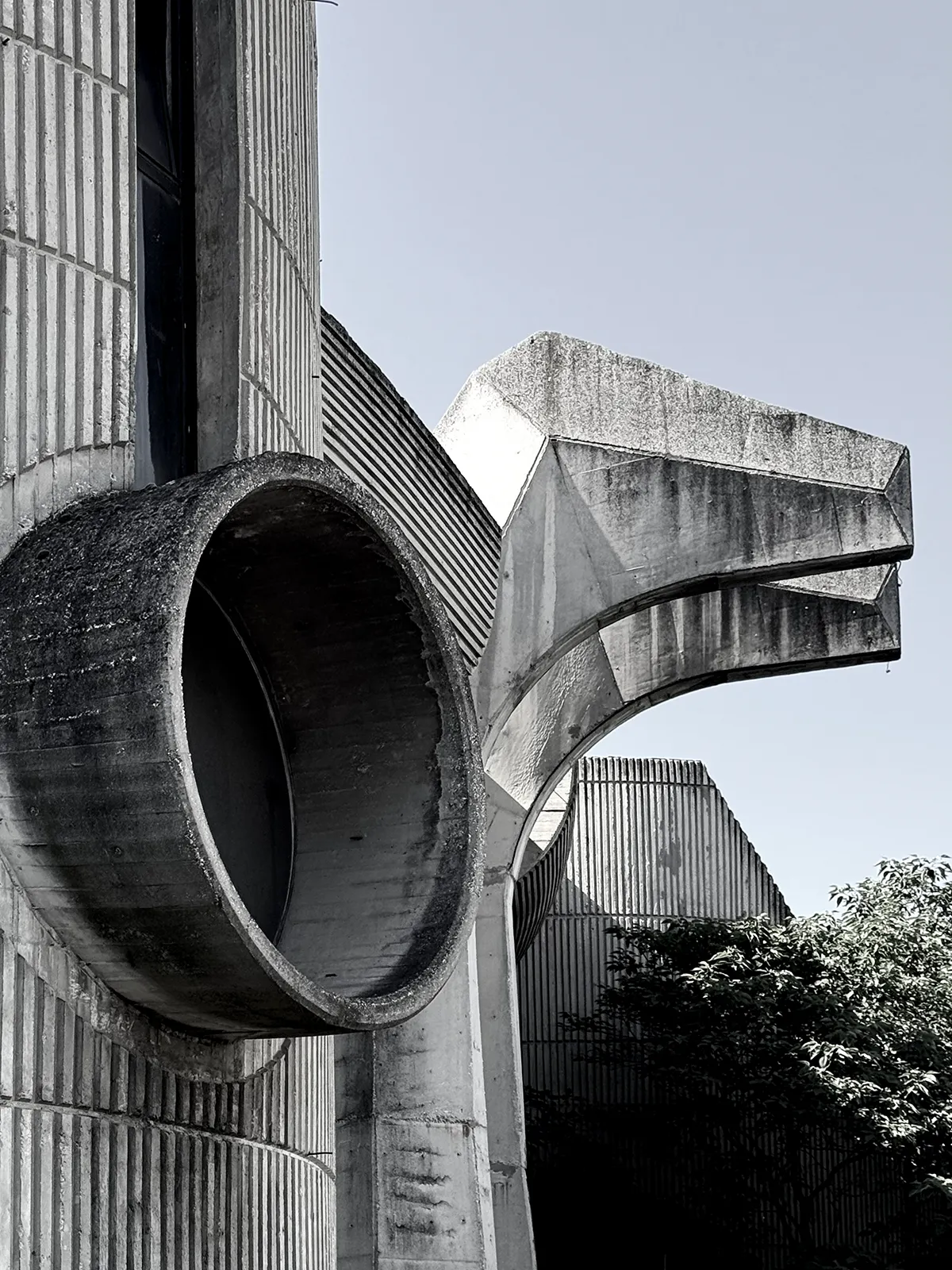
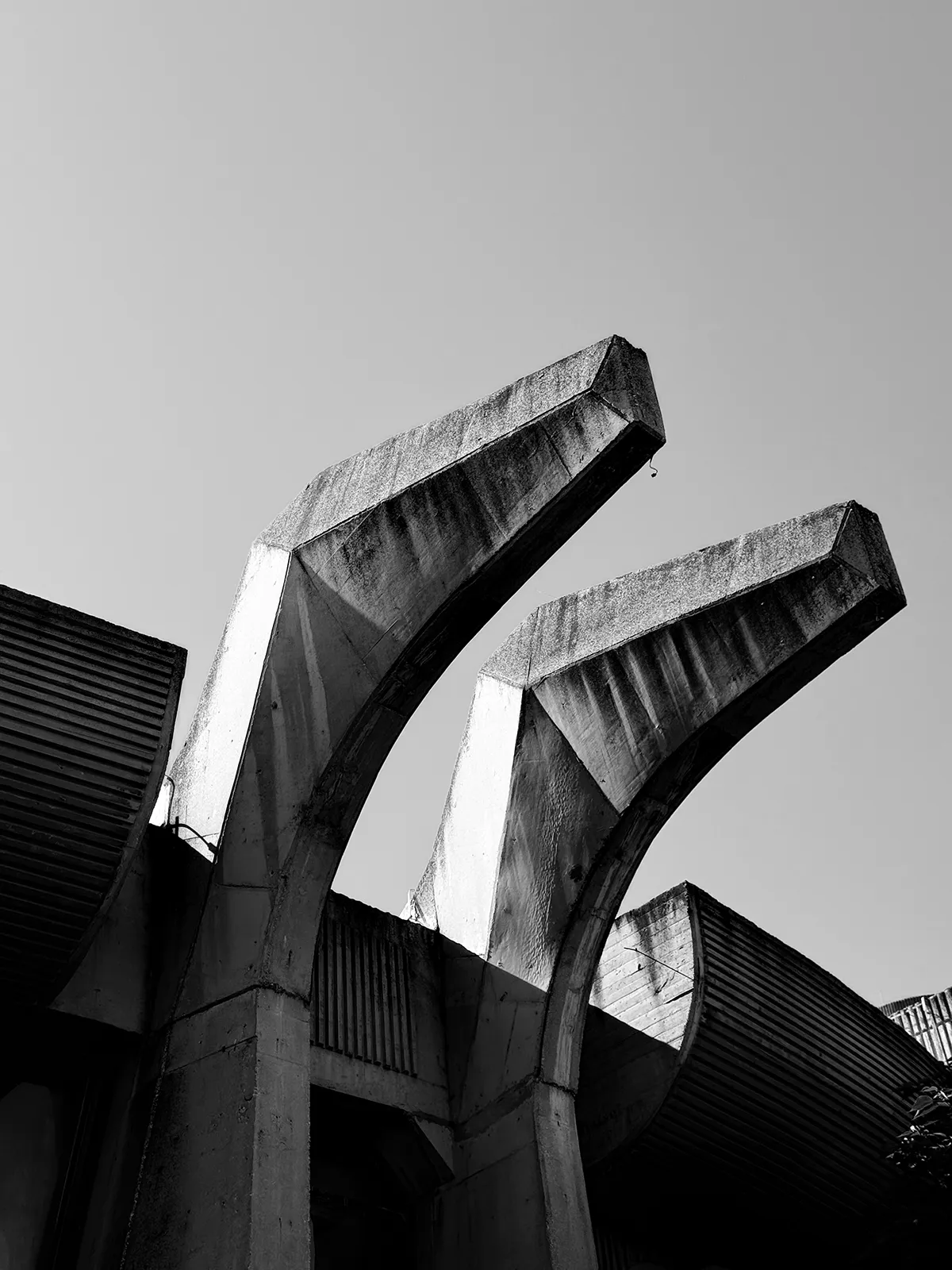
Among the proposals discussed, the administration indicated specific interest in the Post Office building, an example of 1970s Brutalist architecture that the city would like to obtain from the Ministry in order to convert it into a tourist hub and information centre.
At the urban level, Skopje also aims to integrate the public green system with the river system, a vision that found a direct reference in the logic of the “Roads” proposed by Englobe.
The continuation of the dialogue with the city was made conditional on the formalization of the protocol with the Ministry, a step considered necessary to clarify competences and responsibilities between the two institutional levels.
Universal Balkan as an Industrial Partner Seeking Restoration Expertise
The meeting with Universal Balkan was different in nature. The family-owned company, founded in 1993 and specialized in turnkey interventions from design to construction, has a workforce of approximately 28 professionals in its design department — expected to grow from September, in connection with the launch of the national hospital facility redevelopment programme.
Over the years, the company has consolidated its expertise mainly in the hospital and theatre sectors, but it has long been seeking an Italian partner to develop a restoration division which, at present, is not among its established strengths.
The discussion concluded with the topic of Skopje Fortress, where Universal Balkan has already initiated a design phase but nevertheless expressed interest in involving ENGLOBE.
Founder Vladimir Arsoski committed to contacting the Minister of Culture directly to assess the possible ways in which the Italian consortium could enter the initiative.
Next Steps for ENGLOBE in North Macedonia
The overall picture emerging from the mission is that of concrete interest, from Macedonian institutions and operators, in an integrated design model that is still not widely adopted in the local market, where the separation between design and construction remains the standard even for complex restoration works.
The direction indicated by all interlocutors converges toward the formalization of a protocol with the Ministry of Culture, a step that should resolve the issue of competences and make it possible to extend the dialogue, at a later stage, to the City of Skopje and to the “Skopje European Capital of Culture” Foundation.
What is the Skopje European Capital of Culture 2028 project?
It is the programme that grants Skopje the title of European Capital of Culture for 2028. The foundation dedicated to managing the interventions has been established, but at the time of the June 16 meeting it still lacked the governing bodies required to become operational, indicating that the process was still in a preliminary phase.
What is meant by “integrated design” in the restoration of protected heritage?
It is an organizational model in which a single entity coordinates urban planning, architectural design, restoration and exhibition design, reducing the number of stakeholders involved and improving control over time, cost and quality compared with procurement processes fragmented between design and construction.