Sanctuary of the Madonna delle Grazie
Sanctuary of the Madonna delle Grazie
Restoration and Seismic Improvement of the Sanctuary of the Madonna delle Grazie in Teramo, Italy
Where is the Sanctuary of the Madonna delle Grazie?
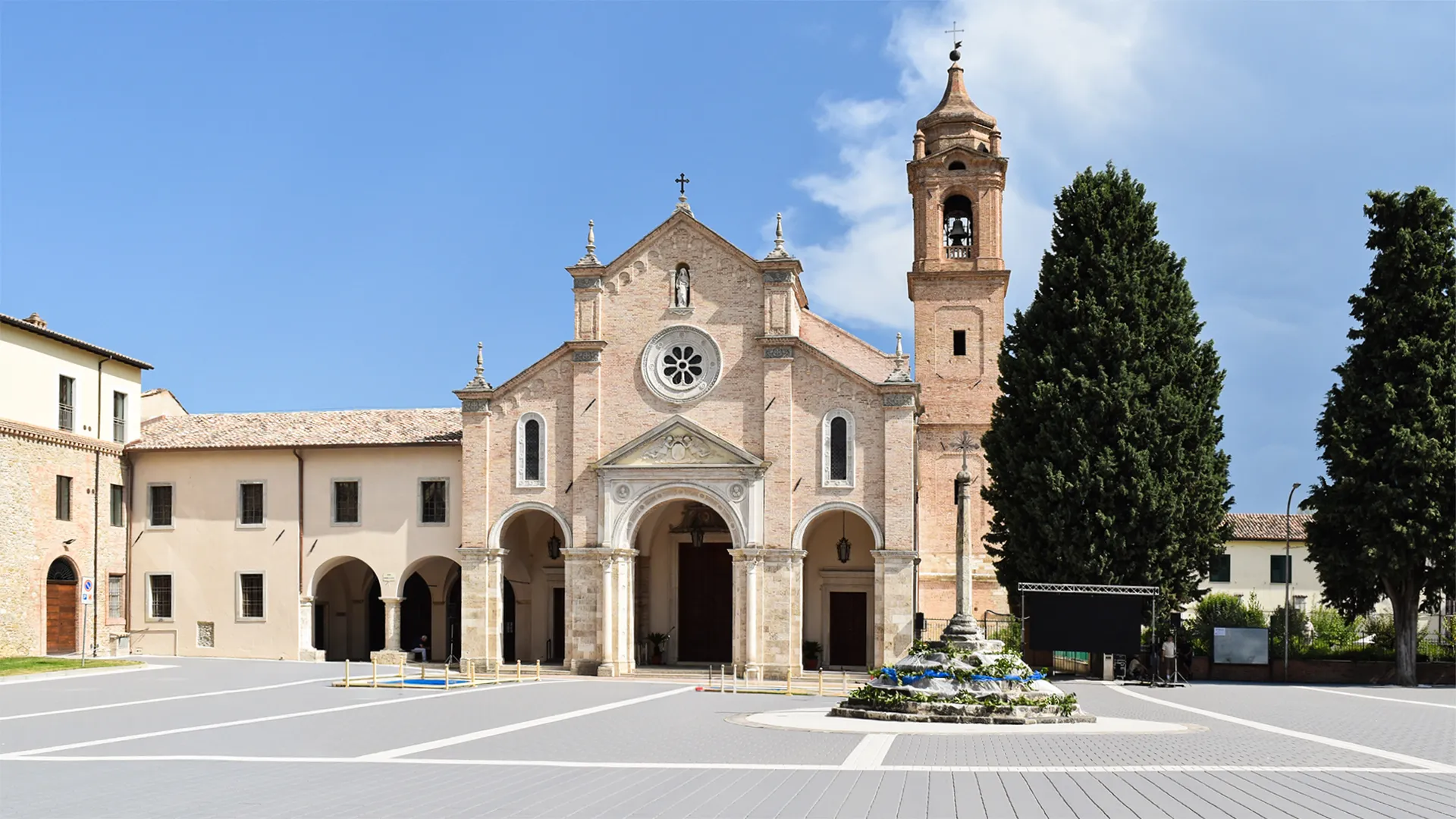
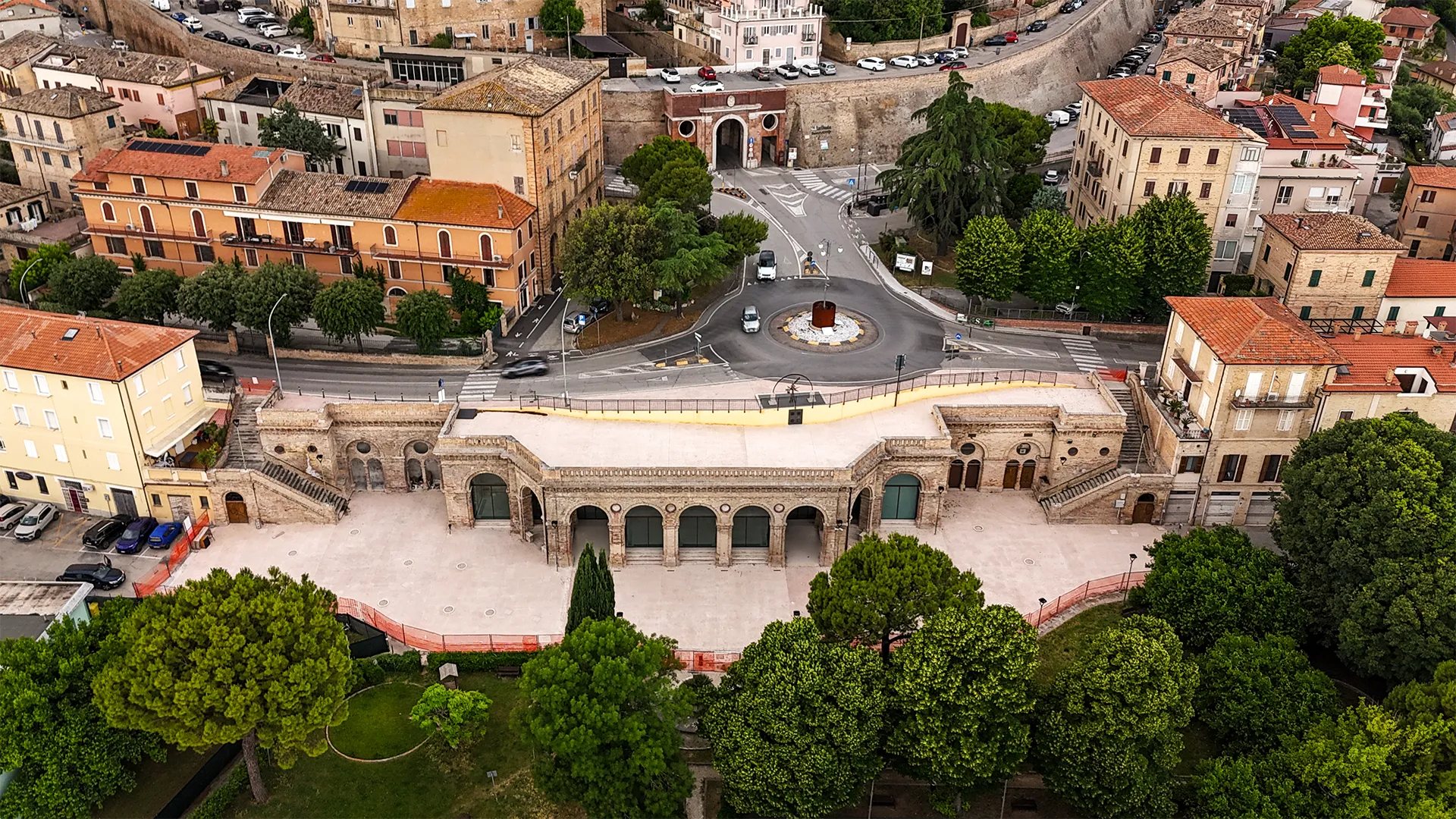
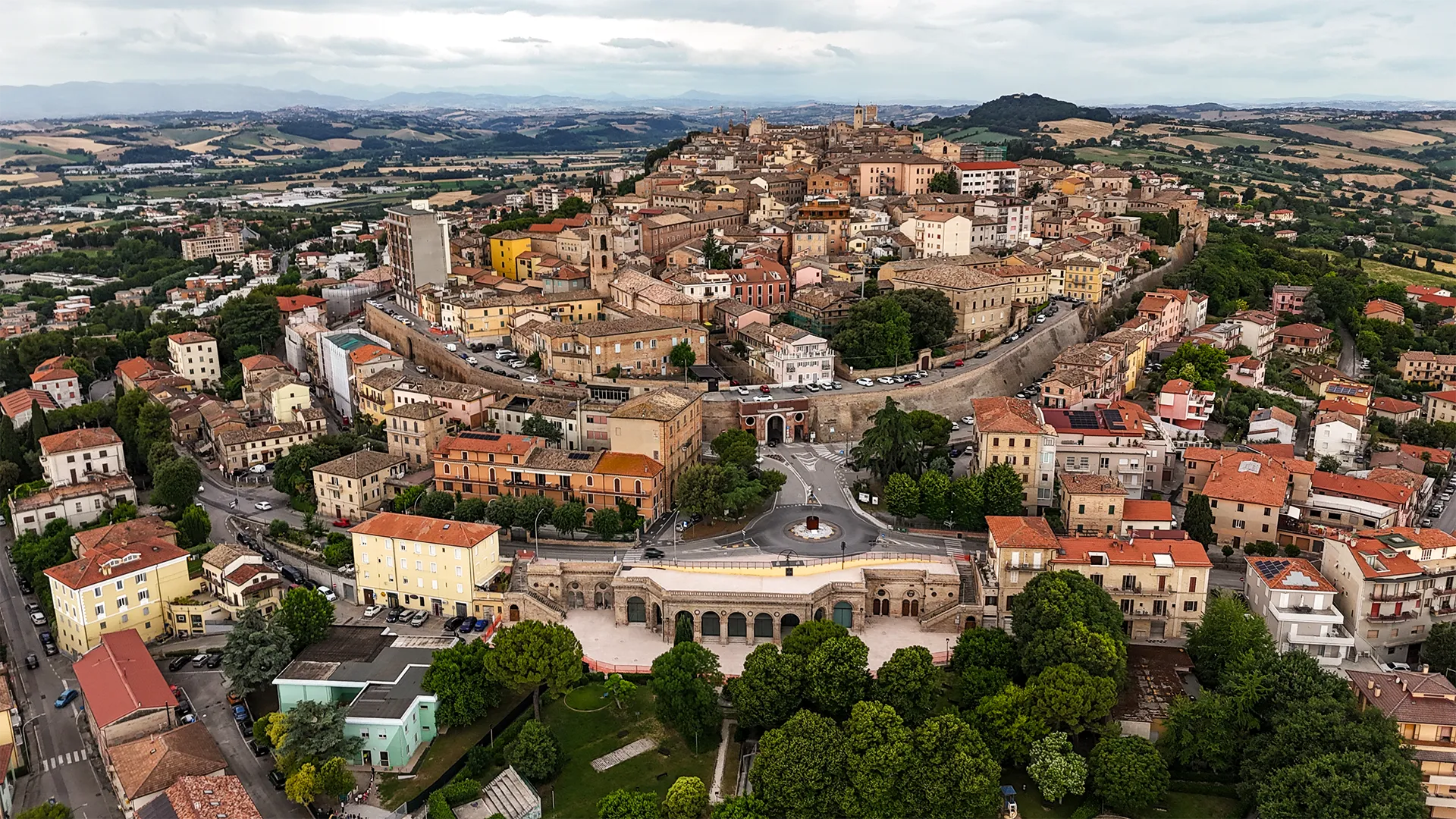
The sanctuary stands just outside the walls of Teramo’s historic center, near Porta Reale, known locally as Porta Madonna. The complex brings together the church, the bell tower, and the former convent arranged around its cloister, and it is the focus of devotion to the Madonna delle Grazie, the city’s co-patron saint.
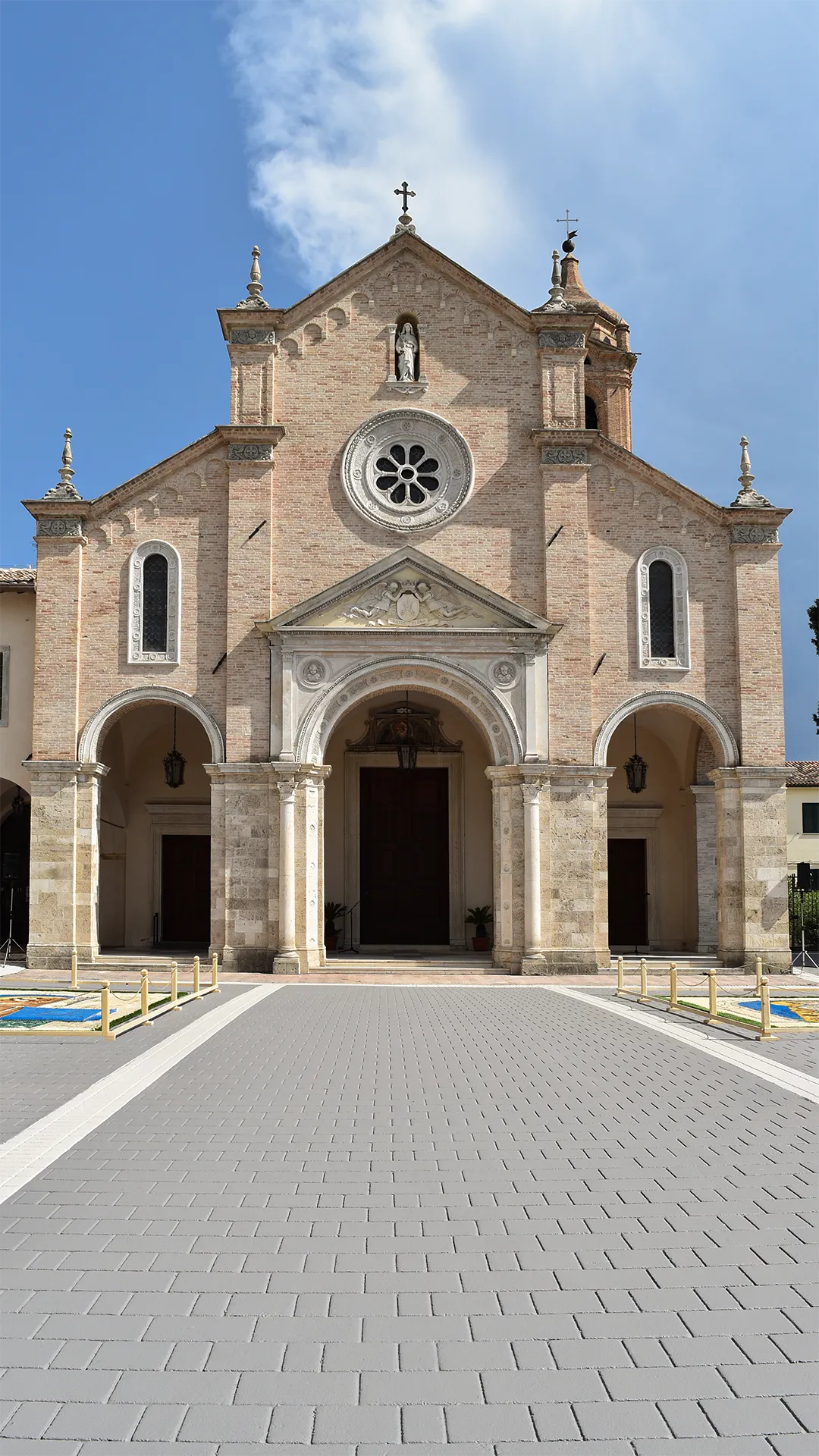
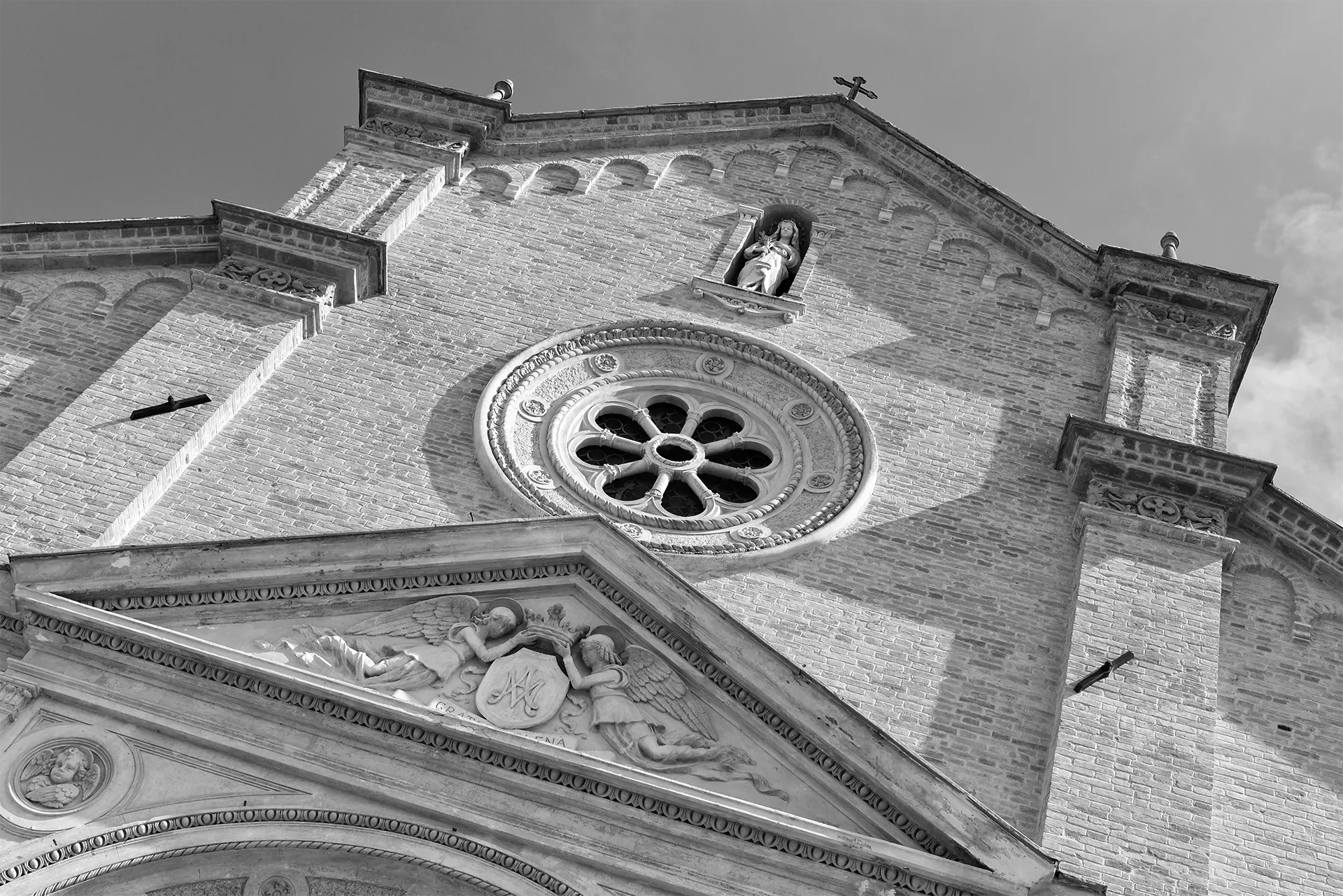
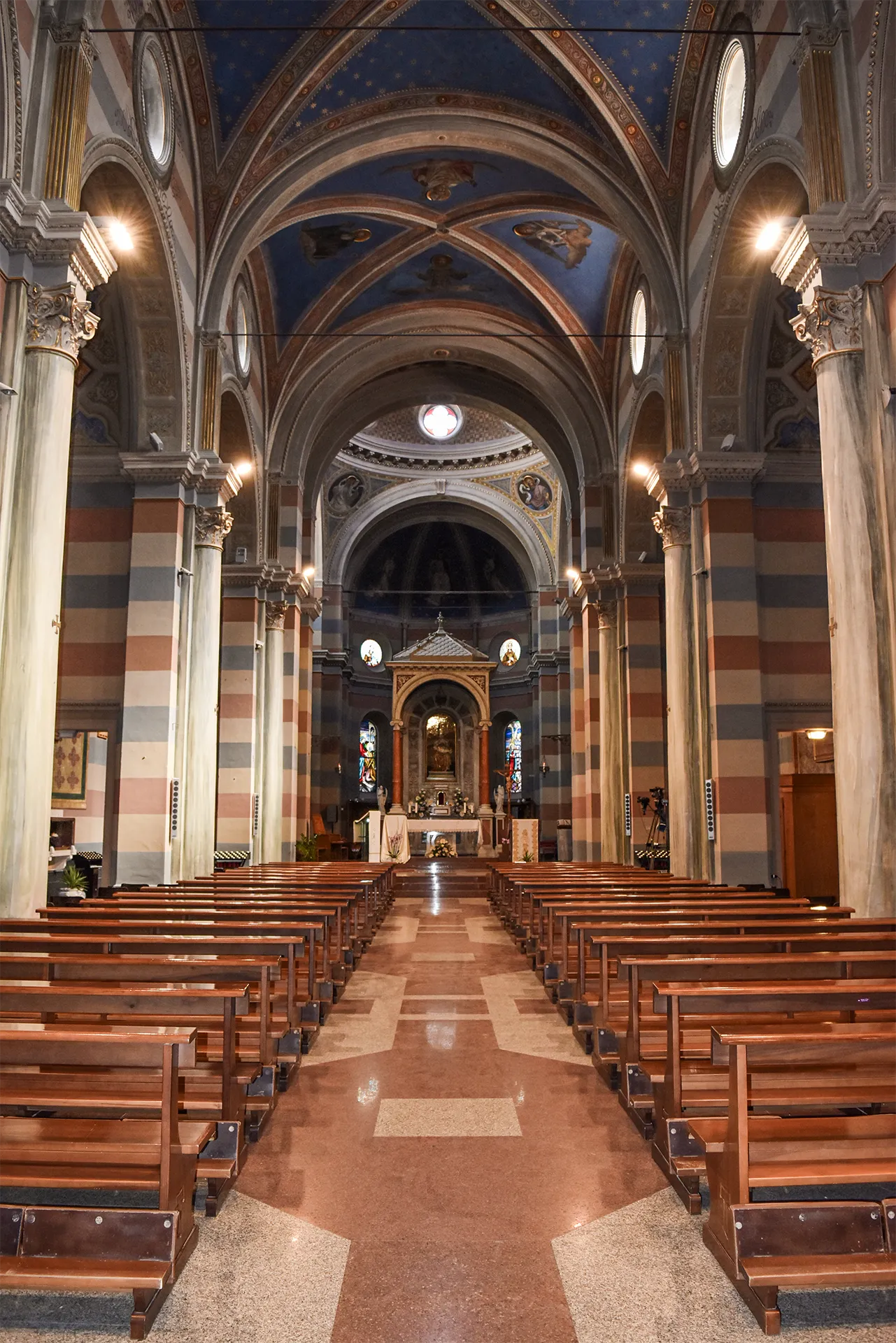
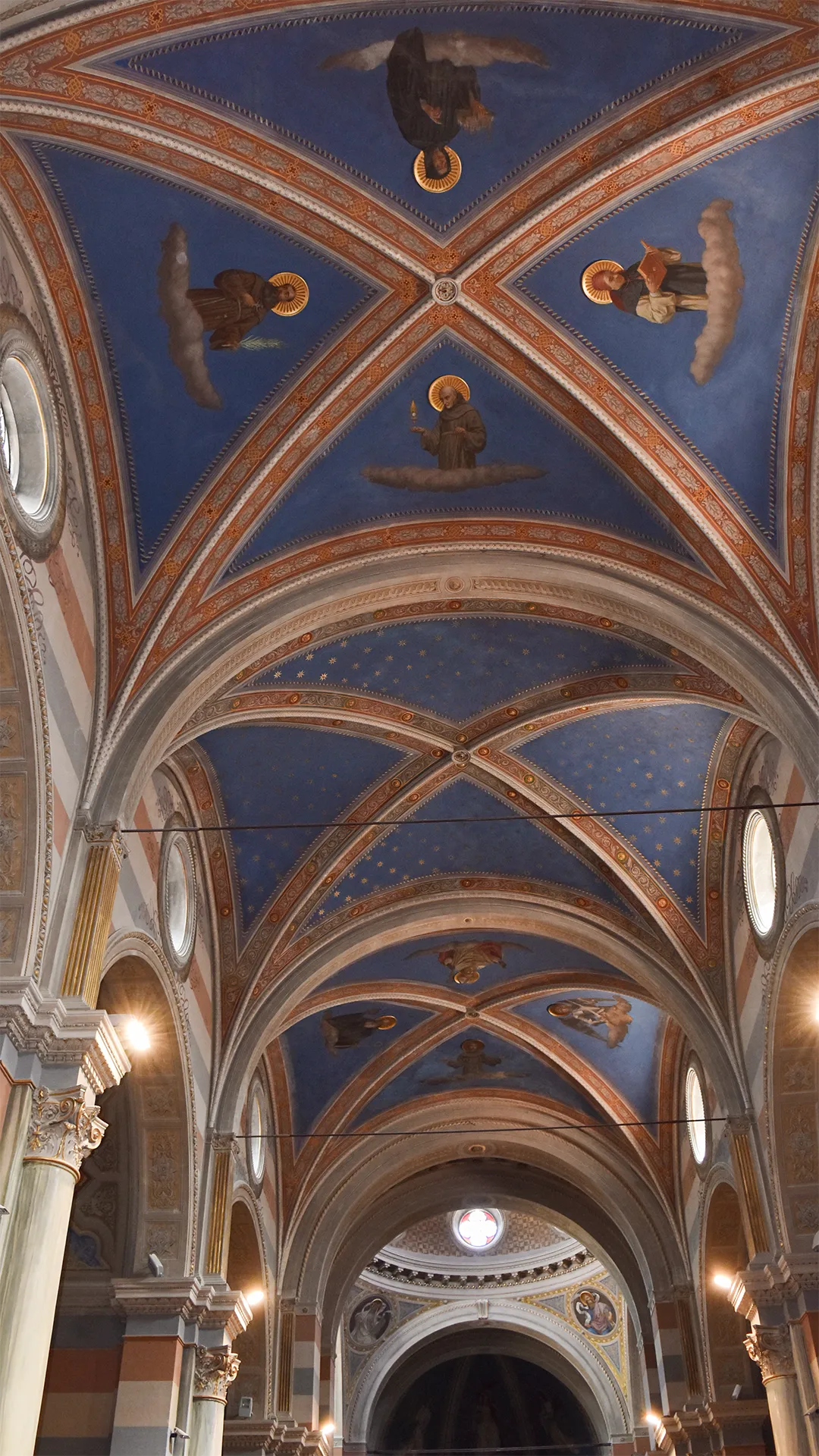
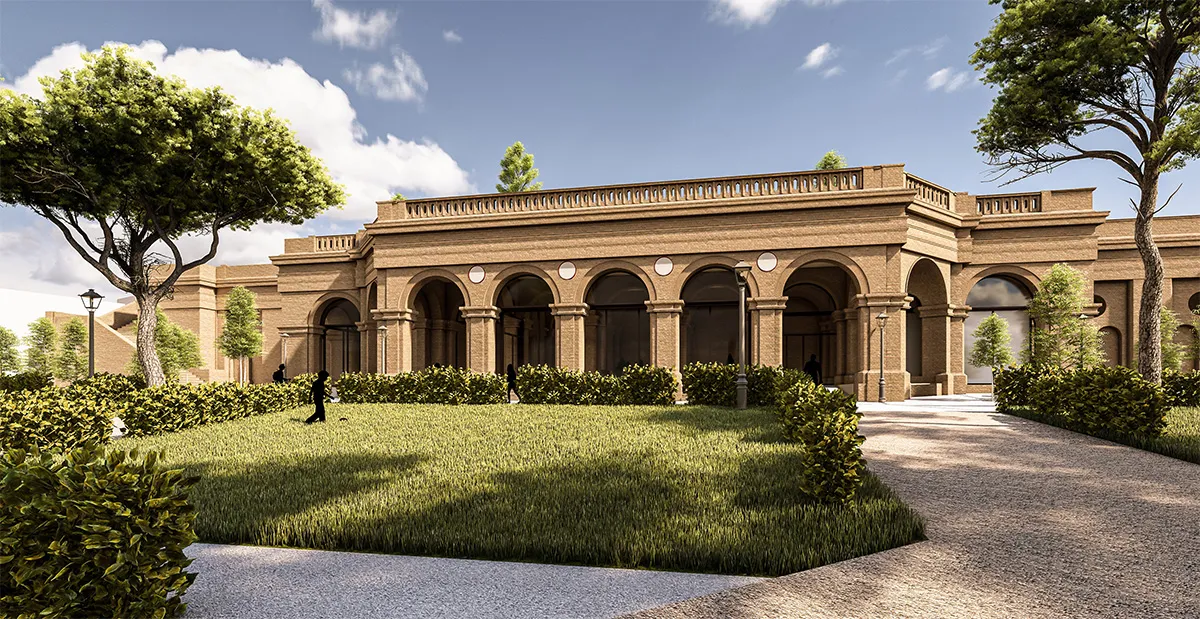
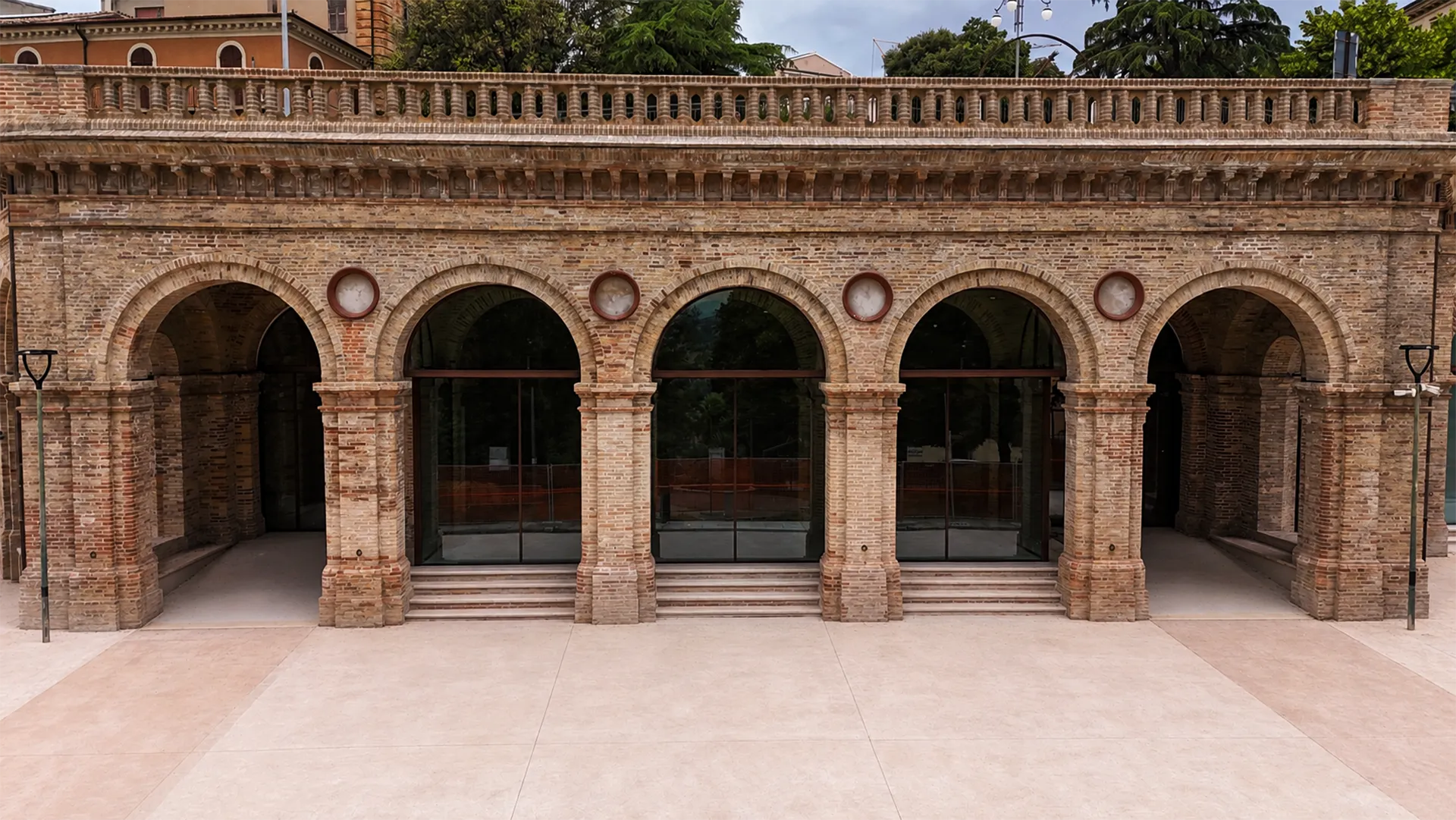
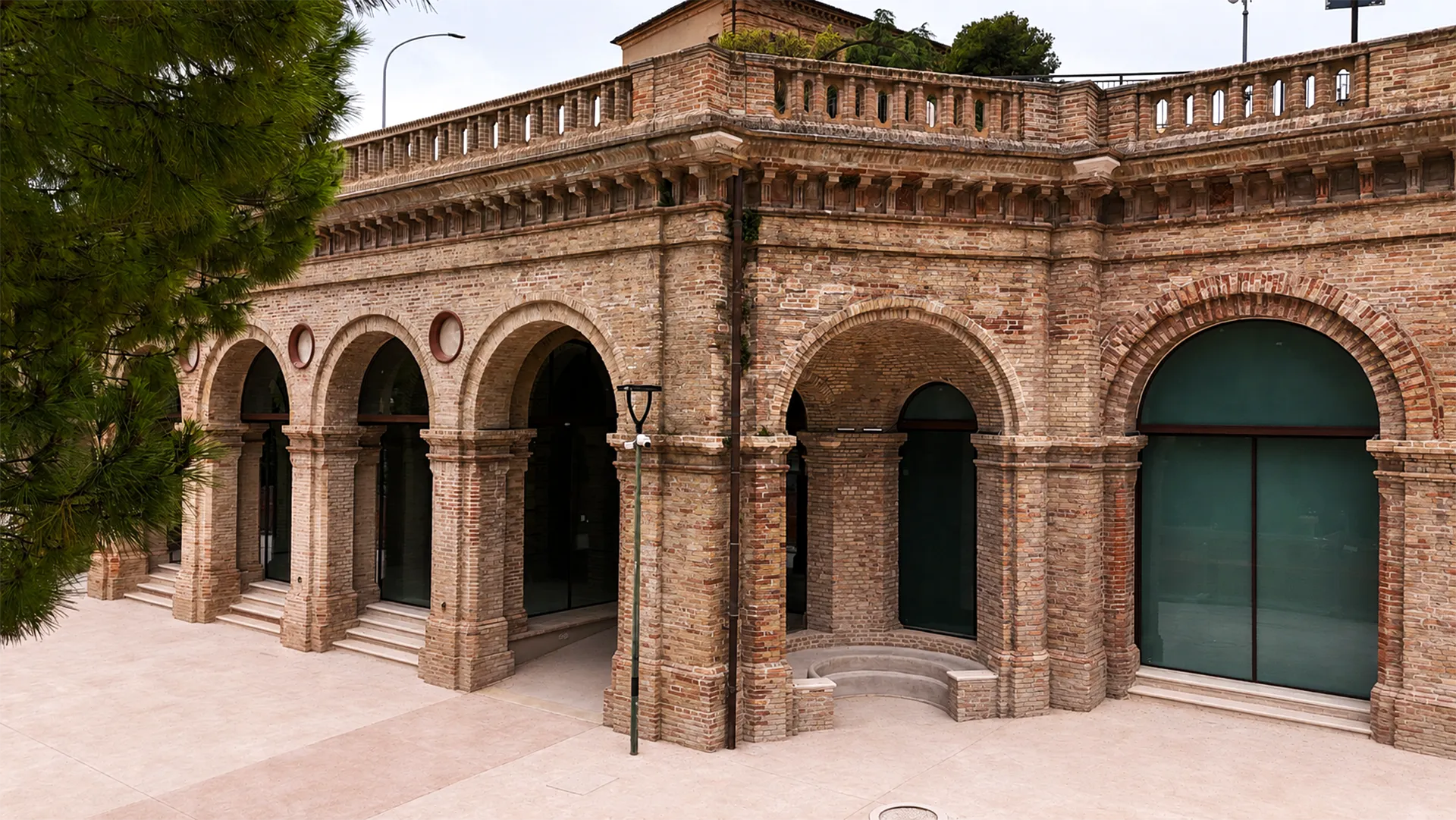
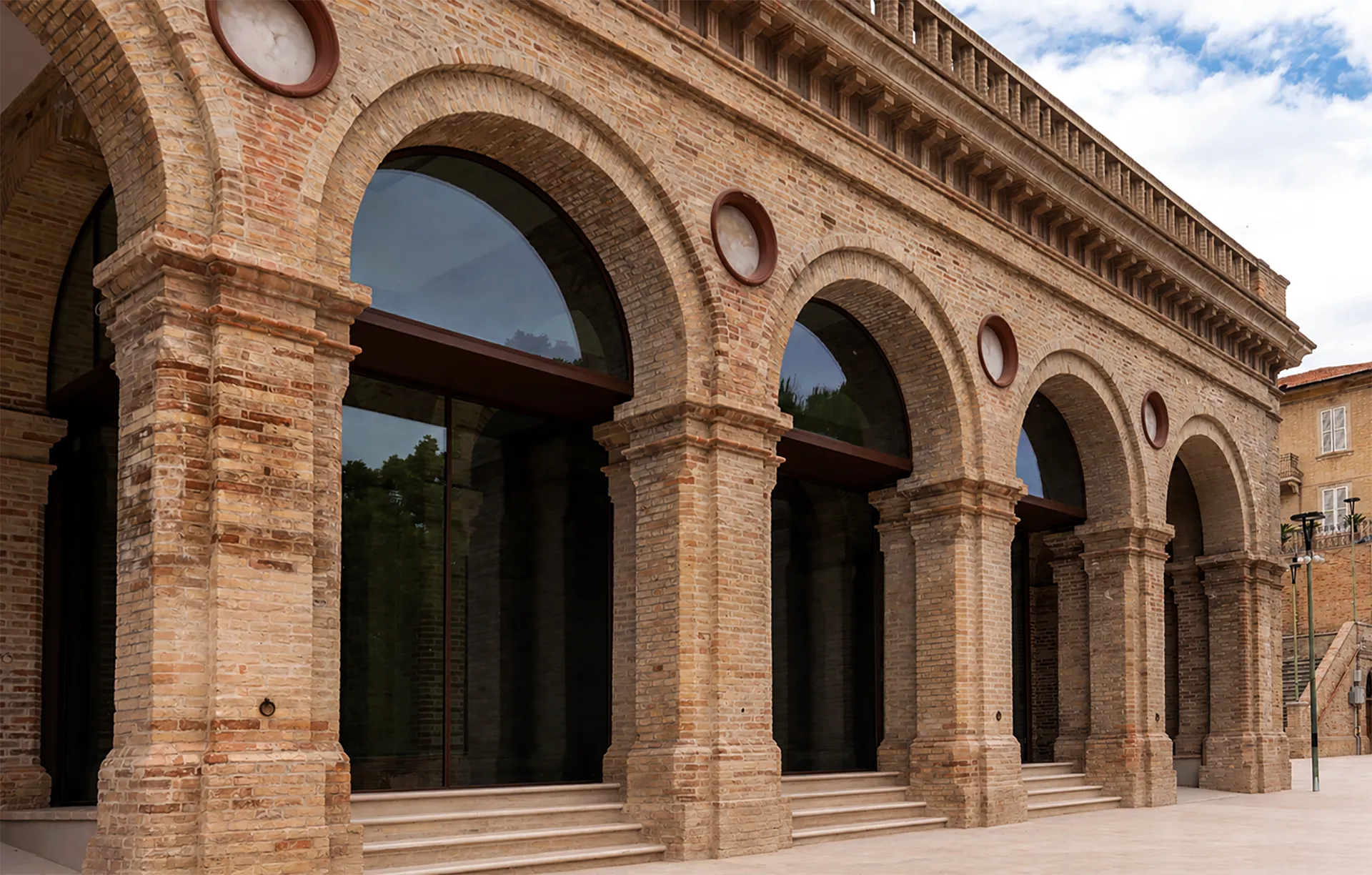
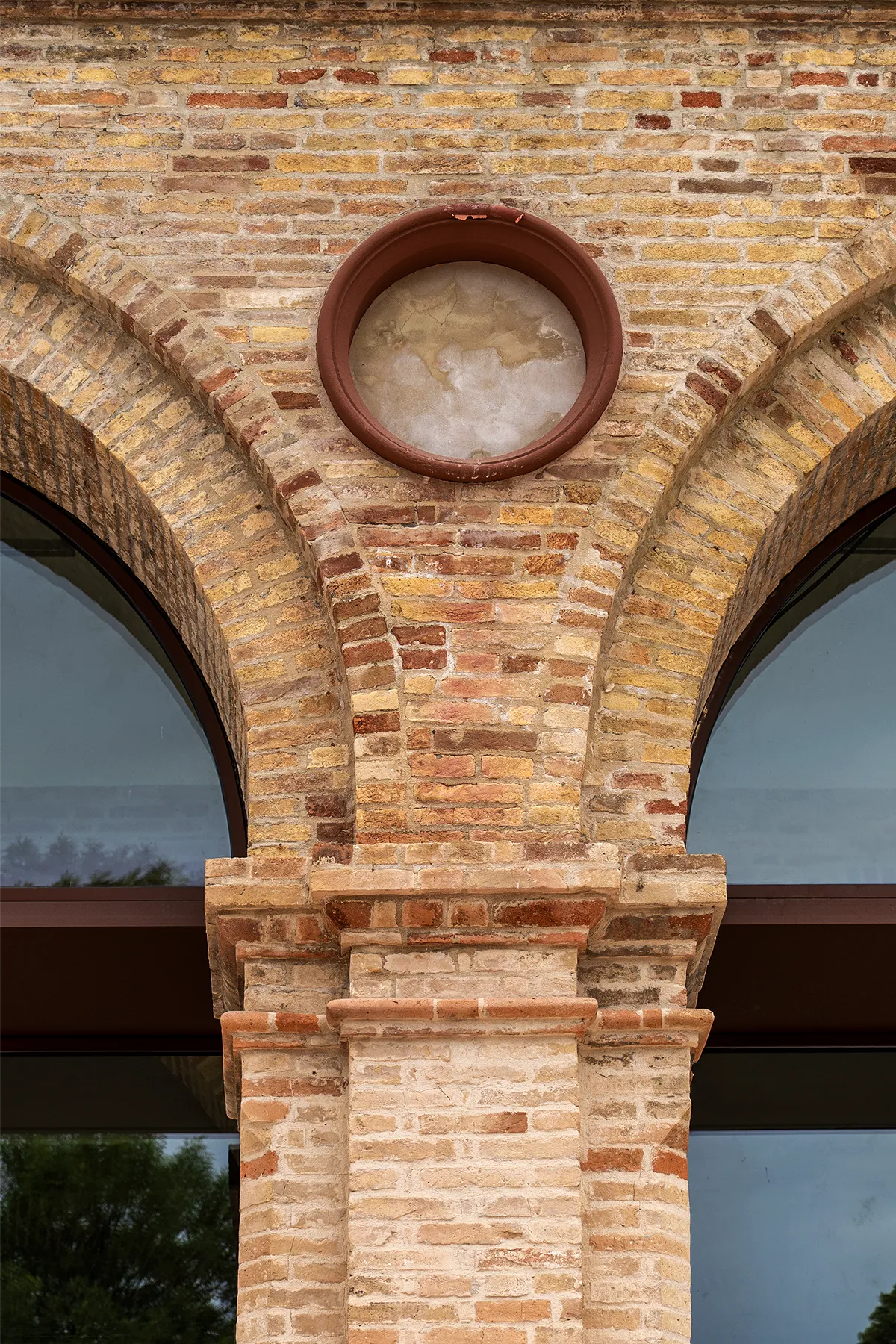
The building presents itself with a brick façade fronted by a three-entrance portico. The Latin-cross interior unfolds along a single nave with three side chapels on each side, covered by groin vaults and culminating in a dome on an octagonal drum, pierced by eight oculi and topped by a lantern. What defines the space is the continuity of its painted decoration: horizontal bands lining the walls, shell motifs in the side arches and, in the transept, the faux tapestries painted by Cesare Mariani, among the most significant works in the entire building.
What is the history of the building?
The complex originated in the 12th century as the Benedictine convent of Sant’Angelo delle Donne and owes its present appearance to a reconstruction carried out between 1892 and 1900. The convent was founded before 1153 thanks to a donation from a man named Teodino and was tied, through the monastery of San Giovanni di Scorzone, to the Abbey of Montecassino. In 1449 a papal bull issued by Pope Nicholas V entrusted it to the Observant Friars Minor under the new dedication to Santa Maria delle Grazie, with a decisive role played by Friar Giacomo della Marca. Tradition credits him with donating the 15th-century polychrome wooden statue of the Madonna and Child that still stands on the high altar.
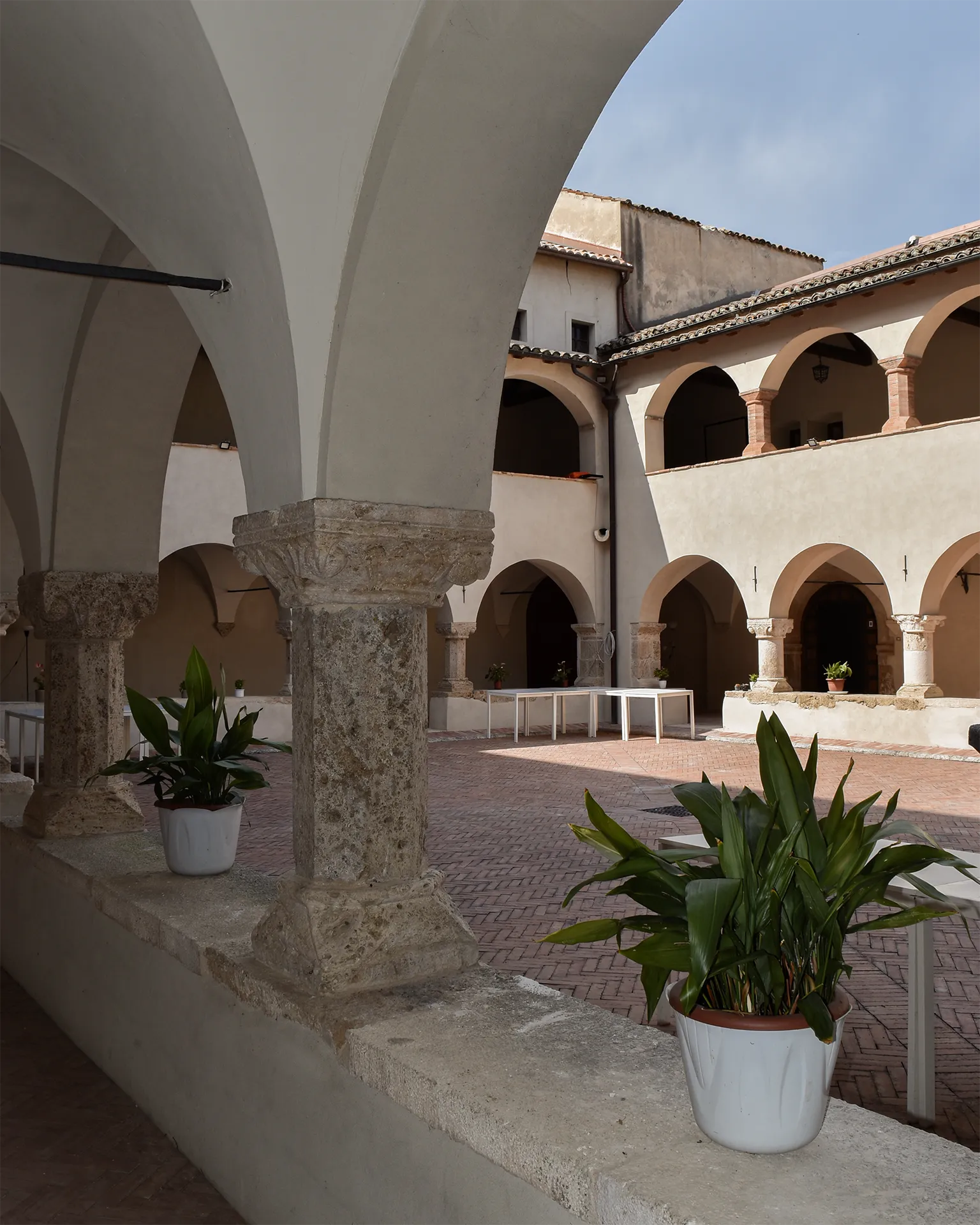
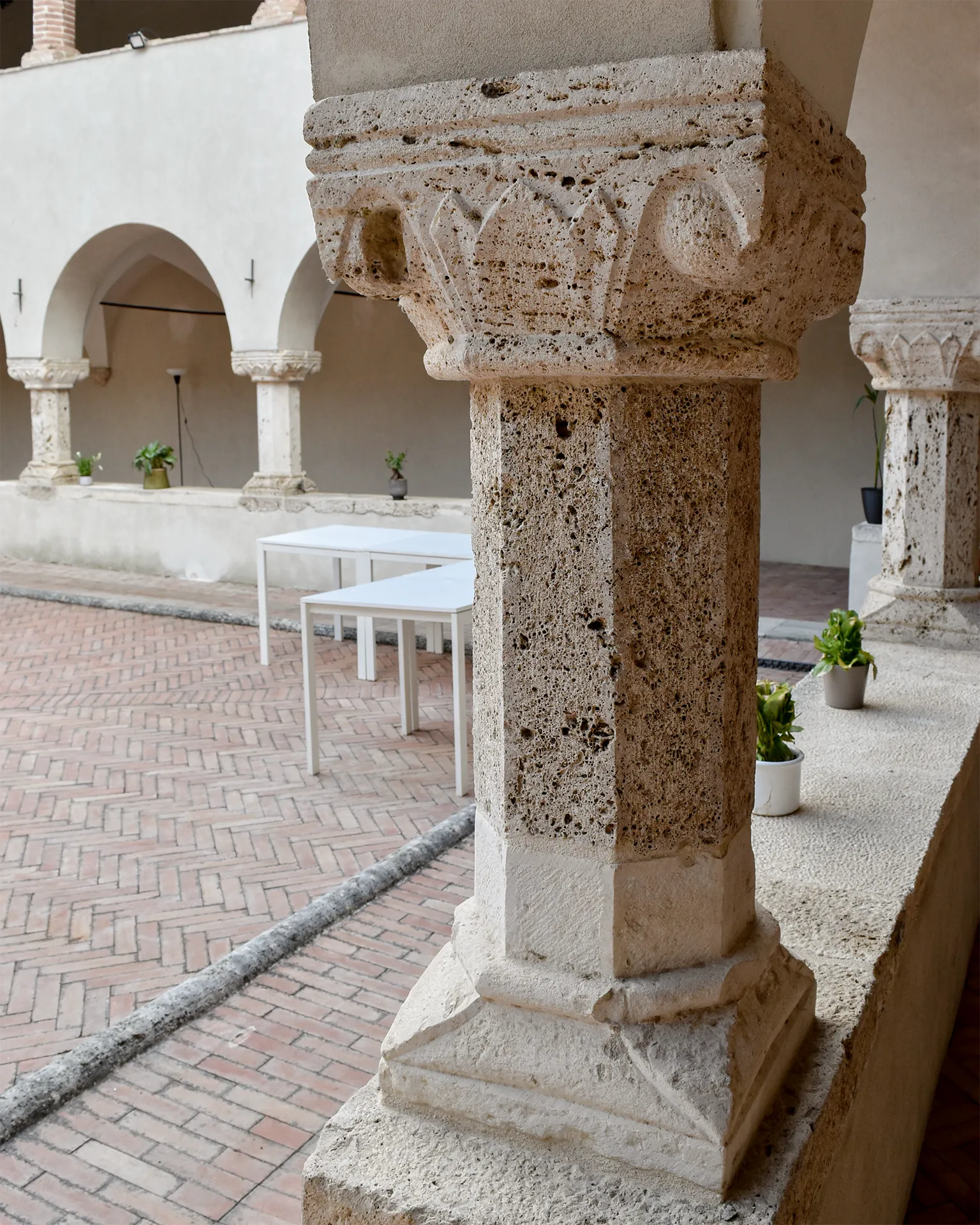
The same tradition recounts how, in November 1521, an apparition of the Virgin put to flight the troops of Duke Andrea Matteo d’Acquaviva, who were besieging the city; the church was consecrated a few years later. Between 1892 and 1900 the Romanesque church was demolished and rebuilt to a design by Cesare Mariani, with construction overseen by Francesco Savini. Of the earlier building, the bell tower and some of the cloister capitals survive, while the convent has come down to us almost intact.
What damage did the sanctuary show before the work?
The crack pattern was concentrated in the apse, the lantern, and the side chapels, and was largely caused by the thrust of the two great arches between the dome and the apse, which lacked adequate lateral restraint. Removing the plaster then revealed further issues: on the south wall, infilled arches and empty cavities; in the cross walls between the chapels, brick facings with no effective connection to the load-bearing masonry.
How was the sanctuary strengthened?
Through a repair and seismic improvement project based on localized strengthening measures, tailored to the behavior of each element and verified under the Italian Building Code (NTC 2018). In the apse, the work addressed the cause of the damage directly: the sagging keystones of the great arches were consolidated with dry-installed helical bar stitching, and the horizontal thrust was taken up by steel tie rods at the springing of the arches. In the apse semi-dome, the stepped cracks were pressure-wedged with timber wedges and deeply repointed with natural hydraulic lime mortar.
The dome drum was ring-tied, the lantern was reinforced from the inside with glass-fiber mesh, and three transverse tie rods restored the connection between the perimeter walls of the nave. On the south wall, new solid brick masonry replaced the infill, while the facings of the side cross walls were anchored to the load-bearing masonry with stainless steel bars. In the convent, steel ring beams and masonry interlocking at wall intersections improved the building’s overall behavior, and the roof of the east wing was rebuilt in timber, reusing the existing clay tile decking.
How were the paintings, stucco work, and stained glass protected?
By tailoring each solution to its context, since in an entirely painted interior every structural operation met a decorated surface. In the apse semi-dome, the affected portions of wall painting were detached and later reinstalled; where the tie rods were inserted, by contrast, the plaster was left in place and consolidated before drilling. Mariani’s faux tapestries were protected with a covering sheet while work was carried out on the masonry above.
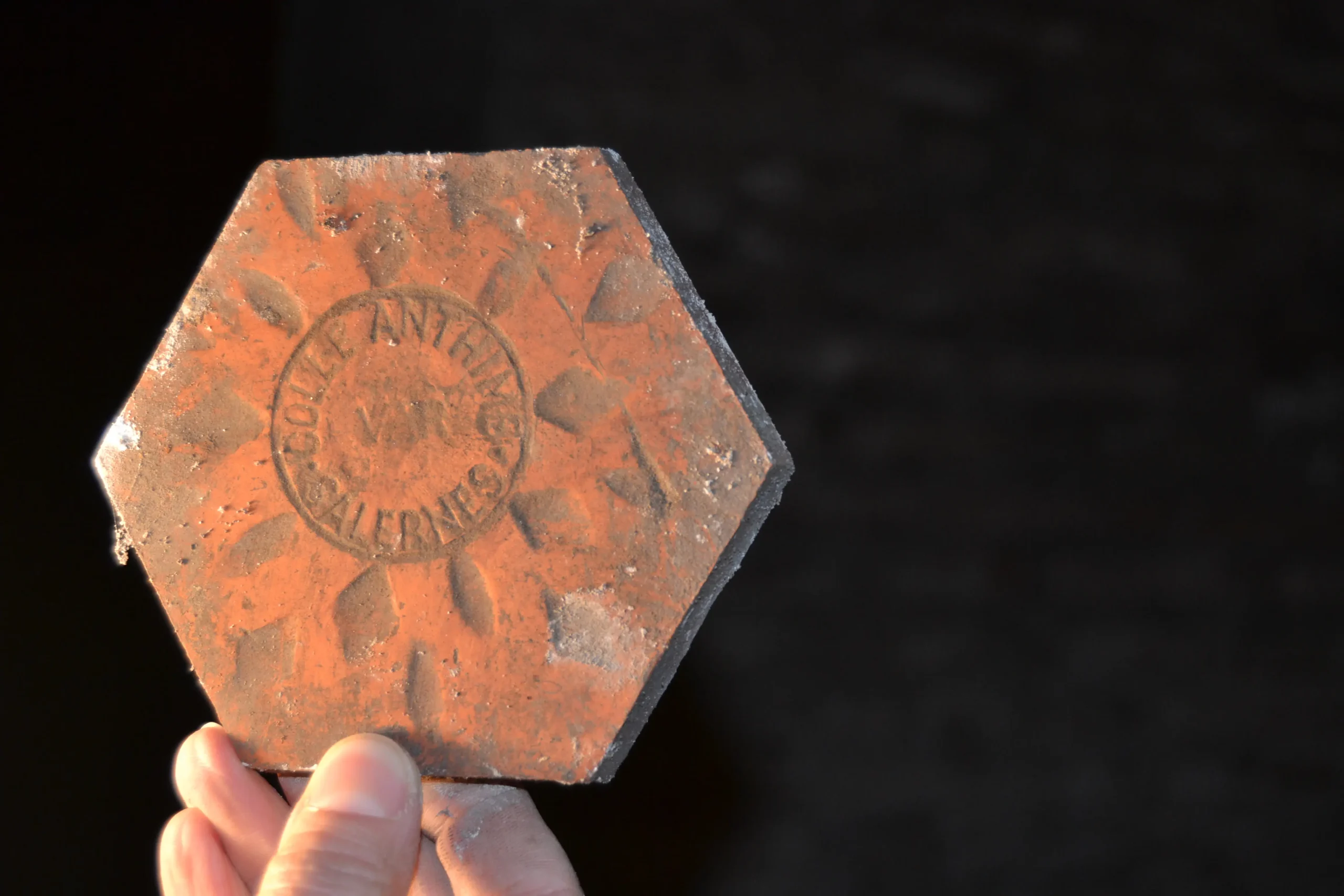
The restoration also addressed the most exposed elements: the leaded windows of Venetian glass roundels in the drum oculi and the lantern, recovered piece by piece in the workshop; the stucco frames of the oculi; the dove of the Holy Spirit in the lantern cupola; and the wrought-iron cross on the façade, consolidated in place without being dismantled. In the rooms flanking the inner façade, lifting the floors brought to light the original terracotta flooring, which was reinstalled in its original position.
How was the project funded?
The project was funded by Italy’s National Recovery and Resilience Plan (NRRP), Mission 1, Component 3, Investment 2.4, the line dedicated to the seismic safety of places of worship and the restoration of the heritage held by the Fondo Edifici di Culto (FEC). The sanctuary belongs to the FEC, managed by the Italian Ministry of the Interior, and the Superintendency of Archaeology, Fine Arts and Landscape for the Provinces of L’Aquila and Teramo served as implementing body. In line with the program’s requirements, the project complied with the Do No Significant Harm (DNSH) principle and the Minimum Environmental Criteria (CAM), ruling out new construction and land consumption and favoring lime mortars and traditional restoration techniques.
The result is a building in which seismic safety was not superimposed on the historic fabric but drawn from its own masonry, one crack at a time.
Who designed the church we see today?
The current church bears the signature of Cesare Mariani, a Roman painter who lived from 1826 to 1901 and was responsible for both its architectural design and much of its interior decoration. Mariani also left a personal mark in the sanctuary: in the Nativity fresco, he portrayed himself as a tall, bearded old man among the figures in the scene.
What fresco was discovered during the 1892 demolition?
While the old church was being torn down, a fresco from the second half of the 15th century emerged in the first chapel on the right, depicting the Madonna delle Grazie enthroned. Close in style to Carlo Crivelli, it was possibly commissioned by the community of Albanian merchants then living in Teramo. Francesco Savini attributed it to Crivelli himself, yet badly damaged it while detaching it; critics later proposed Pietro Alemanno as its author, and the question remains open.
PLACE
Teramo (TE)
CLIENT
Soprintendenza Archeologica, Belle Arti e Paesaggio per le Provincie di L’Aquila e Teramo
WORK PERIOD
ACTIVITY
Construction Design
Design phase Safety coordination
Safety coordination for executive phase
TYPE
Restoration of Listed Cultural Heritage
INTENDED USE
Cultural
Religious
WORK AMOUNT
WORKING GROUP
Englobe
Geol. Alberto Antinori
Rest. Davide Borzacchini