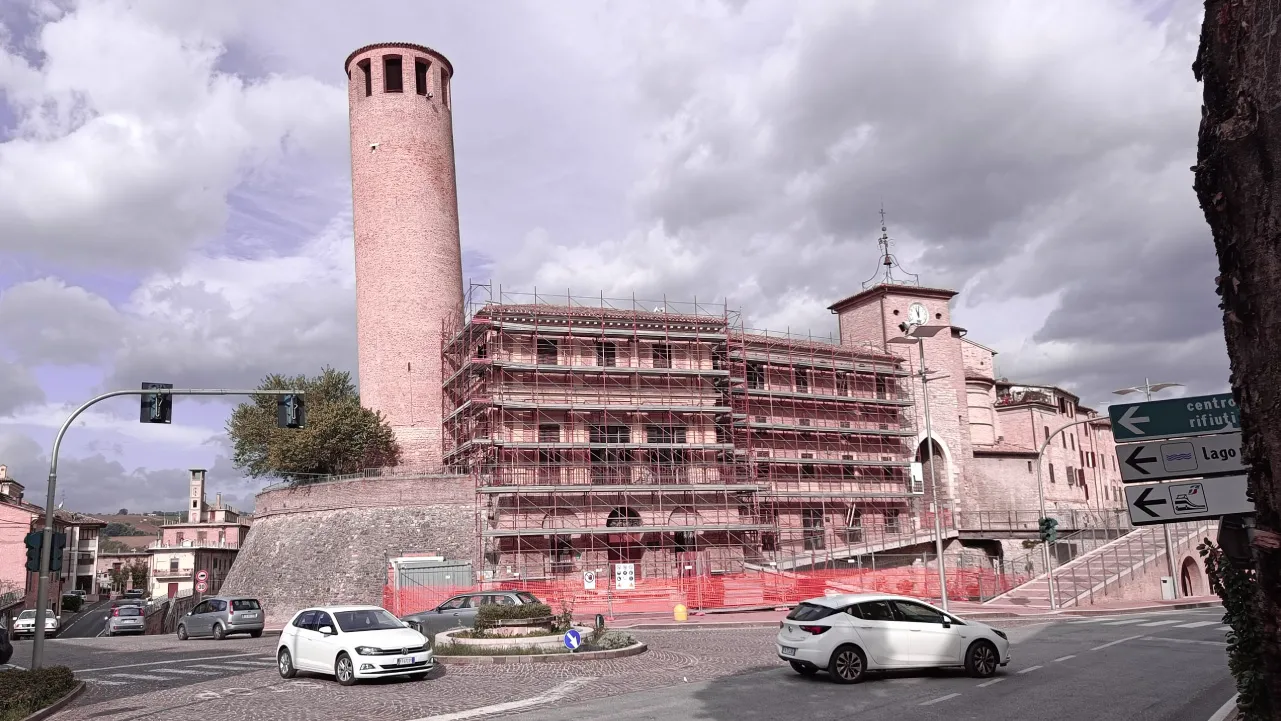
Frenelli in the Restoration of the Convent of San Bernardino in Urbino
In the field of historic building restoration, unforeseen conditions are an integral part of the process. During the rehabilitation works at the Convent of San Bernardino in Urbino, one of the most significant challenges was the discovery of unexpected frenelli structures. These floor-bearing elements required innovative structural consolidation solutions and careful engineering assessments.
What Frenelli Are and Why They Represent an Unexpected Challenge
During the preliminary demolition works in the historic wing, it was revealed that the floors were supported by a series of brick frenelli.
This system, once used to connect the different levels between the old and the new convent, develops around the main cloister. The structure of the frenelli, made of bricks laid in folio, showed signs of decay and instability, worsened by the presence of two rows of “step-like” bricks placed above them.

Technical Solutions for Structural Consolidation
To restore stability and ensure the usability of the building, two main strategies were adopted:
Reinforcement of Load-Bearing Vaults
The vaults, damaged by façade overturning movements, were consolidated with carbon fiber fabrics applied both to the intrados and extrados, connected with through-anchor stitching. In addition, the use of GFRP mesh was proposed to achieve global surface reinforcement.
Reconstruction of Compromised Frenelli
In areas with larger cavities, the frenelli were rebuilt and anchored to the main masonry walls using resin-bonded bars. On top of them, an OSB platform supported by wooden joists was installed, creating a solid base for the new flooring system and finishing stratigraphy.
Structural and Architectural Challenges
The unforeseen issues were not limited to the frenelli. Certain demolished areas required the reconstruction of internal partitions and the adoption of dry construction solutions in plasterboard, with curved panels designed to evoke the original vaults. This solution made it possible to preserve the historic identity while meeting the functional needs of the building.
Lessons from the Restoration of the Convent of San Bernardino
The project demonstrates the importance of a flexible and multidisciplinary approach in the restoration of protected cultural heritage assets. Structural challenges such as the discovery of frenelli require close collaboration between designers and engineers to reconcile historic preservation with the safety and functionality of the building.